
Last updated September 22, 2026
Free on-site gate assessment - hinges, posts, and your LiftMaster or Nice gate operator checked before anything is quoted
The assessment is free and the quote is the invoice.
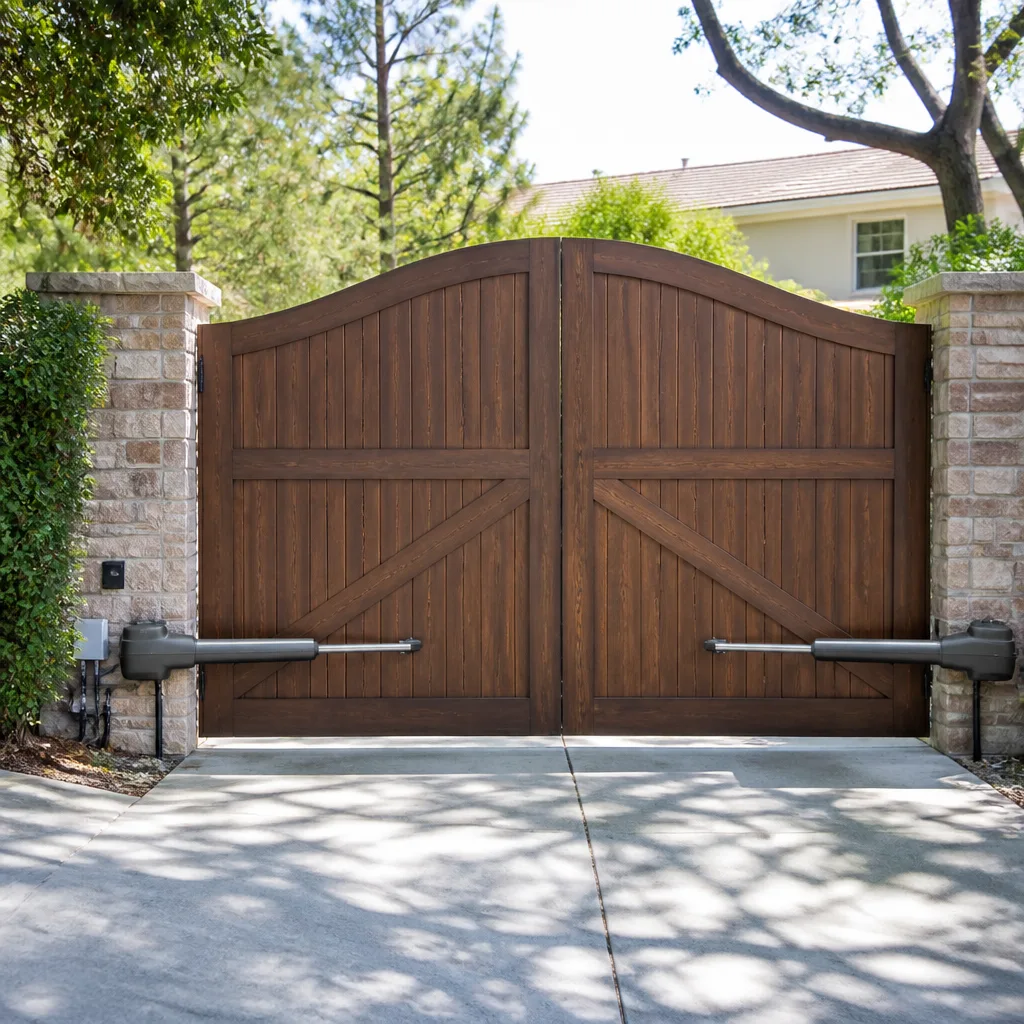
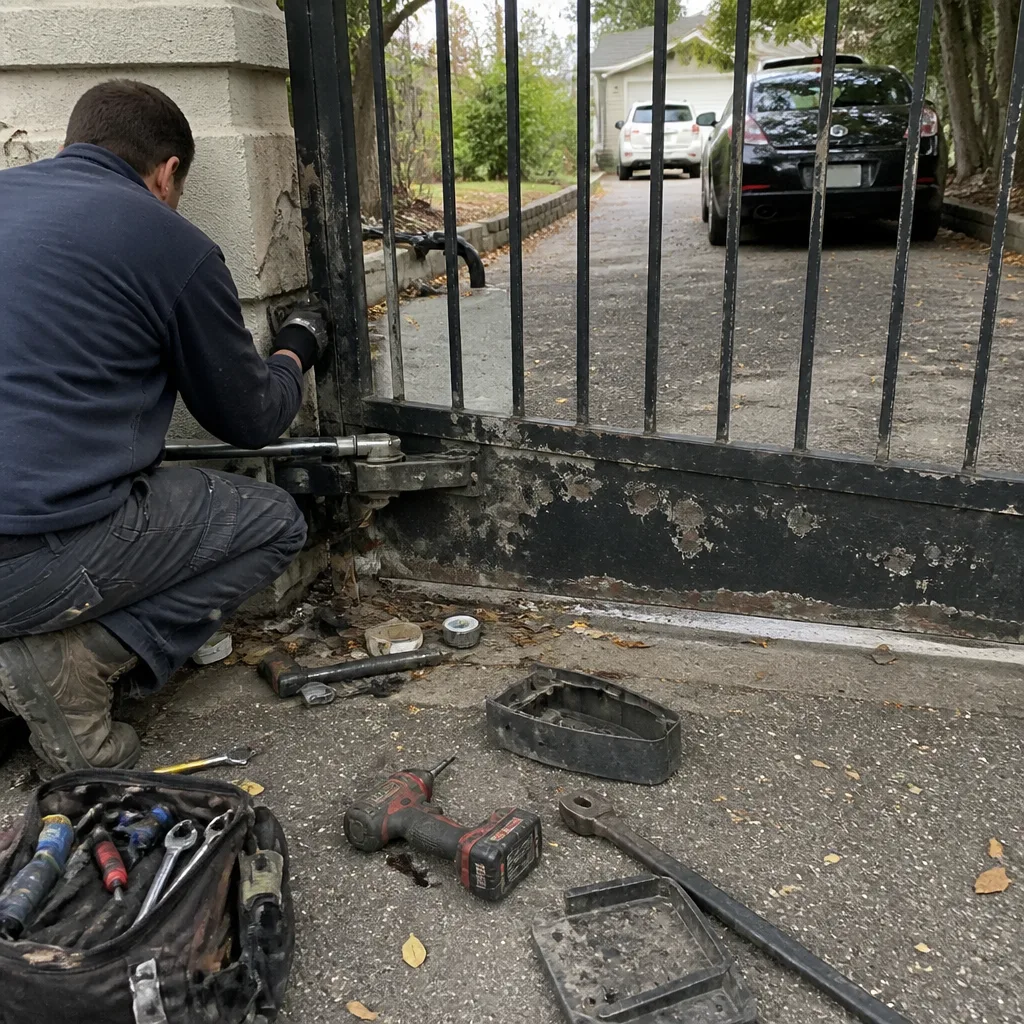 Before
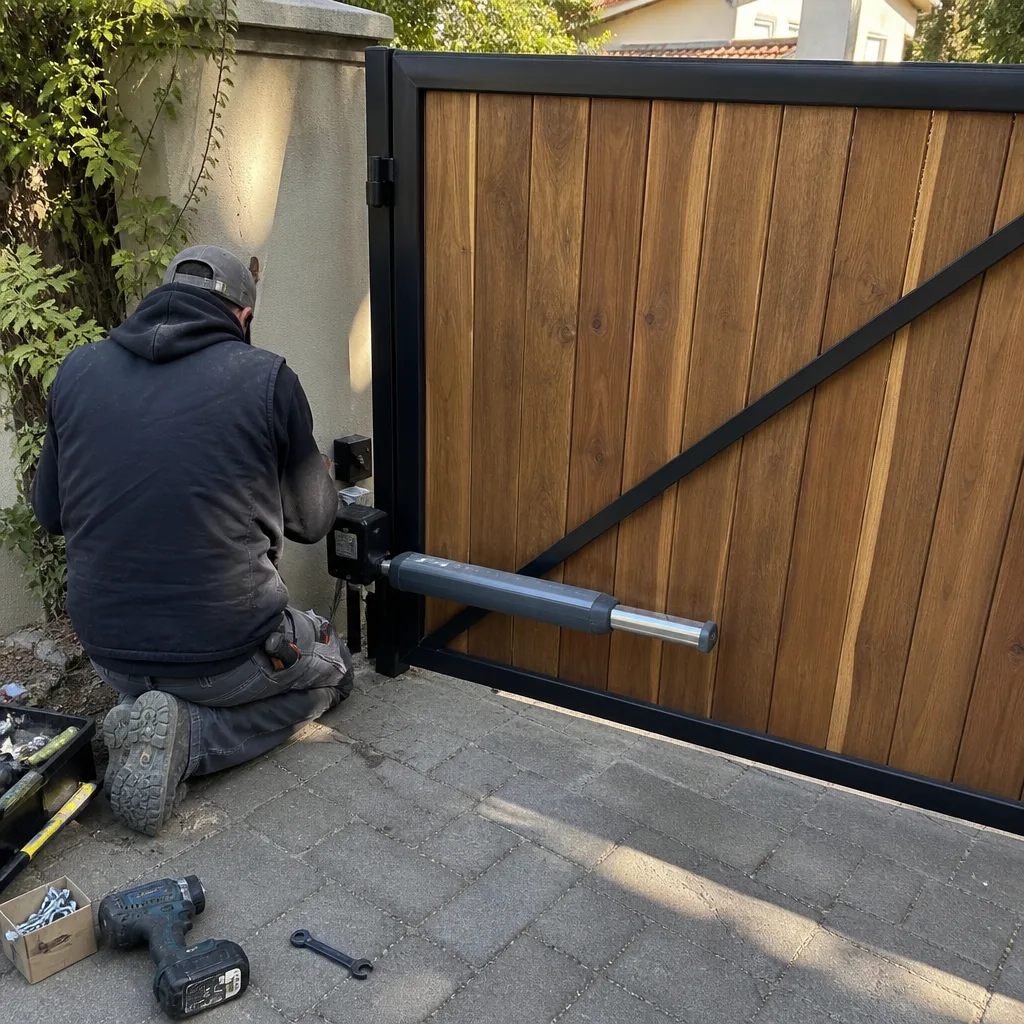 After
After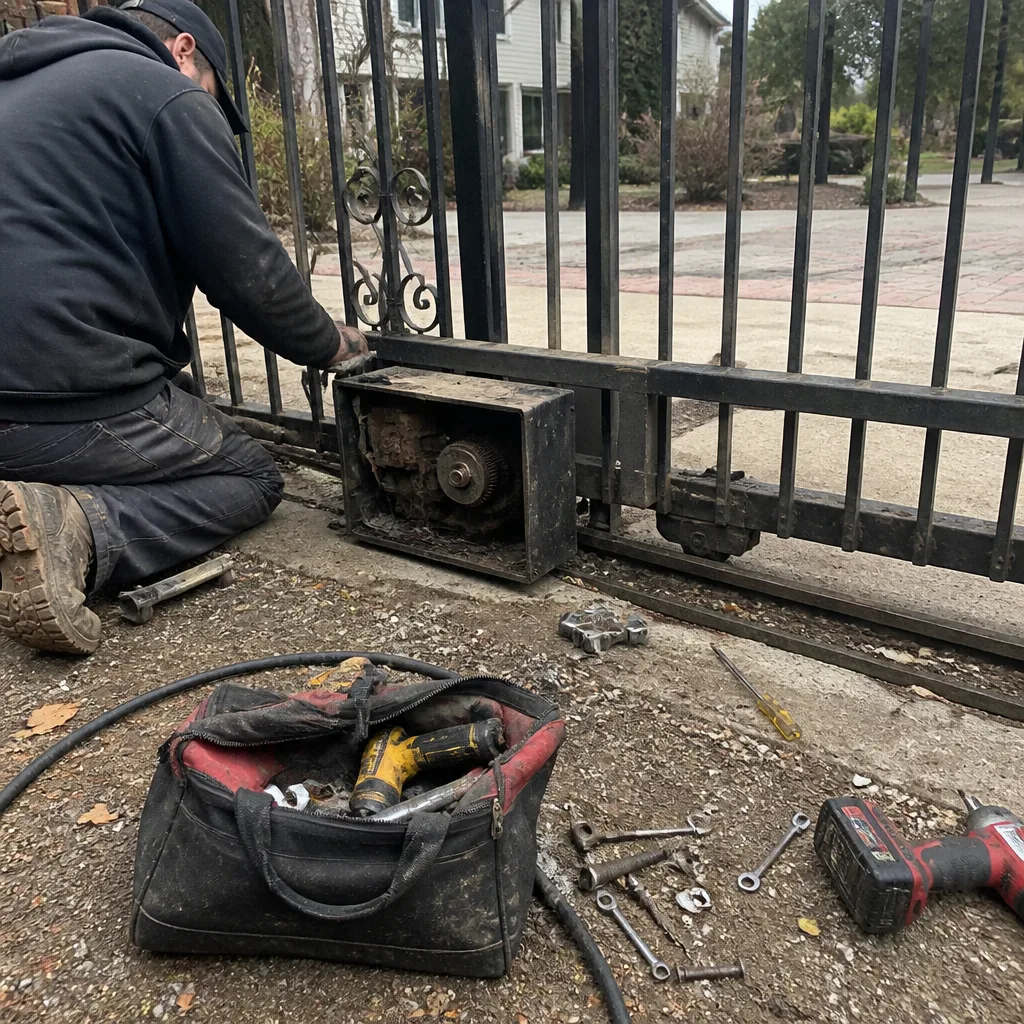 Before
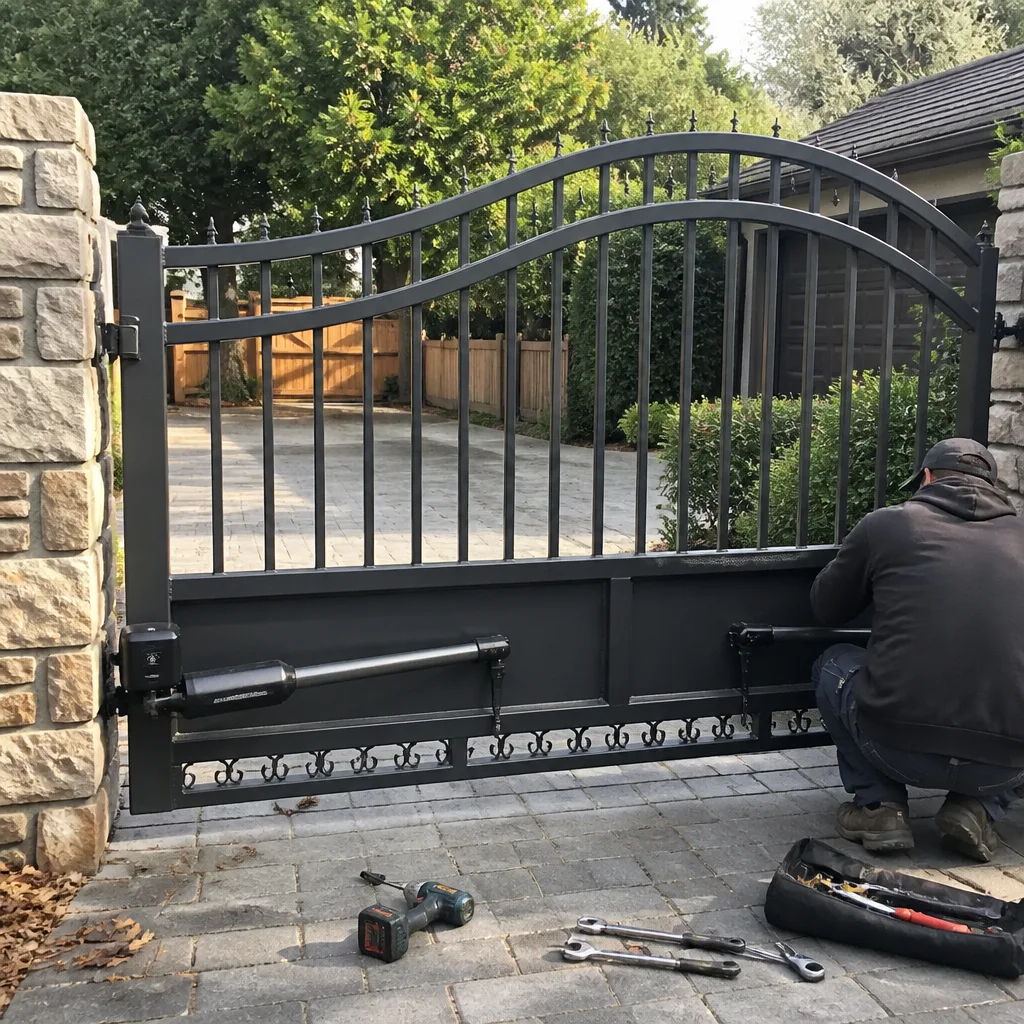 After
After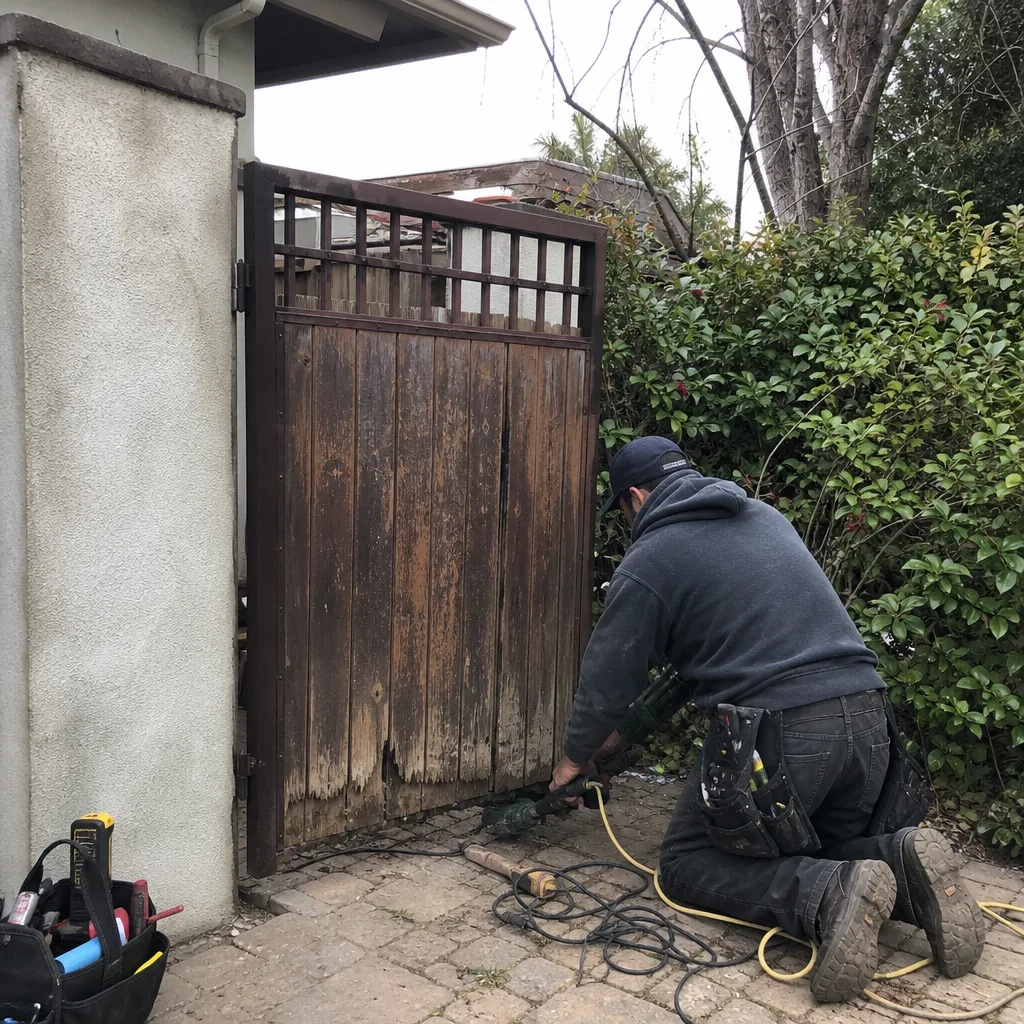 Before
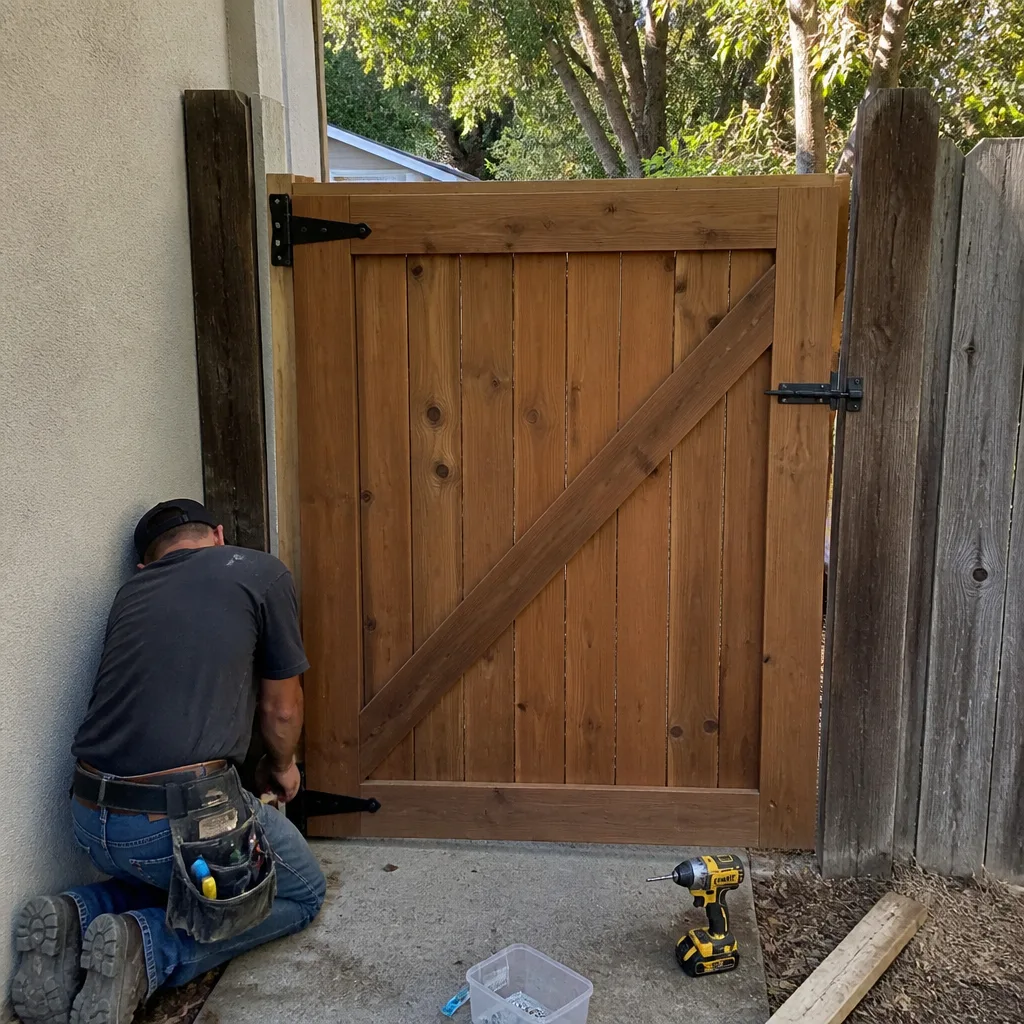 After
AfterGate Repair Warning Signs: A Los Gatos Homeowner’s Reference Guide
A gate that hesitates for two seconds before moving is easy to ignore. It’s also one of the clearest early indicators of a capacitor failing inside the operator, and the repair cost doubles once it fails completely versus while it’s still running. In Los Gatos, where hillside properties put extra load on swing-gate arms and salt air from the Bay accelerates corrosion on coastal-facing hardware, catching these signals early isn’t about being cautious. It’s about paying for a $180 capacitor replacement instead of a $1,400 motor rebuild. This guide assigns every warning sign a specific urgency tier, tells you what each sound and visual symptom actually means inside the mechanism, and gives you a logging template so you can hand a technician usable data before they drive out. For professional help, see our Gate Repair services.
Quick Answer
Gate warning signs fall into three urgency tiers: stop using the gate immediately for grinding metal, exposed wiring, or a gate that reverses unpredictably; schedule within 30 days for slow response, intermittent remote failure, or new vibration; log and monitor for surface rust, minor paint cracking, or slight motor hum changes. The specific sound, timing, and frequency of a symptom matter more than how alarming it feels.
Table of Contents
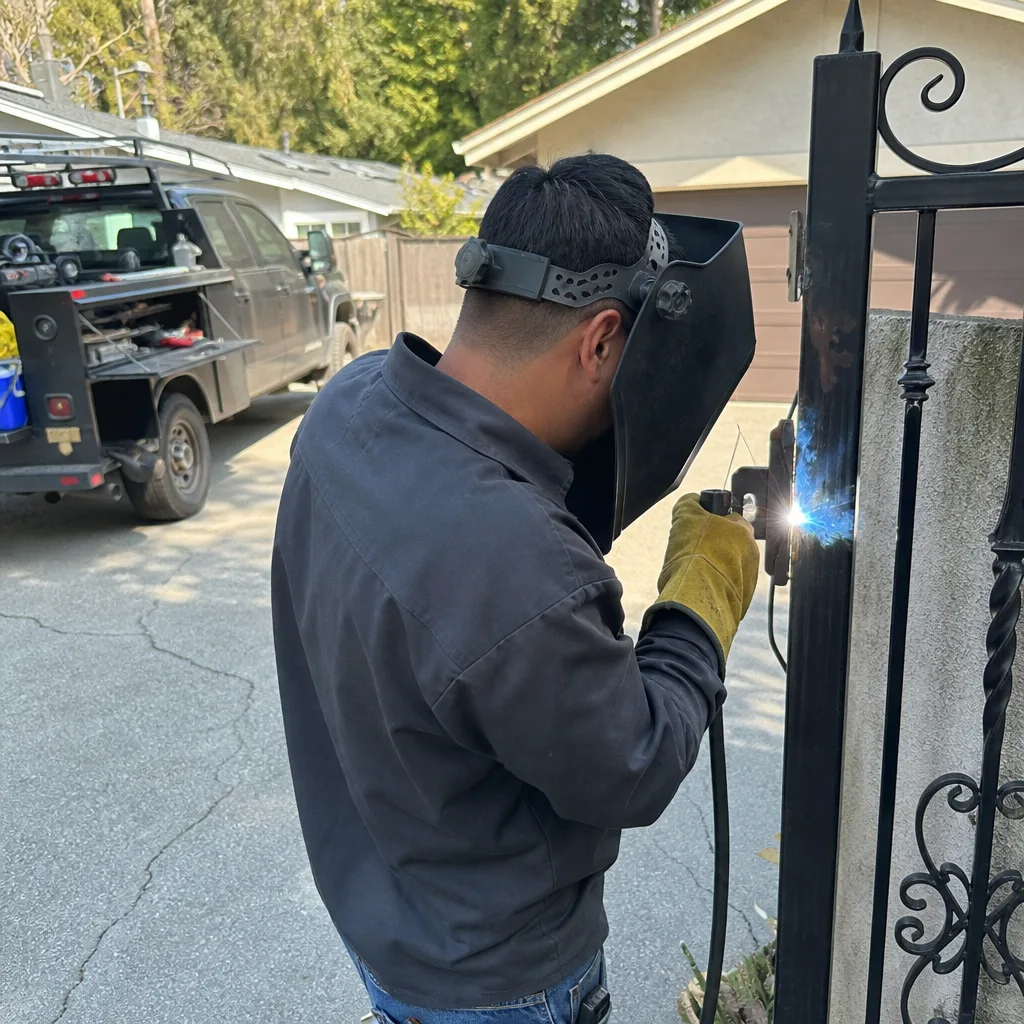
- The Three Urgency Tiers: How to Classify What You’re Seeing
- Sound Signals: What Grinding, Clicking, and Cycling Hum Reveal
- Visual Signs: Cosmetic Surface Issues vs. Structural Failure
- Why Intermittent Failures Demand Faster Action Than Consistent Ones
- Los Gatos-Specific Factors: Climate, Terrain, and Code
- Homeowner Logging Template: Recording Symptoms a Technician Can Use
- Common Mistakes to Avoid
- When to Call a Professional
- Frequently Asked Questions
- The Bottom Line
BeforeAfterThe Three Urgency Tiers: How to Classify What You’re Seeing
Most gate warning sign guides list symptoms in random order and leave the homeowner guessing about timing. For more guides & resources, visit our blog. We’ve found that ambiguity costs money. A homeowner who waits two weeks on a Tier 1 sign can turn a $200 adjustment into a $900 replacement. A homeowner who panics over a Tier 3 sign wastes a service call that could have waited for scheduled maintenance.
Here’s the classification system we use on every diagnostic call in Los Gatos:
Tier 1: Stop Using the Gate Now
These signs indicate active safety failure or imminent mechanical collapse. Continuing to operate the gate risks injury, property damage, or catastrophic component failure that destroys adjacent parts.
- Grinding metal on metal from the gearbox or drive arm, indicating stripped gears or a failed bearing race
- Gate reverses unpredictably or fails to stop for obstacles, suggesting a failed photo-eye (infrared safety beam), misaligned safety edge, or faulty limit switch
- Exposed or damaged low-voltage wiring on the motor housing, control board, or gate frame, creating shock or fire risk especially in wet conditions
- Gate moves unevenly or one side lags on a dual-swing installation, pointing to a failed actuator on one arm or a structural post shift
- Loud bang or pop followed by abnormal operation, typically a spring or torsion component failure on a slide gate or a shear pin failure on a swing arm
If you observe any Tier 1 sign, disconnect power to the operator at the breaker and operate the gate manually only if emergency vehicle access is required. In Los Gatos, many hillside properties have single-point vehicle access; if that’s your situation, call for emergency service rather than attempting manual operation on a compromised gate.
Tier 2: Schedule Within 30 Days
These symptoms indicate progressive wear that will degrade into Tier 1 if unaddressed, but the gate remains safe to use with increased vigilance.
- Slow or hesitant start, especially a 1-3 second delay between remote activation and gate movement, indicating capacitor degradation in the operator
- Intermittent remote or keypad response, where the gate works on the third try or only at close range, suggesting failing receiver circuitry or antenna degradation
- New vibration or shudder during travel, pointing to loose mounting bolts, worn rollers on a slide gate, or a bent track section
- Motor runs but gate barely moves, indicating a failing start capacitor or a mechanical binding issue that’s still within compensatory range
- Keypad or intercom displays error codes that reset with a power cycle but return within days
Tier 3: Log and Monitor
These are early indicators or cosmetic issues that should be tracked but don’t require immediate service unless they progress.
- Surface rust on non-load-bearing hardware like decorative caps or non-structural brackets
- Minor paint cracking or chalking on the gate panel itself
- Slight change in motor hum pitch that doesn’t affect operation speed or force
- Remote requires slightly closer range than previously, but works reliably within that range
- Gate closes with slightly more force on the final 6 inches of travel, indicating limit switch drift that hasn’t yet reached safety threshold
The key distinction between Tier 2 and Tier 3 is progression rate. A symptom that worsens over two weeks is Tier 2. A symptom that’s been stable for six months is Tier 3.
Sound Signals: What Grinding, Clicking, and Cycling Hum Reveal
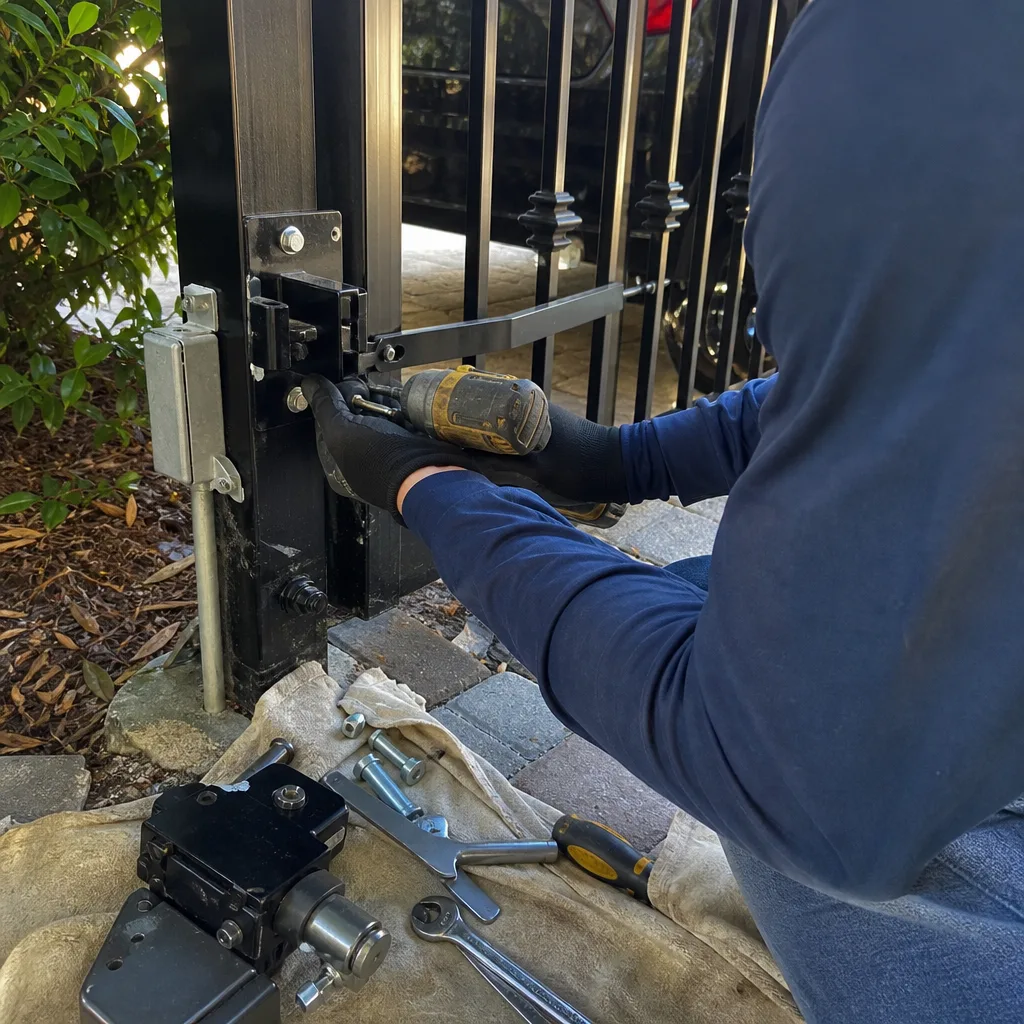
Sound is the most diagnostic information a homeowner can provide, and the most commonly misreported. “It’s making a noise” tells a technician almost nothing. The specific quality, timing, and location of a sound points directly to the failed component and often to whether repair or replacement is the economical path.
Grinding: Gearbox or Track System
A grinding sound from a gate operator indicates metal-on-metal contact inside the gearbox, where the worm gear or reduction gears have lost lubrication or a bearing race has disintegrated. On gate motor and opener systems in Los Gatos, we see this most often on Viking and DoorKing operators that have run 8-12 years without gearbox service, particularly on uphill swing gates where the motor works against gravity throughout the closing cycle.
The critical detail: note whether grinding occurs during the entire travel or only at one end. Full-travel grinding suggests gearbox failure. End-only grinding, especially at the closed position, usually indicates a physical obstruction or a limit switch that’s allowing over-travel into a mechanical stop.
Clicking: Electrical or Relay Failure
Rapid clicking from the operator housing, especially without corresponding motor movement, points to a control board relay that’s failing to hold closed or a capacitor that’s dropped below starting voltage. On Elite and Ghost Controls operators, we’ve traced this pattern to cold-solder joints on the control board that open under load, a manufacturing defect that manifests after 5-7 years of thermal cycling.
Single clicks with no motor response suggest a safety circuit interruption: the photo-eye, safety edge, or loop detector is sending an open-circuit signal that prevents the control board from energizing the motor.
Cycling Hum: Capacitor or Motor Windings
A hum that cycles on and off every 2-5 seconds without gate movement is the sound of a start capacitor attempting to energize a motor that can’t reach running speed. The capacitor charges, dumps into the motor, the motor stalls, and the cycle repeats. This is the sound we hear described as “it sounds like it wants to move.” Left unattended, this pattern overheats the motor windings and converts a $180 capacitor replacement into a $1,200-$1,800 motor replacement.
High-Pitched Whine: Belt or Chain Drive
On slide-gate operators with belt or chain drive systems, a whine that rises in pitch with gate speed indicates a dry or stretched drive element. On gate repair calls in Los Gatos, we find this frequently on properties near Los Gatos Creek Trail where dust and organic debris accelerate wear on exposed chain runs.
How to Report Sounds to a Technician
- Record a 10-second video with your phone; audio compression on phone microphones captures the frequency range of most gate sounds adequately
- Note the exact point in gate travel where the sound occurs: start, middle, end, or entire range
- Identify whether the sound happens every cycle or intermittently, and whether weather conditions affect it
- Check whether the sound changes when operating manually versus by remote; manual operation that eliminates an electrical sound isolates the problem to the operator
Visual Signs: Cosmetic Surface Issues vs. Structural Failure
Los Gatos homeowners, particularly in older neighborhoods near downtown and in hillside properties with wrought-iron or steel gates, face a specific diagnostic challenge: determining whether rust, cracking, or deformation is a surface maintenance item or an indicator of imminent structural failure.
Surface Rust: When It’s Cosmetic
Rust that appears as uniform orange staining on the surface of paint or powder coat, without pitting or flaking of the base metal, is typically cosmetic. It indicates coating degradation that needs attention to prevent future penetration, but the underlying steel retains full structural integrity. Common locations for cosmetic rust in Los Gatos include lower horizontal rails where irrigation spray contacts the gate daily, and hinge pins where paint wear exposes bare steel to air.
Structural Rust: When Load-Bearing Steel Is Compromised
Structural rust shows as pitting, flaking layers of metal (lamellar corrosion), or measurable reduction in cross-section. Critical inspection points:
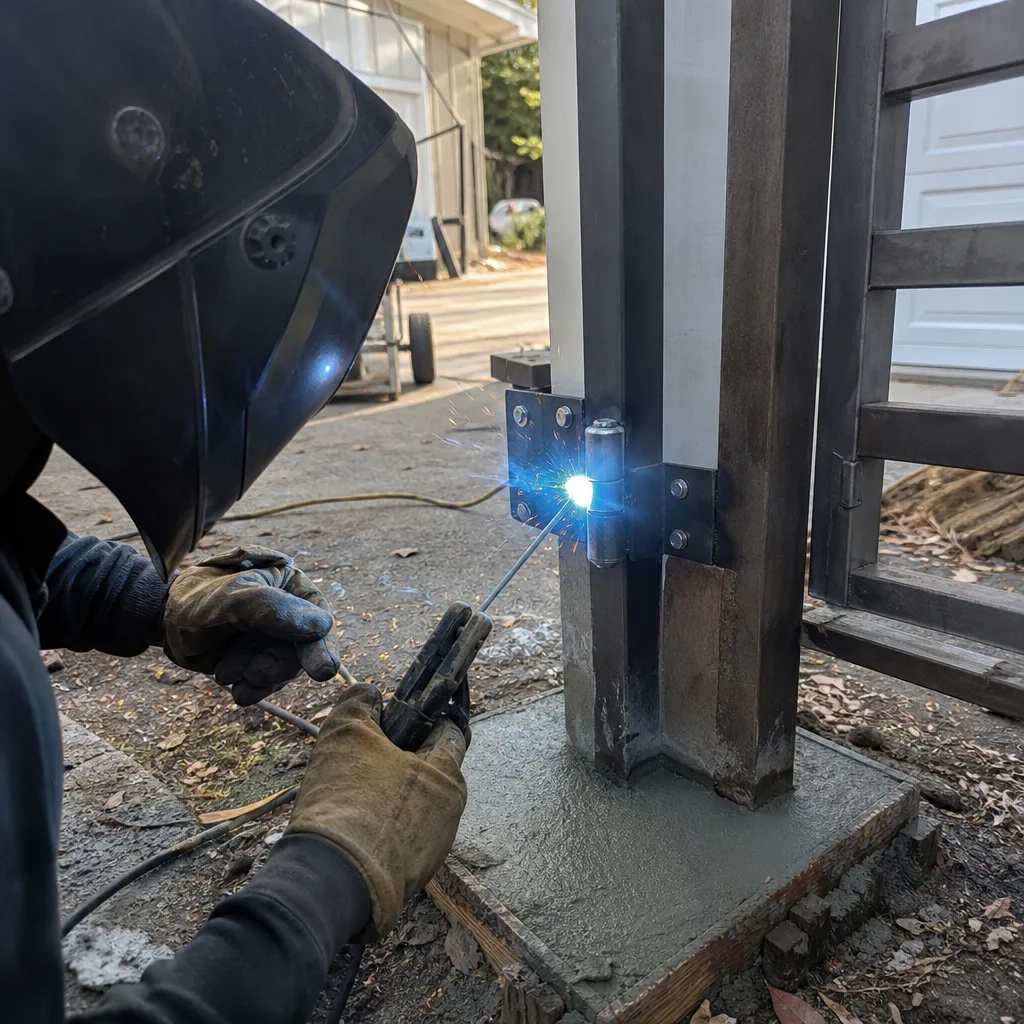
- Hinge welds and hinge plates: rust that has penetrated the weld bead or reduced the thickness of the plate that bolts to the post or gate frame
- Slide gate track and guide rollers: pitting on the track surface that causes roller vibration or jumping, or rust on roller axles that indicates bearing seal failure
- Swing gate actuator mounting brackets: any rust at the bolt holes or weld joints where the actuator arm connects to the gate frame, because this joint carries the full dynamic load of gate movement
- Underground operator boxes: water intrusion that produces rust on the operator chassis or control board mounting plate, common in Los Gatos properties with poor drainage on uphill grades
The test we teach homeowners: press a flat screwdriver tip against the rusted area and apply moderate pressure. If the metal deforms or the rust layer separates to reveal significantly reduced cross-section, that’s structural. If the metal is solid beneath surface staining, it’s cosmetic.
Paint and Coating Failures
Alligator cracking (interconnected polygonal cracks) in paint or powder coat indicates UV degradation and moisture infiltration at the coating-substrate interface. On gates within 3 miles of the Bay in Los Gatos, salt air accelerates this pattern. The coating failure itself is Tier 3, but the moisture trapped beneath the coating accelerates hidden corrosion. We recommend documenting the location and extent, then scheduling coating repair within the same maintenance visit as any mechanical service.
Gate Frame Deformation
Any visible bend or twist in the gate frame is structural. Even minor deformation, 1/4 inch out of plane on a swing gate or vertical rail deflection on a slide gate, indicates that the frame has been overloaded, typically by wind load, vehicle contact, or a failed actuator that applied force at an angle. Deformation progresses nonlinearly; the bent section creates stress concentration that accelerates further bending. This is Tier 2 progressing to Tier 1.
Why Intermittent Failures Demand Faster Action Than Consistent Ones
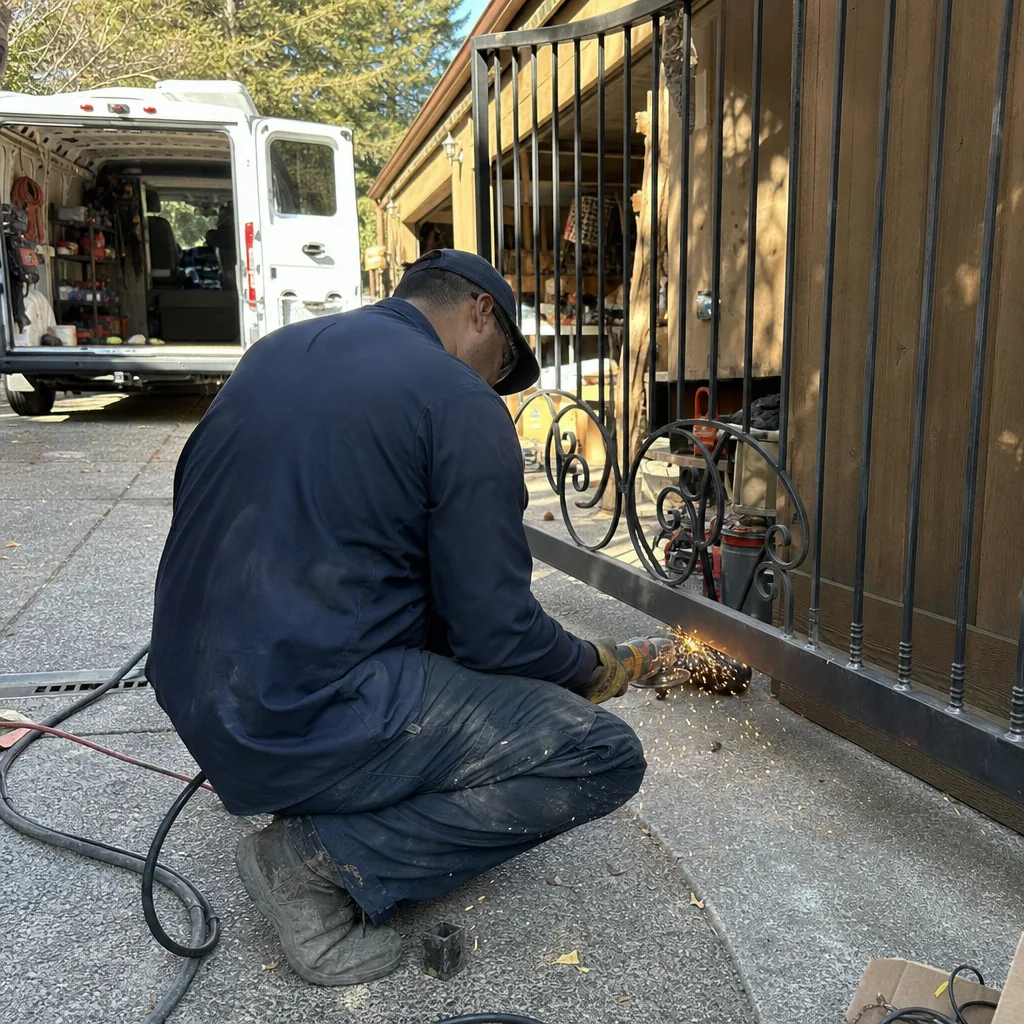
This is the counterintuitive rule that saves the most money when homeowners apply it correctly. A gate that fails every third cycle is more urgent than a gate that has failed completely and predictably.
The diagnostic logic: a consistent failure produces a consistent symptom that a technician can observe, measure, and trace to root cause. An intermittent failure, by definition, hides its root cause during observation. The technician arrives, the gate works normally, and the homeowner pays for a diagnostic visit that yields no actionable finding. The failure returns that evening.
More critically, intermittent electrical failures in gate operators often indicate a component operating at the edge of its specification range. A capacitor with 60% of rated capacitance may start the motor on cool mornings but fail on warm afternoons when internal resistance rises. A control board solder joint that opens at 140°F may pass all tests in a 70°F garage. These marginal components fail catastrophically without additional warning, and their failure mode often damages adjacent components.
Our recommended protocol for intermittent symptoms:
- Begin logging immediately using the template in the next section; pattern data is the most valuable diagnostic tool
- Treat any intermittent safety-system failure as Tier 1; a photo-eye that works 90% of the time is a liability issue, not a maintenance scheduling problem
- Schedule service within 14 days, not 30, for intermittent motor or control failures; the marginal component is degrading and will likely fail completely before a 30-day window
- Request that the technician bring replacement capacitors, control boards, and safety components for common brands rather than making a diagnostic-only visit followed by a parts-ordering delay
At Vance Gate Repair Los Gatos, we stock capacitors, limit switches, and safety edges for the nine automation brands we service, including Viking, Ghost Controls, and DoorKing, specifically to resolve intermittent failures on the first visit. The alternative, a two-visit repair for a one-visit problem, violates the Haven Standard principle of documented efficiency.
Los Gatos-Specific Factors: Climate, Terrain, and Code
Gate failure patterns in Los Gatos differ measurably from flatland Bay Area cities due to three local factors that affect component selection, maintenance intervals, and failure modes.
Hillside Loading and Gravity
Los Gatos properties on slopes above 8% grade, common in neighborhoods along Shannon Road, Tait Avenue, and the eastern foothills, impose asymmetric loads on swing-gate actuators. The closing cycle works against gravity; the opening cycle works with it. This asymmetry accelerates wear on the gearbox side that handles the load against gravity, typically the closing-side actuator on dual-swing installations. We see 40% faster gearbox wear on uphill-closing gates compared to flat installations, and we adjust our maintenance recommendations accordingly.
Corrosion Environment
The Los Gatos climate sits at a corrosion inflection point. Properties within 2 miles of the Bay or along creek corridors experience elevated humidity and salt deposition that accelerates rust on uncoated steel. Properties above 600 feet elevation, particularly in the Santa Cruz Mountains interface, experience wider temperature swings that stress control board solder joints and capacitor electrolytes. The specific corrosion environment affects whether we recommend standard or marine-grade hardware on new gate installations in Los Gatos.
Local Code and Access Requirements
Los Gatos municipal code requires that automatic gates serving as primary vehicle access to a residence include manual release mechanisms operable from inside the property without tools, and that gate operators comply with UL 325 safety standards for entrapment protection. These requirements affect repair decisions: a non-compliant operator cannot be legally repaired if the repair would leave it in non-compliant condition. We document UL 325 compliance status on every service record under Haven Standard Clause 4.
Additionally, gates in Los Gatos historic districts or with visibility from public rights-of-way may be subject to design review for structural modifications. We note this constraint when recommending frame repairs or material substitutions that would alter the gate’s visible appearance.
Homeowner Logging Template: Recording Symptoms a Technician Can Use
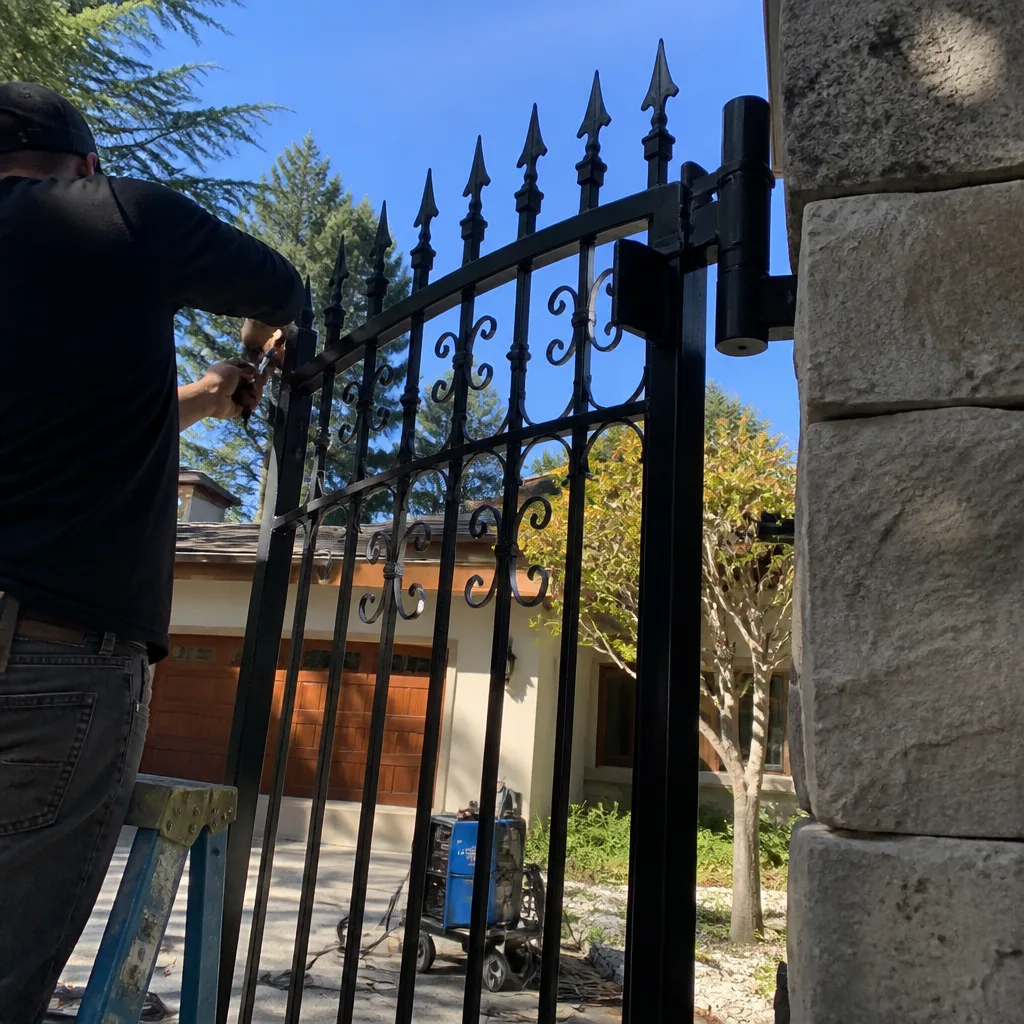
The most expensive service call is the one that finds nothing because the symptom didn’t appear during observation. A structured log converts intermittent failures into diagnosable patterns and often allows remote diagnosis before dispatch.
We developed this template based on the documentation habit Adrian Vance established on commercial access-control sites starting in 2014: record what you found, when you found it, and the conditions that accompanied it.
Gate Symptom Log
Copy this format into a notes app or printed sheet:
| Date/Time | Symptom | Gate Position | Weather/Temp | Frequency | Other Notes |
|---|---|---|---|---|---|
| Example: 3/15, 7:45 AM | 2-sec delay before opening | Closed, first cycle of day | 48°F, fog | Daily, first cycle only | Normal after initial delay |
What to Record for Each Symptom Category
For sound-based symptoms: Note the quality (grind/click/hum/whine), the location (operator housing, track, hinge, gate panel), and whether it changes when operating manually. Record a video with audio if possible.
For movement-based symptoms: Measure or estimate the delay in seconds, the distance of travel before symptom appears, and whether the symptom is consistent or varies. Note if the gate completes its cycle despite the symptom or stops prematurely.
For remote or keypad symptoms: Record the distance from gate when attempting operation, whether other remotes or the keypad produce the same result, and whether the symptom occurs at all times or only during specific hours (which may indicate low-voltage conditions from utility peak demand).
For safety system symptoms: Document the exact failure mode: gate reverses without obstruction, gate fails to reverse when obstruction is present, or safety device indicator light shows fault. Safety system logs are Tier 1 documentation; do not operate the gate without resolving these.
When you call for service, read the log chronologically. Patterns that emerge from 10-14 days of logging often allow a technician to bring the correct components and complete repair in one visit. Under Haven Standard Clause 4, we photograph and file your log with the job record so future technicians have historical data.
Common Mistakes to Avoid
- Assuming a gate that still works doesn’t need attention. In Los Gatos, we regularly see homeowners delay service on a gate with a 3-second startup delay, then call when the motor fails completely. The capacitor replacement that would have cost $180 becomes a $1,400 motor and control board replacement.
- Applying WD-40 to gate components as a universal fix. WD-40 is a water displacer, not a lubricant, and it attracts dust that accelerates wear on track systems. It also degrades rubber safety edges and some photo-eye housings. Use manufacturer-specified lubricants only.
- Ignoring intermittent safety system failures because “it usually works.” A photo-eye that fails 10% of the time creates 100% liability exposure. In Los Gatos, where many properties have pedestrian traffic from trail systems and neighborhood footpaths, this is a specific legal and safety risk.
- Attempting to adjust limit switches or force settings without documentation. These settings are calibrated to the specific gate weight, wind load, and safety edge configuration. An undocumented adjustment that increases force to compensate for mechanical binding can create entrapment hazard and void UL 325 compliance.
- Waiting for “one more thing to break” before calling. Multiple simultaneous failures often indicate a root cause, typically power quality or control board degradation, that damages components sequentially. Addressing the first failure prevents the cascade.
- Not verifying that a repair technician documents adjustments. Without a written record of limit switch positions, force settings, and safety device function tests, the next technician starts from zero and you pay for rediscovery. The Haven Standard exists because this gap is common in the industry.
- Overlooking the manual release mechanism. Los Gatos code requires tool-free manual release from inside the property. If your manual release is rusted, missing, or requires a key that’s stored outside the gate, that’s a code violation and a life-safety issue during power outage or fire evacuation.
When to Call a Professional
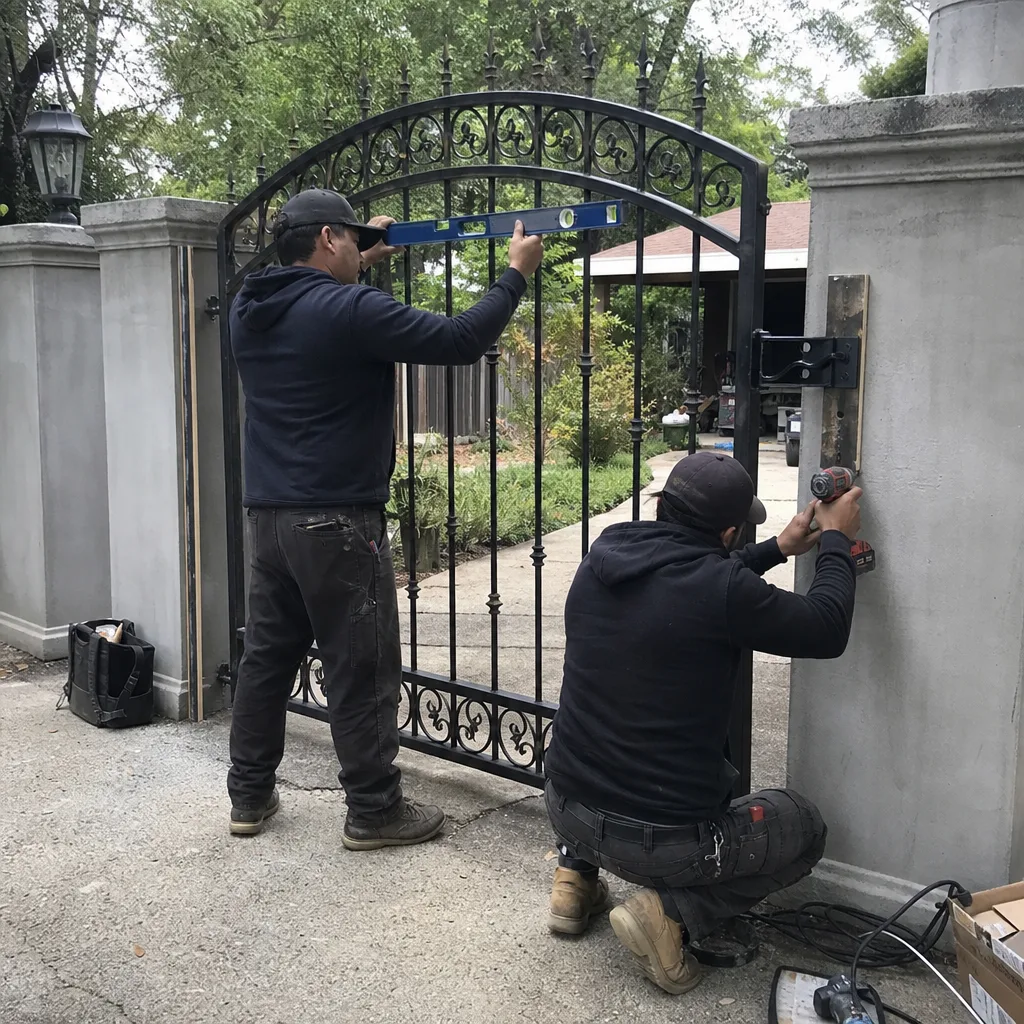
Call for same-day service if you observe any Tier 1 sign: grinding metal, unpredictable reversal, exposed wiring, or a gate that moves unevenly after a loud bang. These conditions create immediate safety risk and typically worsen with each additional cycle.
Schedule within two weeks for Tier 2 symptoms, and within 30 days for Tier 3 items that show progression. For intermittent failures, begin logging immediately and call within 14 days; the pattern data you collect will likely determine whether the repair completes in one visit or two.
Vance Gate Repair Los Gatos offers free estimates in Los Gatos. We’ll review your symptom log, confirm whether your operator brand is among the nine we stock parts for, and give you a written price before any work starts. Call (831) 246-7187. A live person answers 24 hours a day, seven days a week, and we can often diagnose intermittent patterns from your log data before dispatching.
Frequently Asked Questions
Most gate motor repairs in Los Gatos range from $180 for a capacitor or limit switch replacement to $650 for a control board replacement on a multi-brand operator. A full motor replacement, including removal and disposal of the failed unit, typically runs $1,200-$1,800 depending on brand and whether the mounting bracket and arm require modification. We provide a written price before any work starts under Haven Standard Clause 1, and we stock capacitors, control boards, and safety components for Viking, Ghost Controls, DoorKing, Elite, and five other major brands to complete most repairs in one visit. Call (831) 246-7187 for an exact quote on your specific operator model; estimates are free.
A grinding sound usually indicates repairable gearbox wear, not automatic replacement. If the grinding is recent and the gears haven’t seized, a gearbox rebuild or lubrication service often resolves it for $350-$550. If the grinding has persisted for weeks and the motor stalls or overheats, the gearbox damage may have propagated to the motor bearings, making full operator replacement more economical. We diagnose this on-site with the gearbox cover removed and give you both options in writing before proceeding.
Temperature-dependent intermittent failure in Los Gatos typically indicates a capacitor or control board component operating at the edge of specification. Morning coolness allows marginal capacitance; afternoon warmth increases internal resistance beyond the threshold needed to start the motor. Less commonly, voltage drop from utility peak demand in warmer afternoon hours affects operators on long wire runs from the house panel. Log the exact failure times and temperatures for two weeks; this pattern almost always points to a specific component we can replace preventively.
Press a flat screwdriver against the rusted area with moderate pressure. If the metal deforms, flakes away to reveal reduced cross-section, or the rust layer separates in sheets, the steel is structurally compromised and the component needs replacement. Solid metal beneath surface staining is cosmetic. Hinge plates, actuator mounting brackets, and slide gate tracks are the critical inspection points where cosmetic rust most commonly progresses to structural failure in Los Gatos’s corrosion environment.
Under Haven Standard Clause 4, you should receive a written record of every adjustment made, every part installed with manufacturer part number, and photographs of the completed work including limit switch settings, safety device alignment, and any wiring modifications. If your technician leaves with only a verbal summary and a handwritten total, you have no recourse if the problem returns and no baseline for future maintenance. We provide this documentation on every visit at no additional charge.
We service nine major automation brands: LiftMaster, FAAC, BFT, Linear, Viking, Ghost Controls, DoorKing, Elite, and Mighty Mule. We do not steer customers toward replacement with a different brand when repair is viable. Our parts inventory covers common failure components for all nine brands, and our technicians carry wiring diagrams and service manuals for each. If your operator is a different brand, we can still diagnose and often repair, but parts availability may require a second visit. We’ll tell you before dispatch if your brand is outside our same-day parts inventory.
The Bottom Line
Gate warning signs are only useful when they tell you what to do and when. The three-tier system, sound-specific diagnosis, and logging template in this guide give Los Gatos homeowners the same structured approach we use on every service call. Catch the hesitant start before the capacitor fails completely, distinguish cosmetic rust from structural compromise, and treat intermittent failures as more urgent than consistent ones because they hide their root cause until it’s too late for economical repair.
Document what you observe, classify it honestly, and call before the symptom escalates. The written price before work starts and the photographic record after completion, that’s the Haven Standard. We’ve applied it to 22,000 gates since 2014.
Written by Adrian Vance, Owner at Vance Gate Repair Los Gatos, serving Los Gatos since 2014.