
Last updated September 22, 2026
Free on-site gate assessment - hinges, posts, and your LiftMaster or Nice gate operator checked before anything is quoted
The assessment is free and the quote is the invoice.
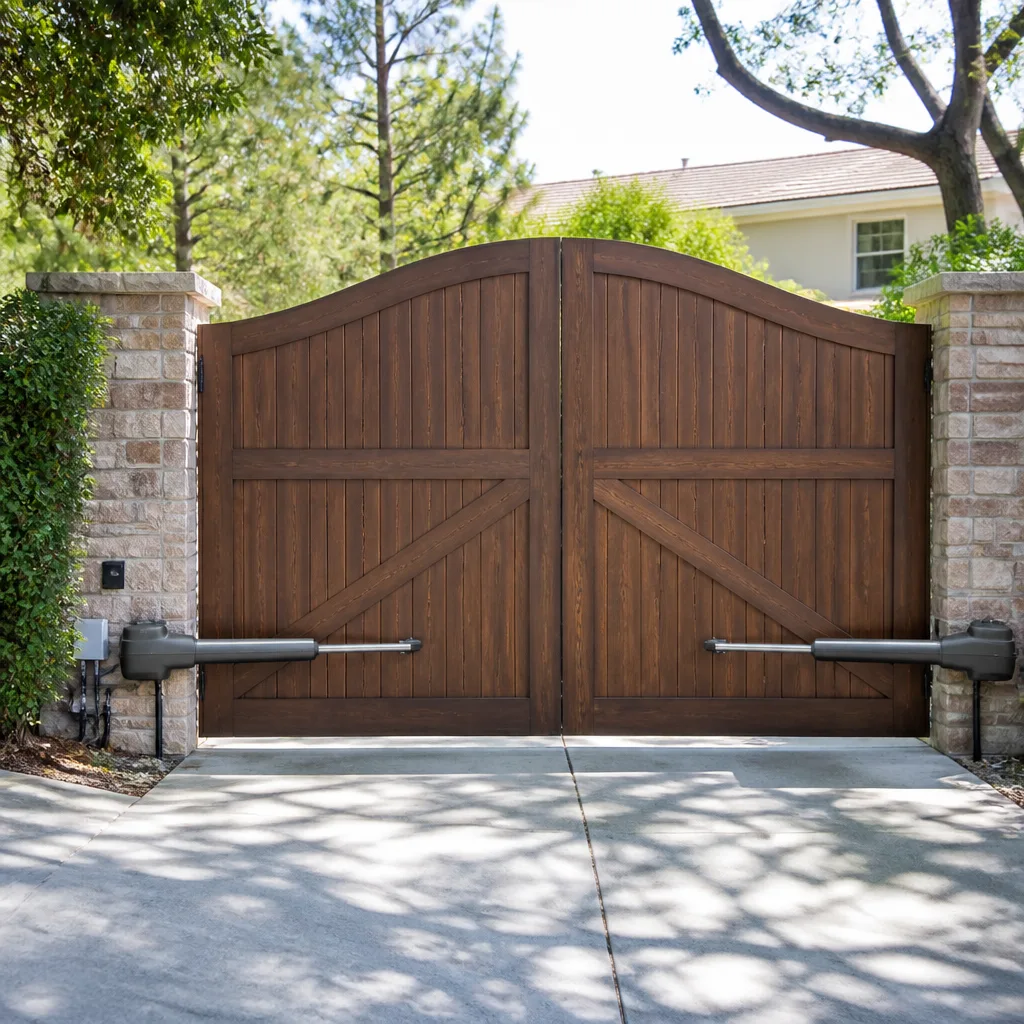
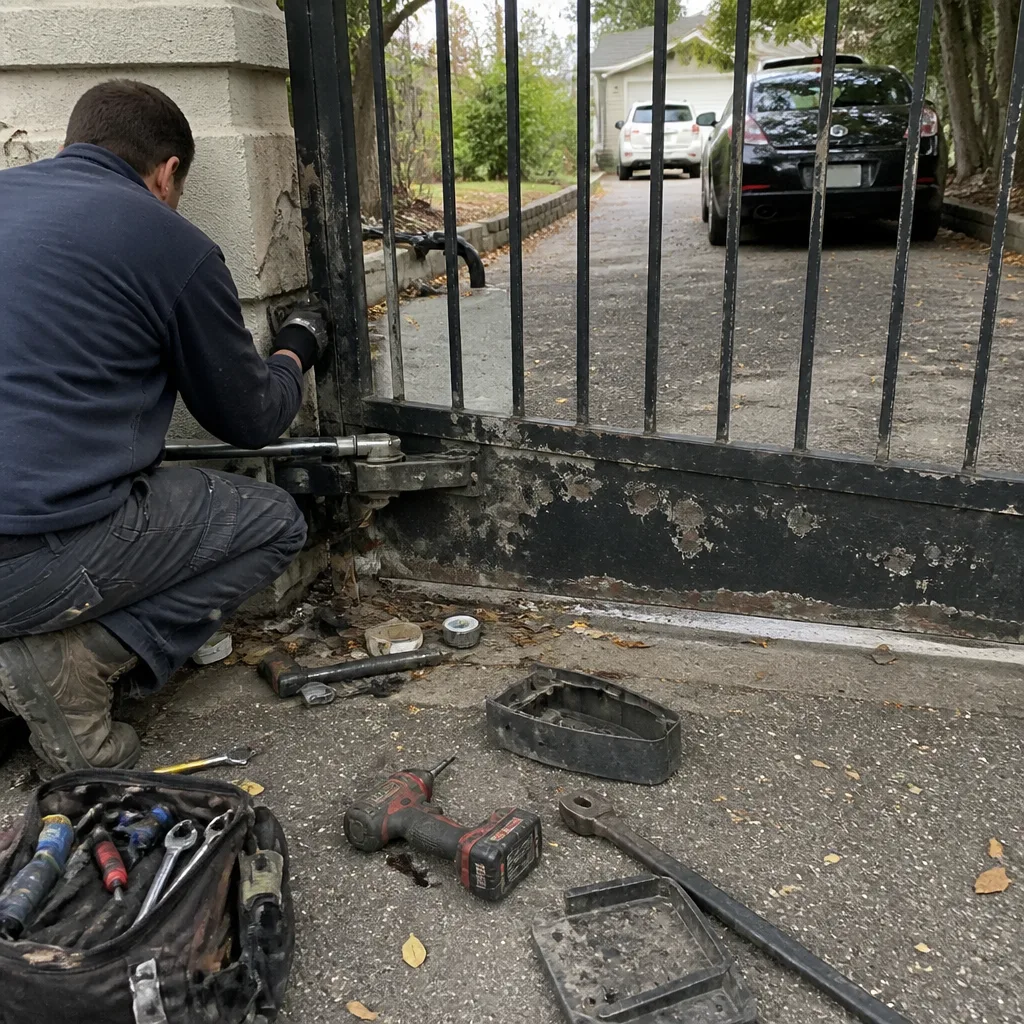 Before
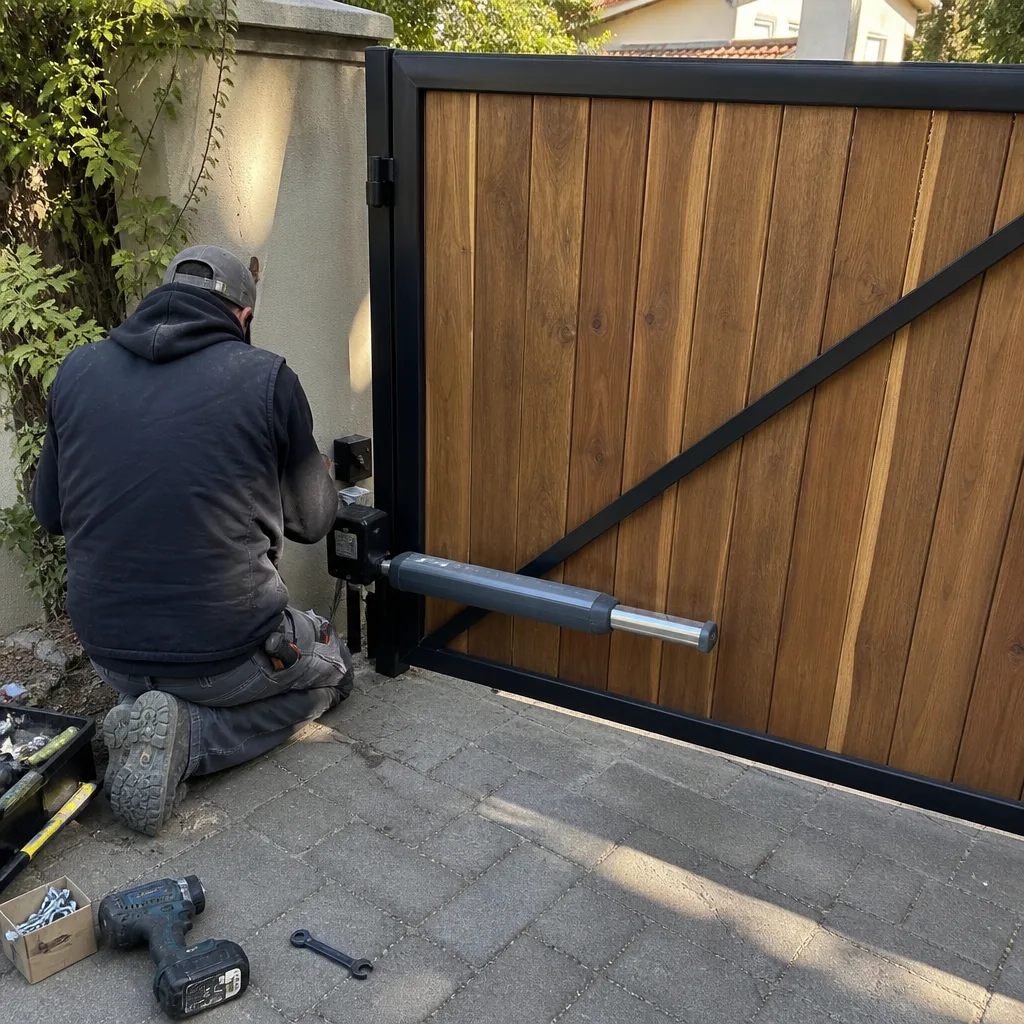 After
After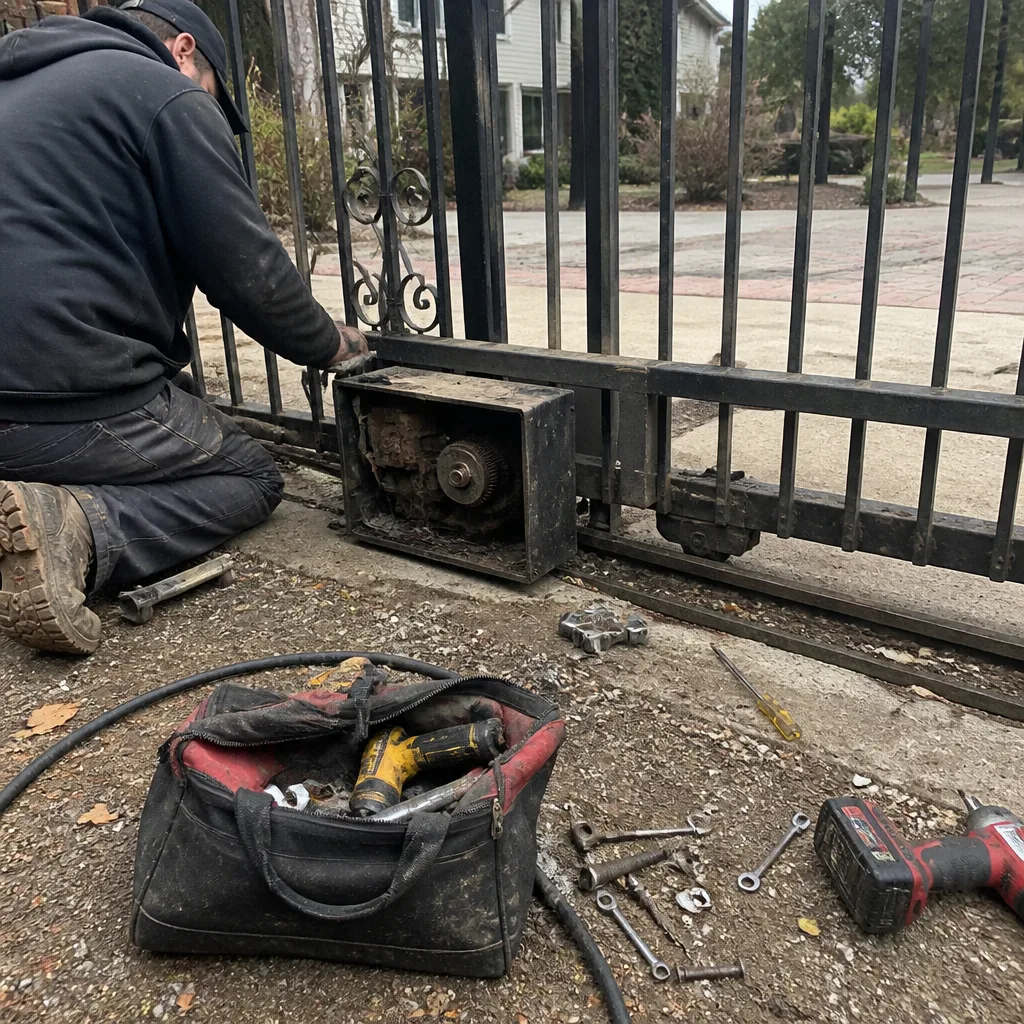 Before
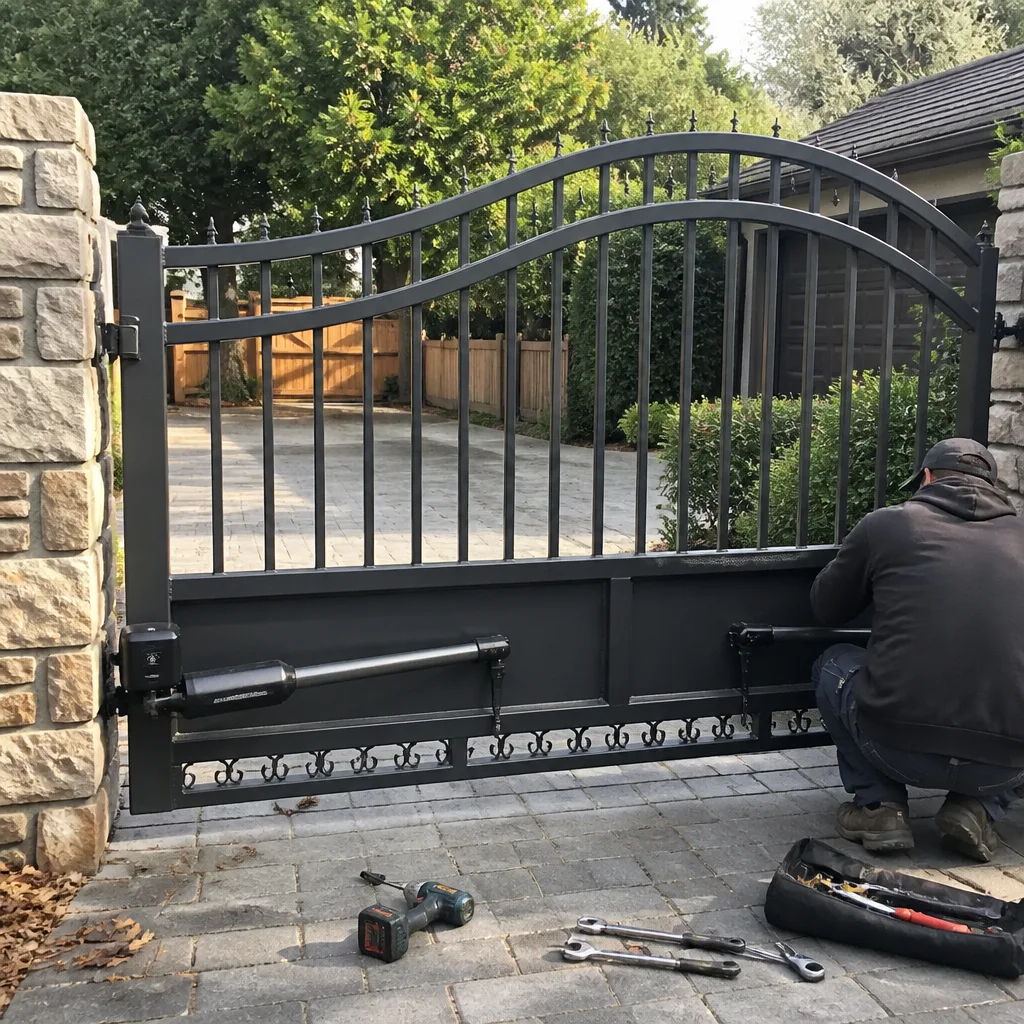 After
After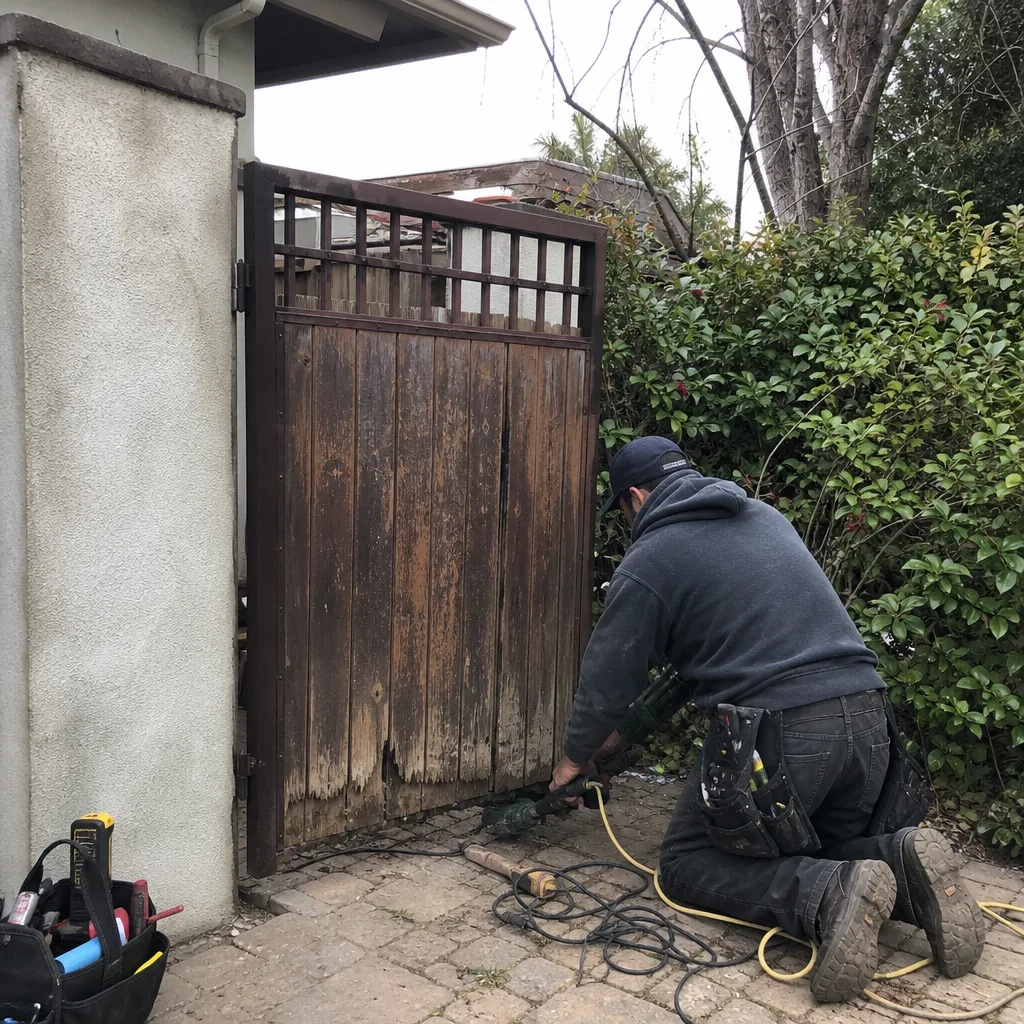 Before
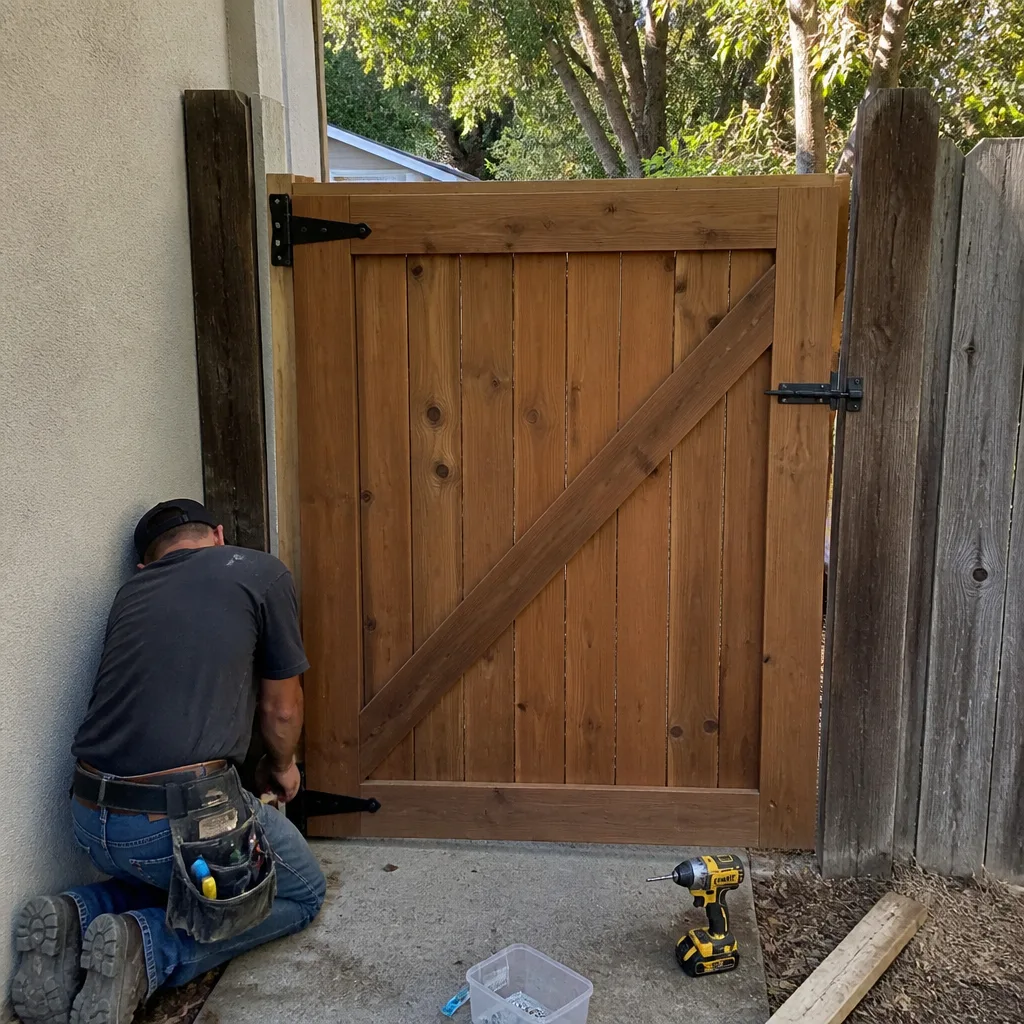 After
AfterSeasonal Gate Repair Care for Los Gatos: Year-Round Homeowner’s Guide
The wet-season failure that gate companies see most often in Los Gatos isn’t storm damage. It’s the slow foundation shift from clay soil expansion that started being measurable in November and became a call-out in February. We’ve pulled gates off their tracks in March that were perfectly aligned in September, and the homeowner never saw it coming because the movement happens in thousandths of an inch per week, not in a single dramatic event. This guide maps what actually happens to Los Gatos gates month by month, what to measure before the rains start, and how to read your own hardware so you’re not paying twice to rediscover the same problem. For hands-on help, our Gate Repair services cover every issue discussed here.
Quick Answer
Los Gatos gate owners should perform baseline measurements in September before clay soil expansion begins, clear oak and bay laurel debris monthly from tracks and photo-eyes, and schedule full mechanical inspections during the two optimal windows: mid-September before winter soil shift, and mid-May after thermal stress peaks but before summer heat intensifies. Most seasonal failures are preventable with documented observation rather than reactive repair.
Table of Contents
- Why Los Gatos Seasons Are Different: Microclimate, Soil, and Canopy
- September: The Baseline Month - Document Before the Shift
- October: Pre-Winter Preparation and the First Warning Signs
- November Through February: Rain Season and Clay Soil Expansion
- March: Post-Winter Assessment and Recovery
- April Through May: The First Thermal Stress Window
- June Through August: Summer Heat, Lubricant Failure, and Operator Cutouts
- Common Mistakes to Avoid
- When to Call a Professional
- Frequently Asked Questions
- The Bottom Line
BeforeAfterWhy Los Gatos Seasons Are Different: Microclimate, Soil, and Canopy
Los Gatos sits in a transition zone that makes generic seasonal advice nearly useless. The Santa Clara Valley floor collects and holds heat in summer, while the surrounding hills create drainage patterns that concentrate winter rainfall on specific soil types. Three factors dominate gate performance here in ways they don’t in neighboring cities.
Expansive clay soil. The hills above Los Gatos and the lower Almaden Valley corridor run high in montmorillonite clay. This soil expands when saturated, exerting lateral pressure on concrete gate posts and footer piers. A post set in September at 85 degrees and dry conditions can shift 3/8 inch by February. That doesn’t sound like much until you consider that a typical swing gate leaf has less than 1/2 inch of latch tolerance.
Oak and bay laurel canopy. The mature tree canopy in Los Gatos neighborhoods like Belgatos, Rinconada Hills, and the Almond Grove district drops debris year-round, but the pattern changes seasonally. Spring brings pollen and catkins that clog photo-eye lenses. Summer drops dry leaves that accumulate in track housings. Winter brings heavier branches and the sudden leaf drop of bay laurel after the first hard rain. Each debris type affects different components.
Theral exposure by orientation. West-facing gates on Los Gatos hillsides absorb afternoon sun that can push operator housing temperatures past 140 degrees in July. East-facing gates see rapid morning heating that causes thermal expansion in aluminum track before the lubricant has distributed. South-facing installations get the most cumulative exposure, but north-facing gates in canyon locations often have moisture retention problems that accelerate corrosion on chain drives.
These three factors, clay, canopy, and orientation, create a specific stress calendar. The rest of this guide follows that calendar.
September: The Baseline Month - Document Before the Shift
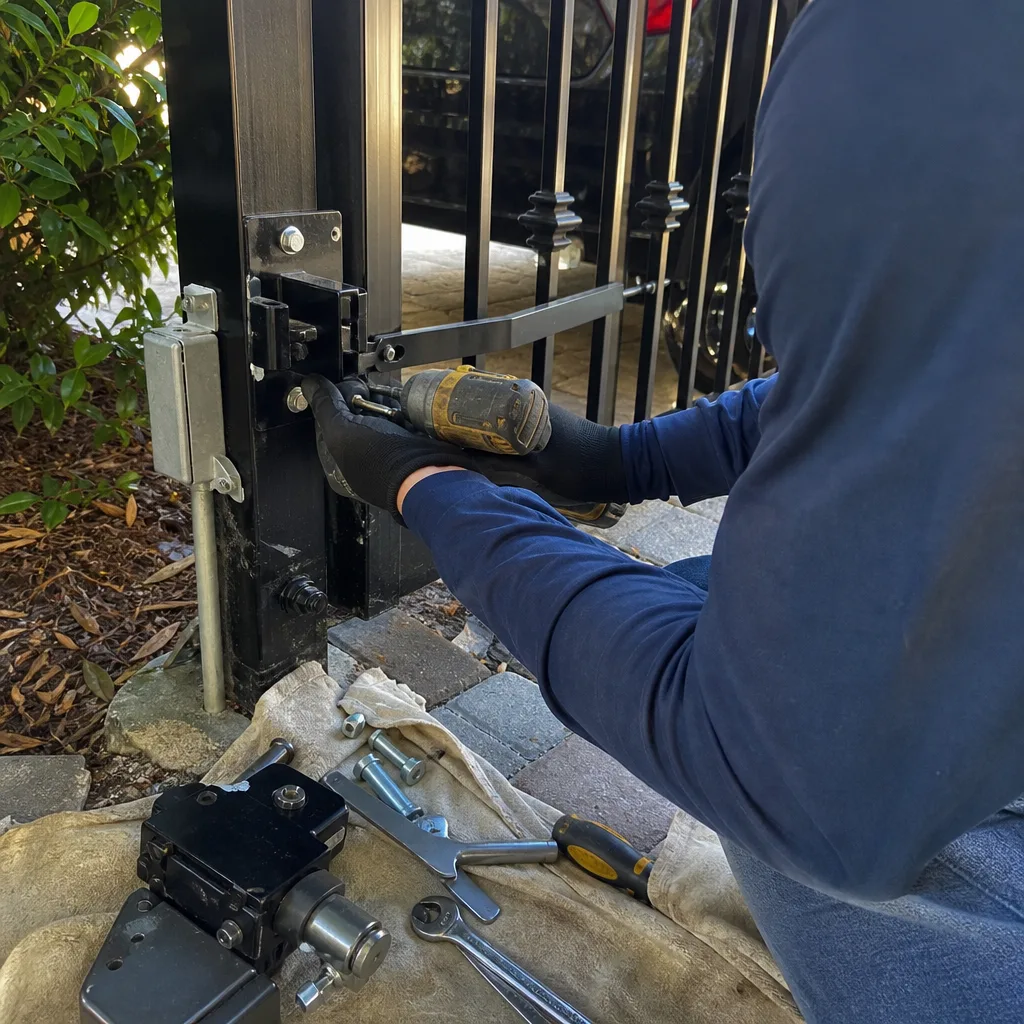
September is the driest, most stable month in Los Gatos. Soil moisture is at its annual low. Thermal expansion has peaked and stabilized. The canopy is between pollen season and leaf drop. This is when you establish the reference points that make winter drift objectively visible.
We recommend four baseline measurements, recorded with photographs and written notes. Under Haven Standard Clause 4, we document these on every September inspection we perform, and we encourage homeowners to maintain their own parallel records.
- Post plumb. Hold a 4-foot level against each gate post, both faces. Record the gap at the bottom in sixteenths of an inch. Photograph the level position with the post in frame. In February, the same measurement will reveal tilt that visual inspection misses.
- Latch engagement depth. With the gate closed, measure how far the latch bolt extends into the strike plate. Typical residential gates need 3/4 inch minimum for security. Record this to the nearest 1/16 inch. Winter post shift often shows here first, as the latch begins to scrape or miss entirely.
- Photo-eye alignment. Most operators, including LiftMaster and DoorKing models common in Los Gatos, have LED indicators that show beam alignment status. Record the color and any flicker pattern. Mark the sensor housing position on the mounting post with a pencil line. If the post shifts, the pencil line makes it visible.
- Operator limit-switch settings. Note the open and close limit positions. On Elite and Mighty Mule operators, these are typically screw-adjusted. Photograph the screw position against the housing. Winter binding from post shift often causes the operator to reach its force limit before the mechanical limit, which accelerates gear wear.
Store these records where you’ll find them in March. The value isn’t in the numbers themselves; it’s in the comparison. A homeowner who calls us in February and can say “the post was plumb in September, now it’s 3/16 out” gets a faster, more accurate diagnosis than one who says “it seems like it doesn’t close right.”
October: Pre-Winter Preparation and the First Warning Signs
October in Los Gatos brings the first reliable rains, usually in the third week. The soil hasn’t saturated yet, but surface drainage patterns reactivate. This is your last practical window for preventive work.
Clear drainage around posts. Gate posts need to shed water, not collect it. In the Shannon Valley and Vista del Lago areas, we’ve seen posts set in bowls that direct runoff toward the concrete. Use a shovel to create a 2-inch slope away from the post base for a radius of 12 inches. This simple grading change reduces soil saturation and the expansion that follows.
Inspect wood components before moisture absorption. If your Los Gatos gate has a wood frame or infill, check for cracks that will admit water. Redwood and cedar gates in the Almond Grove district often show end-grain checking that opens in summer and seals partially in fall. A thin application of penetrating oil to exposed end grain now prevents the swelling and fastener loosening that winter moisture causes.
Test the auto-close timer. Shorter daylight hours mean more gate cycles in darkness. Verify that the auto-close function, required by UL 325 for most residential installations, operates at the set interval. On FAAC and BFT operators common in Los Gatos hillside homes, the timer is menu-adjusted. A gate that stays open because the timer drifted creates both a security exposure and a motor thermal issue if the operator holds the open position against a binding track.
Lubricate with winter-grade product. Summer heat thins lubricant. October is the time to clean and reapply with a product rated for the temperature range you’ll actually see. For chain drives, use a lithium-based grease with NLGI grade 2. For rack-and-pinion systems, a dry PTFE lubricant resists debris accumulation better than wet products.
This is also when we begin seeing the first calls from Los Gatos homeowners who noticed something in September and waited. The latch that scraped once in late September becomes a binding failure after the first heavy rain. The photo-eye that flickered occasionally in dry air fails completely when morning fog condenses on a dirty lens. October preparation prevents October emergency calls.
November Through February: Rain Season and Clay Soil Expansion
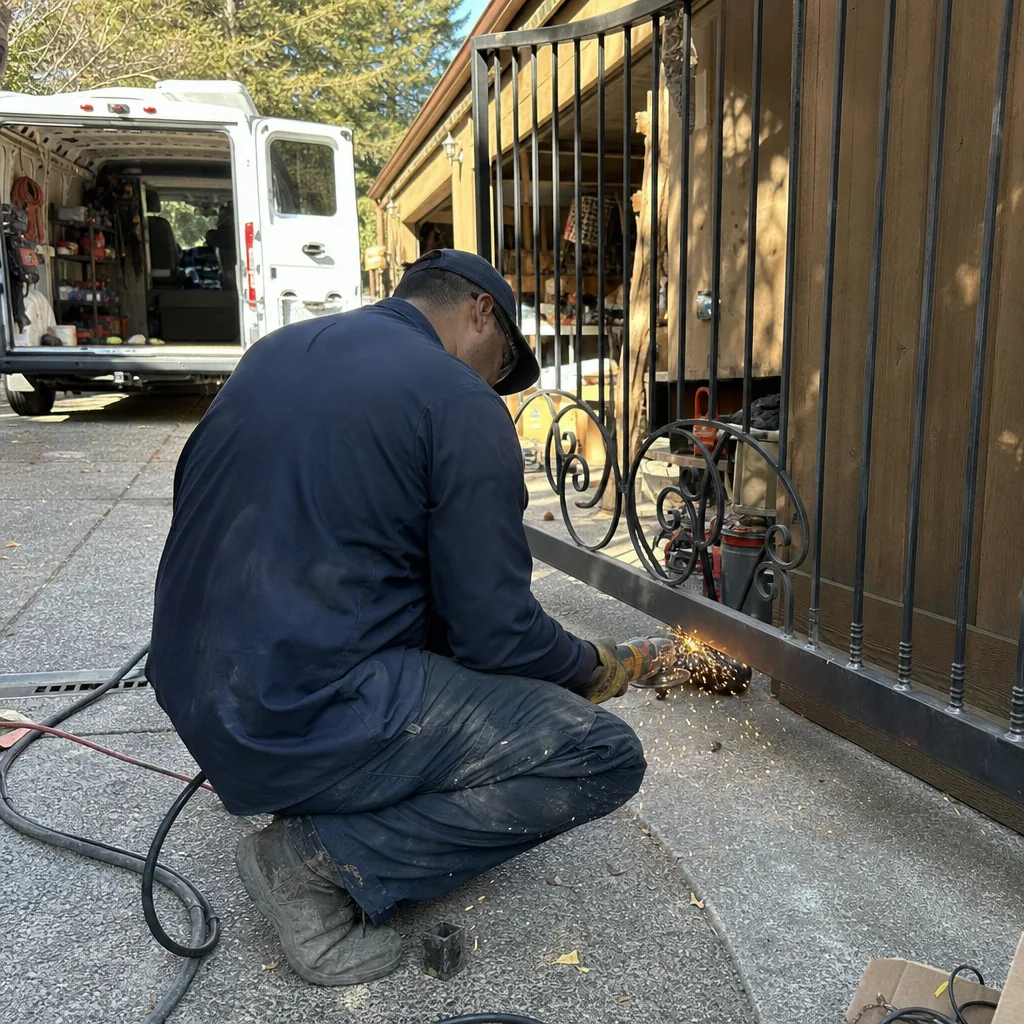
The Los Gatos rainy season averages 23 inches, concentrated between November and March. The critical factor for gates isn’t the rain itself but the soil response. Clay soil reaches maximum expansion 30 to 60 days after sustained saturation. A post that was stable in October can begin moving in December and reach maximum displacement in January or February.
What to watch weekly.
- Latch contact quality. Does the gate latch cleanly on the first cycle, or does it require a second attempt? Increasing retry frequency is often the first observable symptom of post shift.
- Operator force settings. Most modern operators, including Linear and Viking models, have force-adjustment potentiometers. If you find yourself increasing force to achieve consistent closure, the gate is binding somewhere. Increasing force masks the problem and accelerates mechanical wear.
- Track or roller noise. New scraping, popping, or grinding sounds indicate geometry change. Document the sound character and when it occurs, cold morning versus afternoon.
- Photo-eye false triggers. Rain on a dirty lens, spider webs that collect mist, or post shift that changes beam geometry all cause intermittent stops. Note whether the problem occurs in specific weather conditions.
The drainage check after each major storm. Walk the gate line after rains exceeding 1 inch in 24 hours. Look for standing water within 18 inches of any post. Look for soil erosion that exposes concrete footings. In the hills above Los Gatos, we’ve seen storm runoff concentrate against posts that were properly graded in October but lost their drainage channel to leaf accumulation.
When to call before spring. If latch engagement has decreased by more than 1/4 inch from your September baseline, or if the operator requires force adjustment more than once, the geometry has shifted enough that spring correction will be more expensive than winter adjustment. A post that’s 1/4 inch out in January may be 1/2 inch out by March as soil continues to expand. Early intervention prevents the cascading failures, stripped gears, bent arms, cracked welds, that we document in March and April calls.
Under our 365-Day Done Right Promise, any adjustment we make in winter is covered if further settlement requires revisiting the same component. We document the post position and soil conditions so we’re not charging twice for the same underlying movement.
March: Post-Winter Assessment and Recovery
March is the highest-call-volume month for gate repair in Los Gatos. Soil expansion peaks, the accumulated effect of four months of moisture and thermal cycling manifests, and homeowners who tolerated intermittent problems through winter reach their limit.
Perform the September comparison. Retrieve your baseline measurements. Check post plumb, latch depth, photo-eye alignment, and limit settings against your September records. The difference is your objective damage assessment. A gate that “doesn’t work right” becomes “post shifted 5/16 inch northwest, latch engagement reduced from 13/16 to 7/16, close limit now reached at 85% of previous travel.”
Inspect for secondary damage. Primary shift causes secondary wear. Check these specifically:
- Gearbox and arm bushings. Binding from post shift increases resistance through the full cycle. Operator arms, particularly on older LiftMaster and DoorKing units, develop oval wear in their pivot bushings. Rock the arm manually; detectable play indicates replacement need.
- Track welds and fasteners. Rolling gates on hillside Los Gatos properties often have welded track brackets that fatigue from repeated stress. Look for rust streaks originating from weld cracks, the first visible sign of failure.
- Chain or belt tension. Sliders and swing gates with chain drive develop uneven wear when the gate binds in one direction. Check for tight spots and slack variation through the cycle.
- Control board thermal history. Operators that repeatedly hit force limits log error codes. On Elite and Mighty Mule units, access the history menu and note any overcurrent or obstruction events. Patterned events, same time daily or same weather condition, indicate mechanical binding rather than random obstruction.
Schedule correction, not just repair. March is when we see the difference between companies that fix the symptom and companies that fix the cause. A post that’s shifted from clay expansion needs more than latch adjustment. It needs either post stabilization, drainage improvement, or in persistent cases, a floating footer design that accommodates seasonal movement. We price each option in writing before work starts, under Haven Standard Clause 1, so the homeowner can compare one-time correction against recurring seasonal repair.
The documentation handoff. When we complete March recovery work, we provide the same four-measurement record we use in September, now with both values visible. The homeowner sees exactly what changed and what was corrected. This record becomes the baseline for the following September, closing the documentation loop.
April Through May: The First Thermal Stress Window
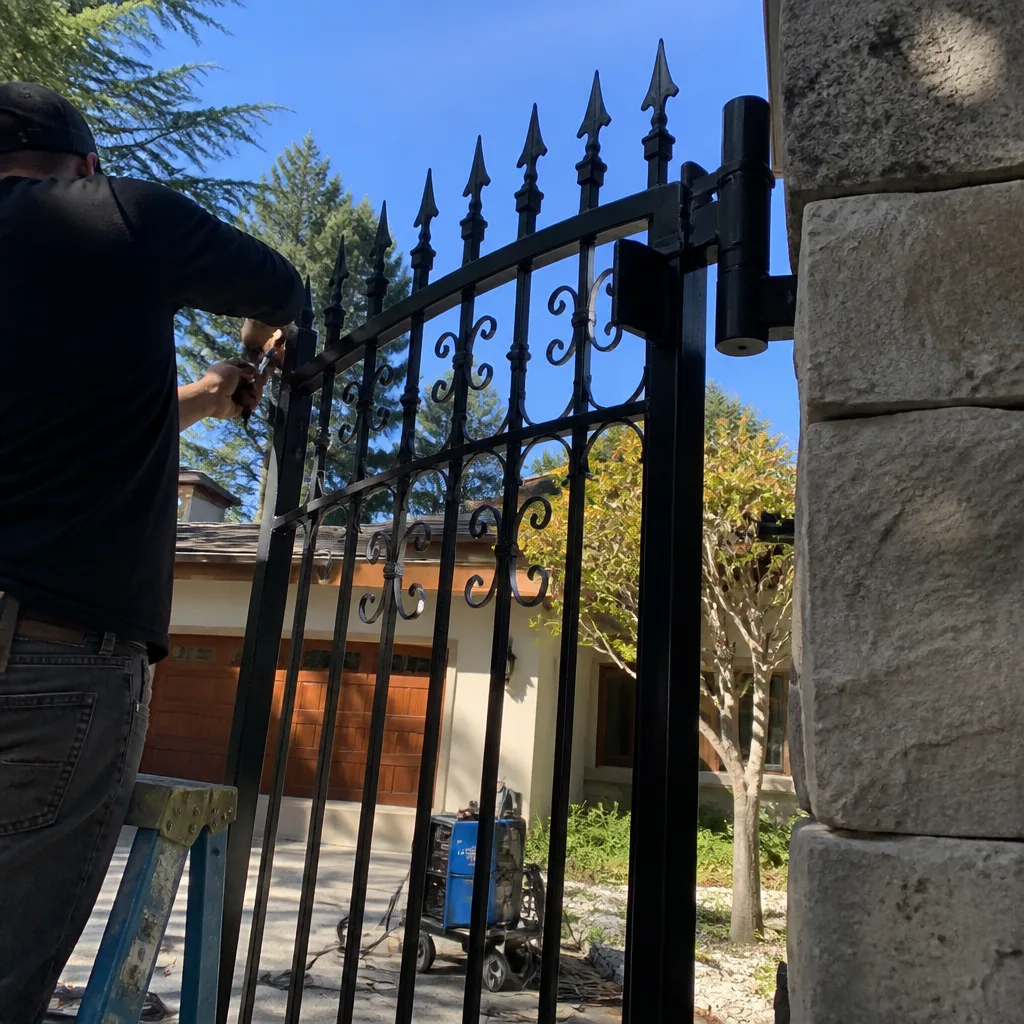
April brings drying soil and the beginning of thermal stress. This is the second optimal inspection window, after September and before summer peak. Soil is still moist enough to work without special equipment, but the expansion phase is ending. Daytime temperatures in Los Gatos reach the 70s, enough to reveal thermal expansion issues that winter cold masked.
Check for soil contraction gaps. As clay dries, it shrinks. Posts that were tight in wet soil may develop void space underneath. Test by probing with a screwdriver around the post base. A post that rocks slightly in dry soil will pump and deteriorate when the next wet season begins. Grouting or compaction now prevents next winter’s failure.
Verify thermal expansion clearance. Aluminum track expands approximately 0.000013 inches per inch per degree Fahrenheit. A 20-foot track section heated from 50 to 90 degrees expands roughly 1/8 inch. This seems minor, but on rolling gates with fixed end stops, the accumulation can cause binding or jump-off. Check that end stops have adequate clearance and that mounting brackets allow slight longitudinal movement.
Service the operator before summer demand. Gate motor and opener service in Los Gatos peaks in July and August. Scheduling in April or May means faster dispatch, cooler working conditions for the technician, and identification of components that won’t survive summer thermal load. We check capacitor ESR (equivalent series resistance), a predictor of failure under thermal stress, on every spring service. Capacitors with elevated ESR often function normally in moderate temperatures but fail when housing temperatures exceed 120 degrees.
Evaluate access control components. Keypads, card readers, and safety loops experience their own thermal patterns. Keypad membranes crack from UV exposure, accelerated by the angle of spring sun. Safety loop detectors drift in sensitivity with temperature. A full system test in April, including all input devices and safety functions, prevents the July failure that strands a homeowner outside their gate.
June Through August: Summer Heat, Lubricant Failure, and Operator Cutouts
Los Gatos summer temperatures reach the 90s regularly, with hillside exposures exceeding 100 degrees. Gate operators have thermal protection circuits that shut down the motor when internal temperature exceeds safe limits. This is not a malfunction; it’s a protective function. But frequent thermal cutout indicates either excessive load, inadequate ventilation, or degraded lubrication increasing mechanical resistance.
Operator housing temperature management. West-facing operators in exposed locations, particularly on properties above Highway 17, benefit from simple shade structures. A 6-inch overhang above the operator housing reduces peak temperature by 15 to 20 degrees. Ensure that any shade structure allows airflow; enclosed boxes trap heat. We document housing temperature with infrared thermometers on summer calls, and we show the homeowner the before-and-after when shade is added.
Lubricant degradation. Summer heat thins lubricants and accelerates oxidation. Chain drives that were properly greased in October may run dry by July. The symptom is metallic clicking or squealing during operation, particularly in the first cycle of the day when the chain has settled into its dry spots. Re-lubricate with high-temperature-rated product. For rack-and-pinion systems, check for grease migration, the tendency of lubricant to flow downhill and pool at the low end, leaving the upper rack dry.
Photo-eye sun interference. Direct sunlight on photo-eye receivers can overwhelm the infrared detector, causing false obstruction signals. This is most common on east-facing gates in morning hours and west-facing gates in late afternoon. Symptoms are specific: the gate opens normally but reverses or stops during close, only at certain times of day. Solutions include hooded photo-eye housings, repositioning to shaded locations, or upgrading to modulated-beam sensors that reject ambient light. On gate installation in Los Gatos projects, we specify modulated sensors for exposures with direct sun risk.
Battery backup verification. Summer heat degrades lead-acid batteries in operator backup systems faster than cold. Test backup function monthly by disconnecting AC power and cycling the gate. If cycle count or speed is reduced, battery capacity has declined. Replacement before failure prevents the stranded-gate scenario during summer power outages, which in Los Gatos often coincide with fire-season PSPS (public safety power shutoff) events.
The debris shift. Summer debris is dry, light, and highly mobile. Oak leaf accumulation in track housings becomes tinder-dry and easily ignited if sparks occur from electrical faults. Clear debris monthly, not seasonally, in summer. Check specifically for bird nesting in operator housings and control boxes. The warm, sheltered environment attracts nesting, and the resulting material is both a fire risk and a conductive path for moisture when fog returns.
Common Mistakes to Avoid
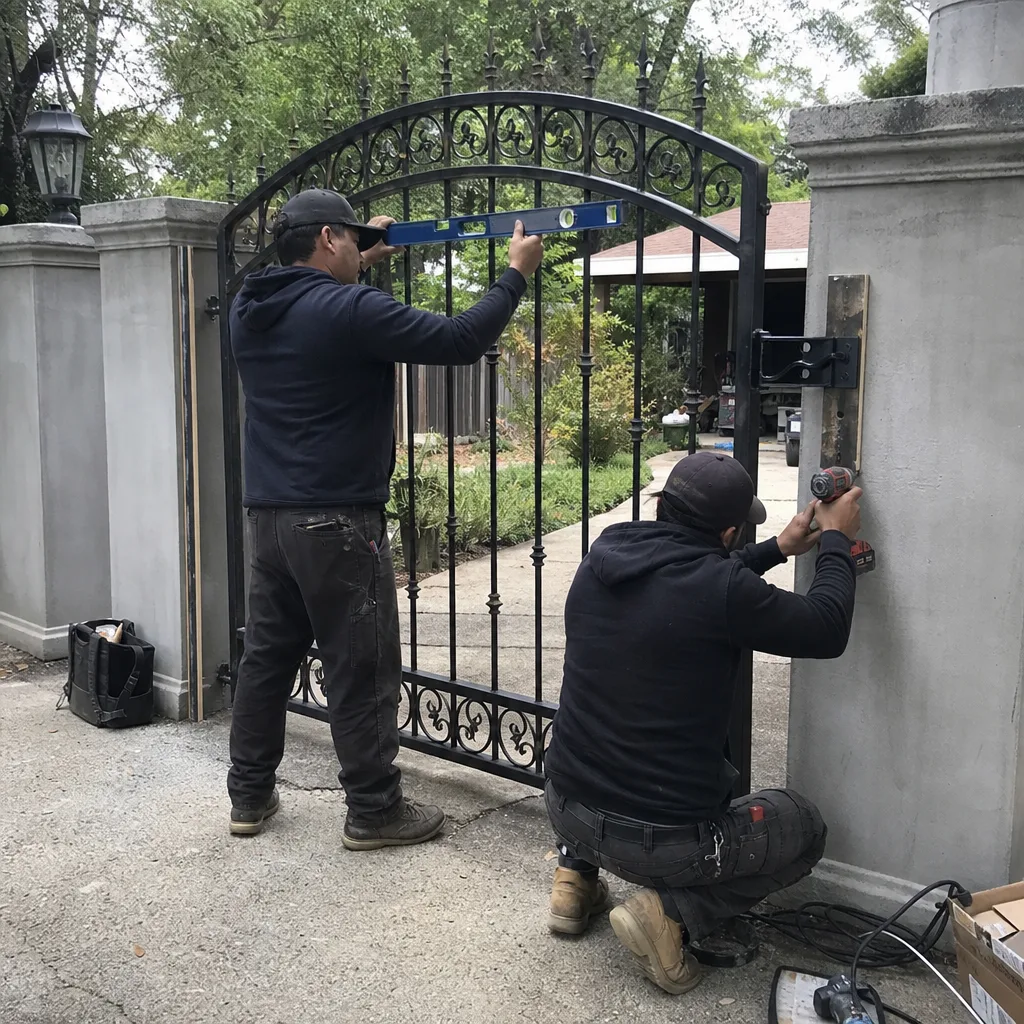
- Waiting for visible damage. By the time a Los Gatos gate shows obvious problems, latch missing, operator alarming, track derailed, the underlying cause has been active for months. The September baseline measurement catches drift before it becomes failure.
- Using pressure washers on operators or control boxes. The moisture intrusion from high-pressure spray causes more damage than the dirt it removes. Wipe housings with a damp cloth and dry immediately. Never direct water at gasket seams or conduit entries.
- Adjusting force limits to compensate for binding. Increasing operator force masks mechanical problems and creates safety hazards. A gate that requires elevated force to close will not stop properly for obstruction. Fix the binding; don’t override the protection.
- Ignoring orientation-specific exposure. A maintenance routine developed for a previous home in a different exposure often fails in Los Gatos. West-facing gates need different lubricant, different shade, different inspection frequency than north-facing gates in the same neighborhood.
- Clearing debris without checking where it came from. Heavy debris accumulation often indicates canopy health decline. A tree dropping unusual quantities may have root damage, disease, or structural instability that threatens the gate structure itself. Note debris pattern changes and consult an arborist when accumulation rates shift significantly.
- Skipping documentation between technicians. When multiple companies service the same gate, each starts from zero. The homeowner who maintains their own measurement record, or chooses a single company that documents every visit, avoids the repeated discovery charges that fragmented service creates.
- Treating all operators identically. The nine brands we service, LiftMaster, FAAC, BFT, Linear, Viking, Ghost Controls, DoorKing, Elite, and Mighty Mule, have different thermal characteristics, different lubrication points, different error code systems. Generic “gate service” that doesn’t account for specific manufacturer requirements often misses critical items.
When to Call a Professional
Call when baseline comparison shows measurable change, not when failure is total. Call when the operator requires force adjustment more than once in a season. Call when photo-eye problems correlate with specific weather or time of day, indicating systematic rather than random cause. Call when you find corrosion, cracks, or wear that you cannot identify the source of.
For Los Gatos homeowners, Vance Gate Repair Los Gatos home offers free estimates. We review your baseline documentation, perform our own four-point measurement, and provide a written scope and price before any work begins. Call (831) 246-7187. A live person answers at any hour, and we dispatch background-checked, uniformed technicians with name and photo provided before arrival.
Frequently Asked Questions
A seasonal inspection and adjustment typically runs $180 to $280 for a standard residential swing or slide gate, depending on access conditions and whether the operator requires internal service. Full mechanical service including lubrication, limit verification, safety system test, and documentation runs $320 to $450. We provide the written price before any work starts under Haven Standard Clause 1. Call (831) 246-7187 for an exact quote, estimates are free.
Yes. Expansive clay in the Los Gatos hills can exert lateral pressure exceeding 3,000 pounds per square foot on a post surface. A 12-inch diameter post presents roughly 7 square feet of surface area to this pressure. The result is measurable tilt, cracking at the footing transition, or in severe cases, complete footing failure. Drainage management and post design that accommodates movement are more cost-effective than repeated seasonal repair.
In Los Gatos, monthly clearing is the minimum during active leaf drop, October through December and May through July for oak, with lighter but consistent accumulation year-round from bay laurel. Rolling gates with exposed lower track need more frequent attention than swing gates. Photo-eyes should be cleaned every two weeks when pollen or dust is active.
Thermal expansion and photo-eye sun interference are the two most common causes. Afternoon sun on west-facing photo-eyes can overwhelm the receiver. Simultaneously, aluminum track and steel components expand at different rates, potentially binding at peak temperature. Document the failure time and gate orientation, this pattern diagnosis is highly specific and points directly to the correction needed.
Our inspection covers post plumb and footing condition, hinge and pivot wear measurement, latch engagement and strike alignment, track or roller condition and clearance, chain or belt tension and wear, operator limit and force settings, photo-eye alignment and response time, safety edge or loop function, control board error history, and battery backup test. Every item is photographed and recorded, with the log provided to the homeowner. This is standard on every visit, not an upgrade.
We service and repair nine major automation brands: LiftMaster, FAAC, BFT, Linear, Viking, Ghost Controls, DoorKing, Elite, and Mighty Mule. We do not steer customers toward replacement with a different brand when repair of the existing unit is practical. Our inventory includes common failure parts for all nine brands, and we can source manufacturer-specific components for older units that are no longer in production.
The Bottom Line
Los Gatos gate care is not about dramatic seasonal preparation. It’s about recognizing that this specific microclimate, clay soil, oak canopy, and thermal exposure pattern, creates predictable stress on predictable schedules. The homeowner who documents baseline measurements in September, clears debris monthly, and compares rather than guesses catches problems when they’re adjustments, not replacements. The homeowner who waits for obvious failure pays for the cascading damage that preventable drift causes.
We built our practice on documented evidence, written prices, and the 365-Day Done Right Promise because we’ve seen too many Los Gatos homeowners pay twice for the same underlying problem. Seasonal care, done with measurement and record, breaks that cycle.
Written by Adrian Vance, Owner at Vance Gate Repair Los Gatos, serving Los Gatos since 2014.