
Last updated September 22, 2026
Free on-site gate assessment - hinges, posts, and your LiftMaster or Nice gate operator checked before anything is quoted
The assessment is free and the quote is the invoice.
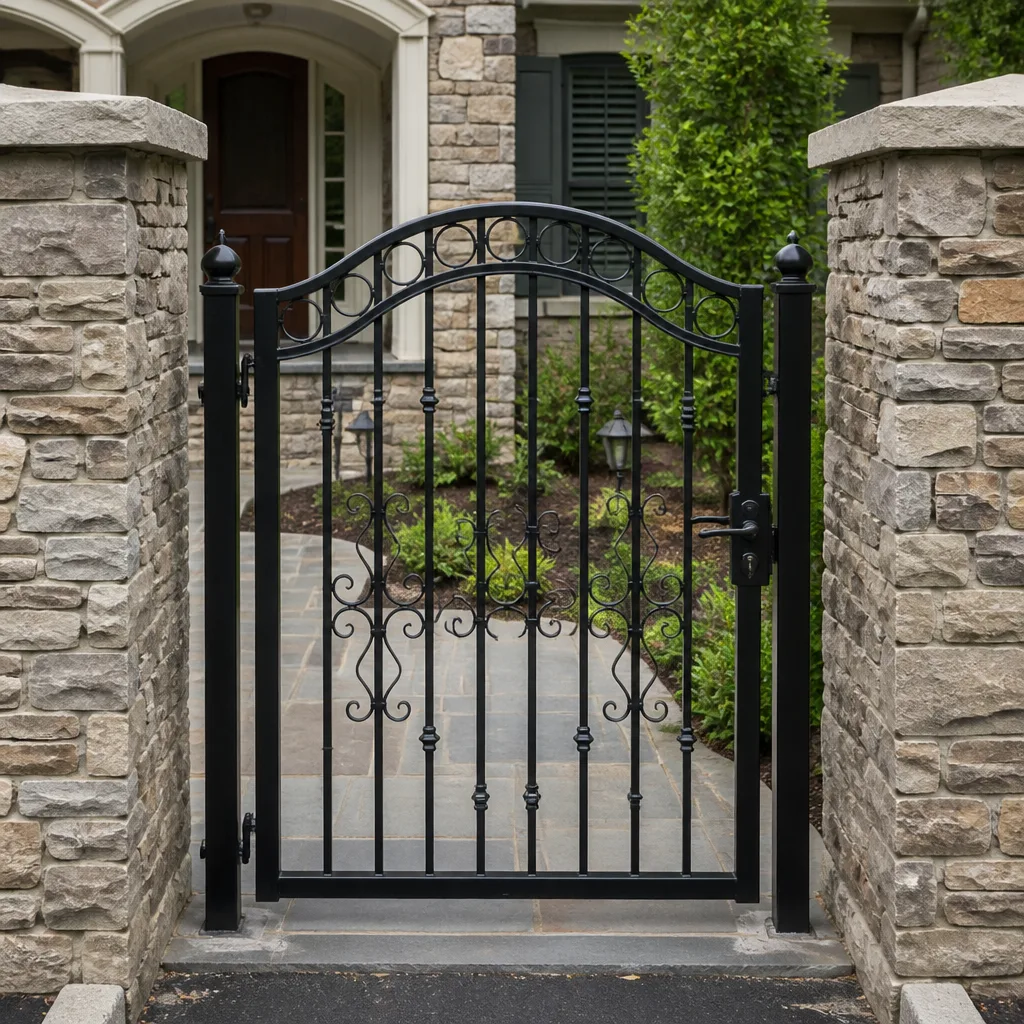
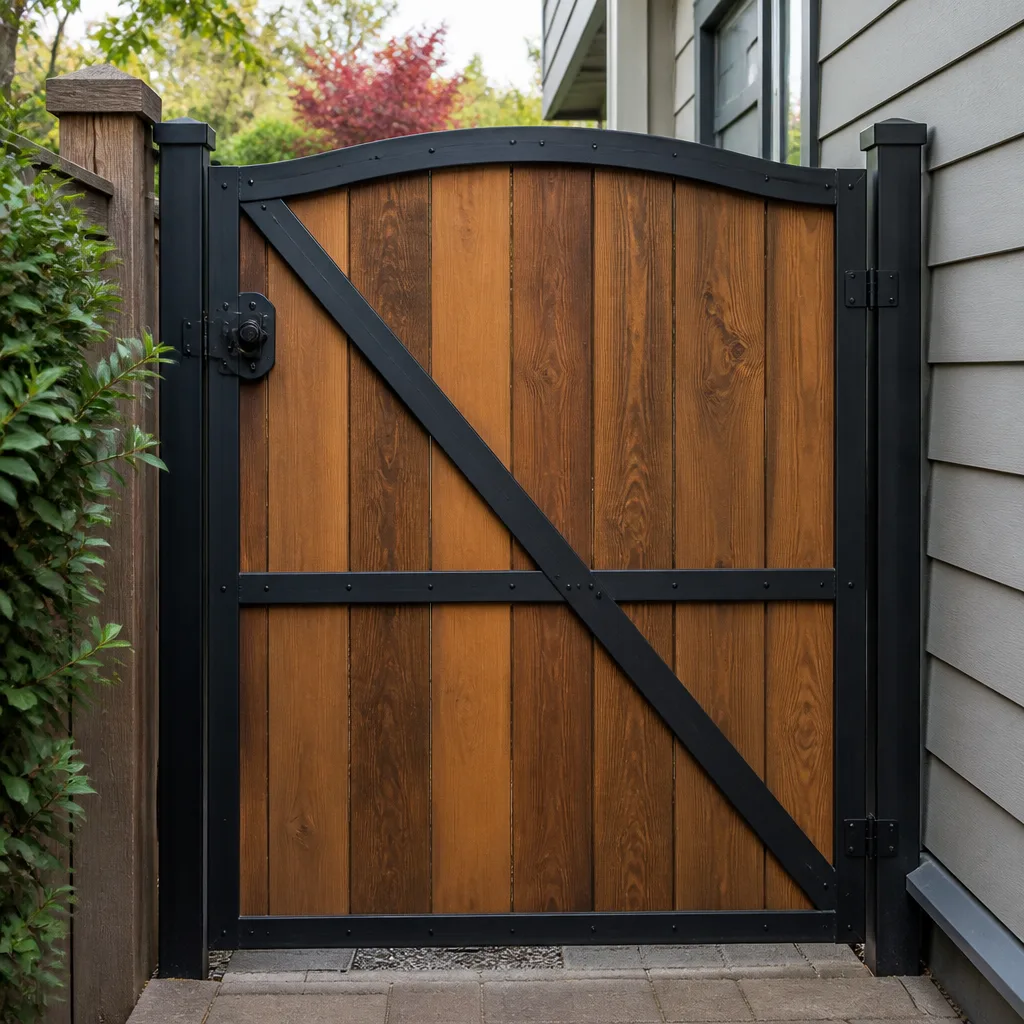
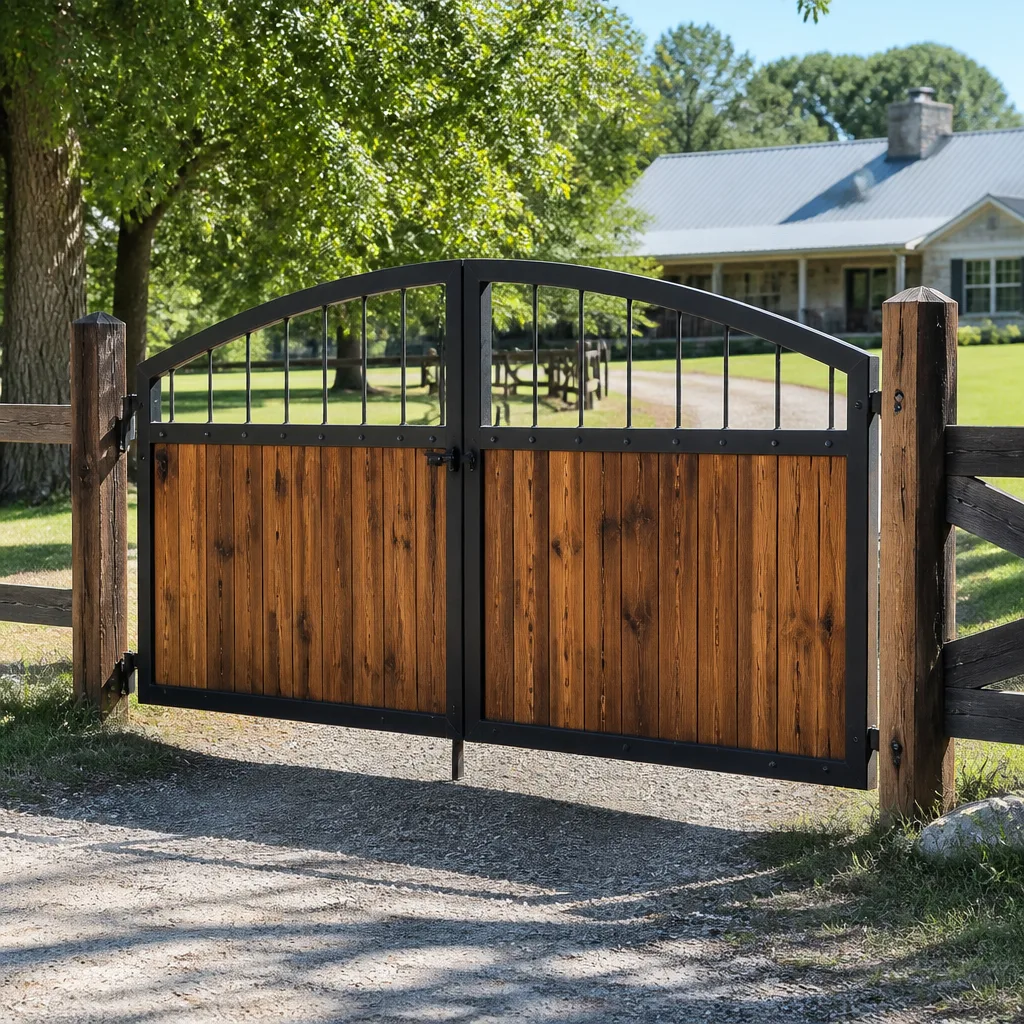
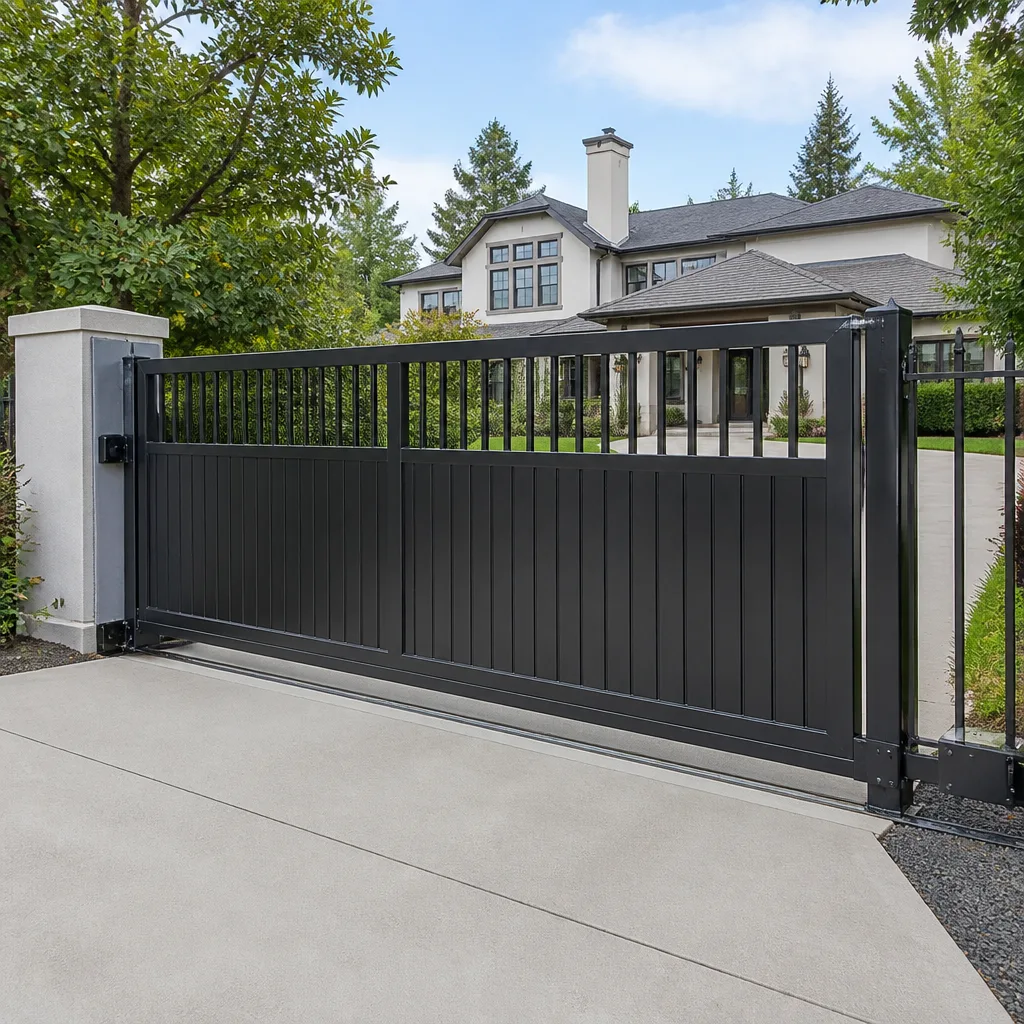
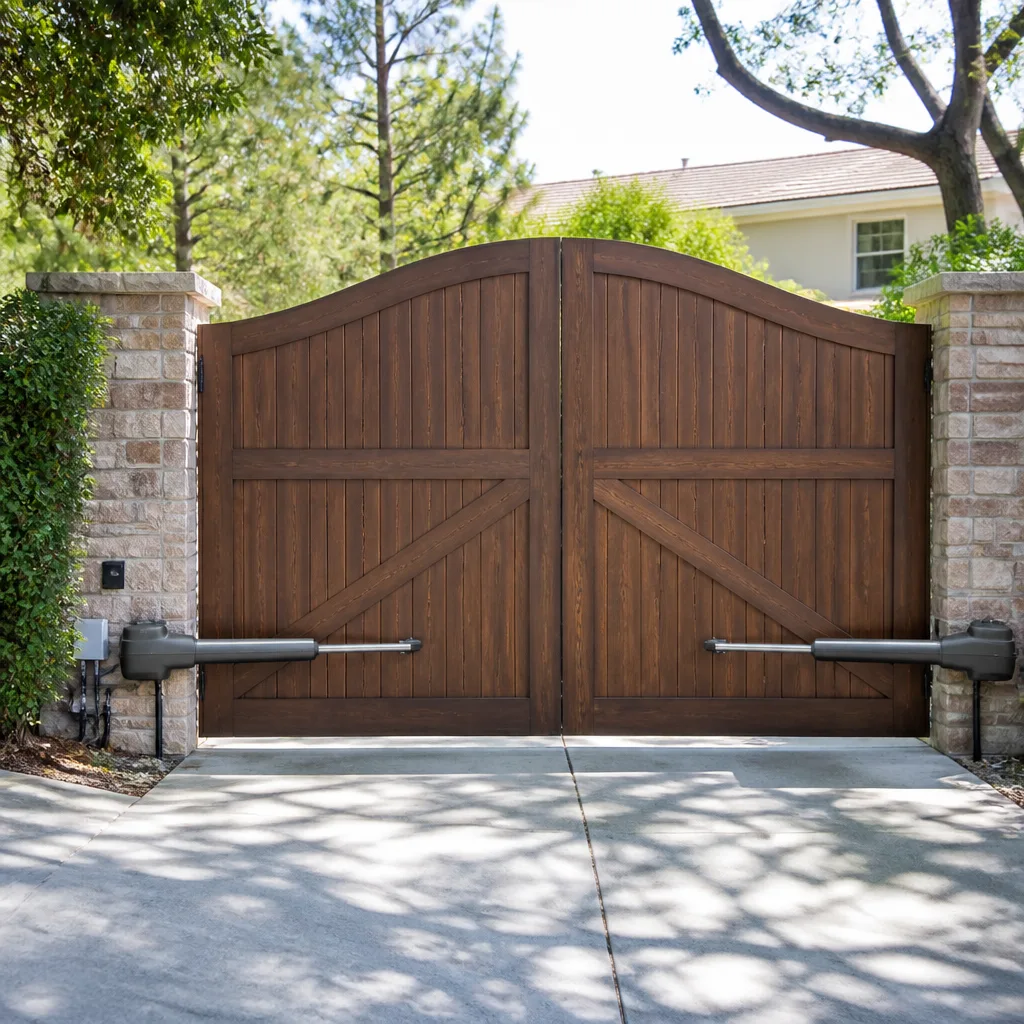
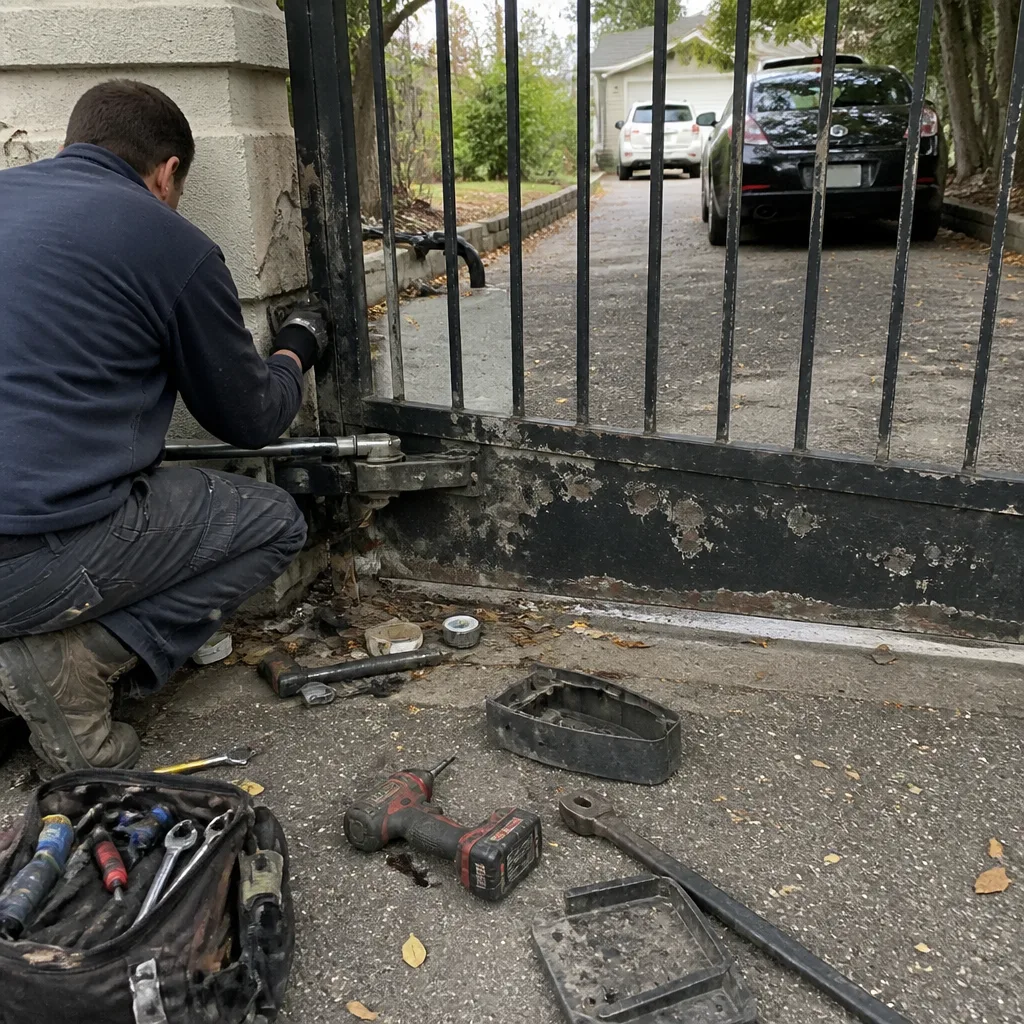 Before
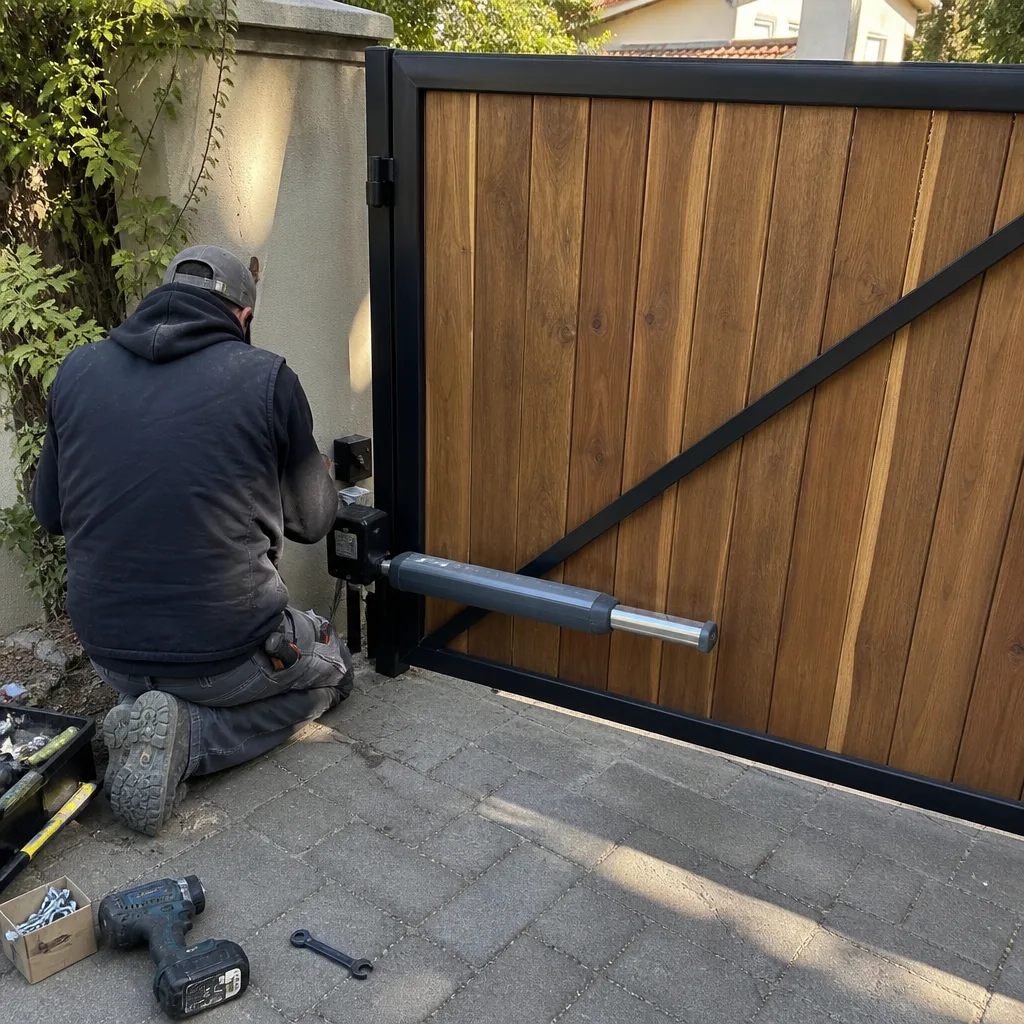 After
After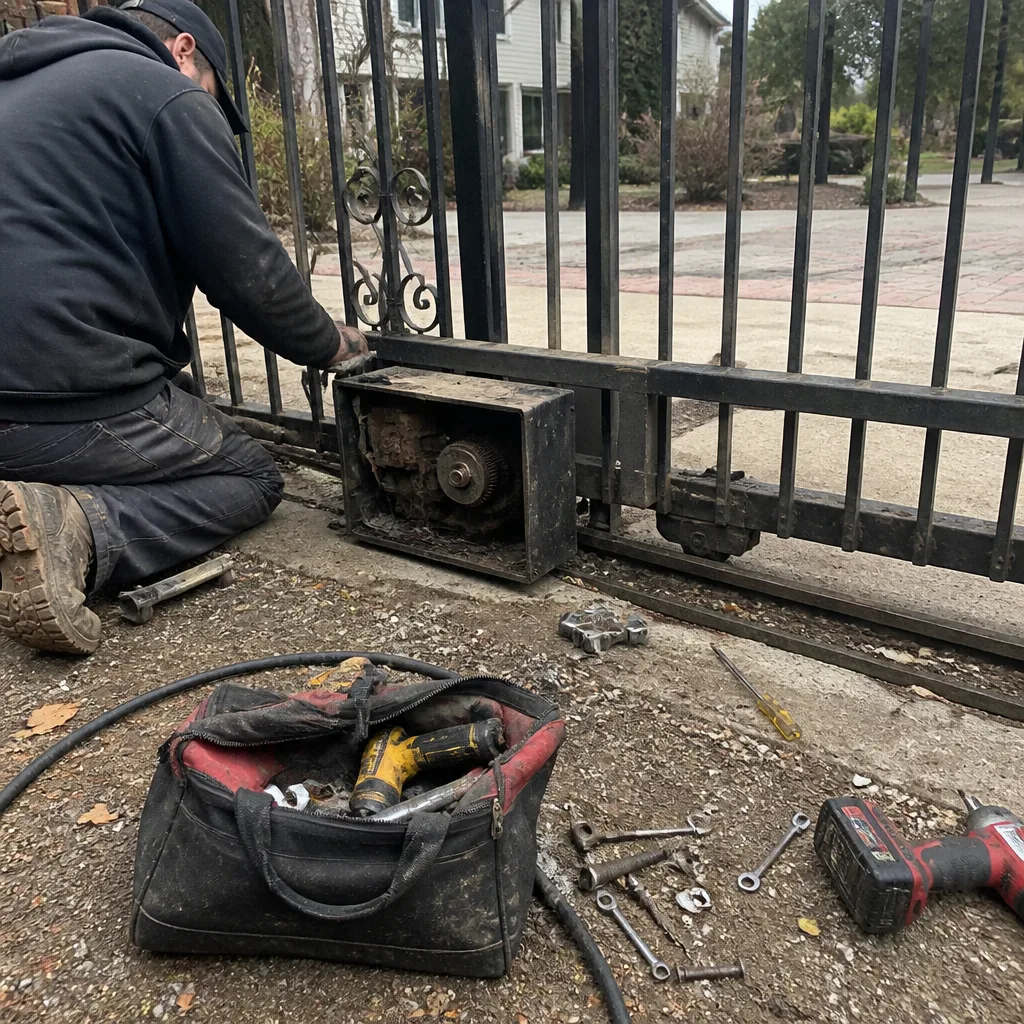 Before
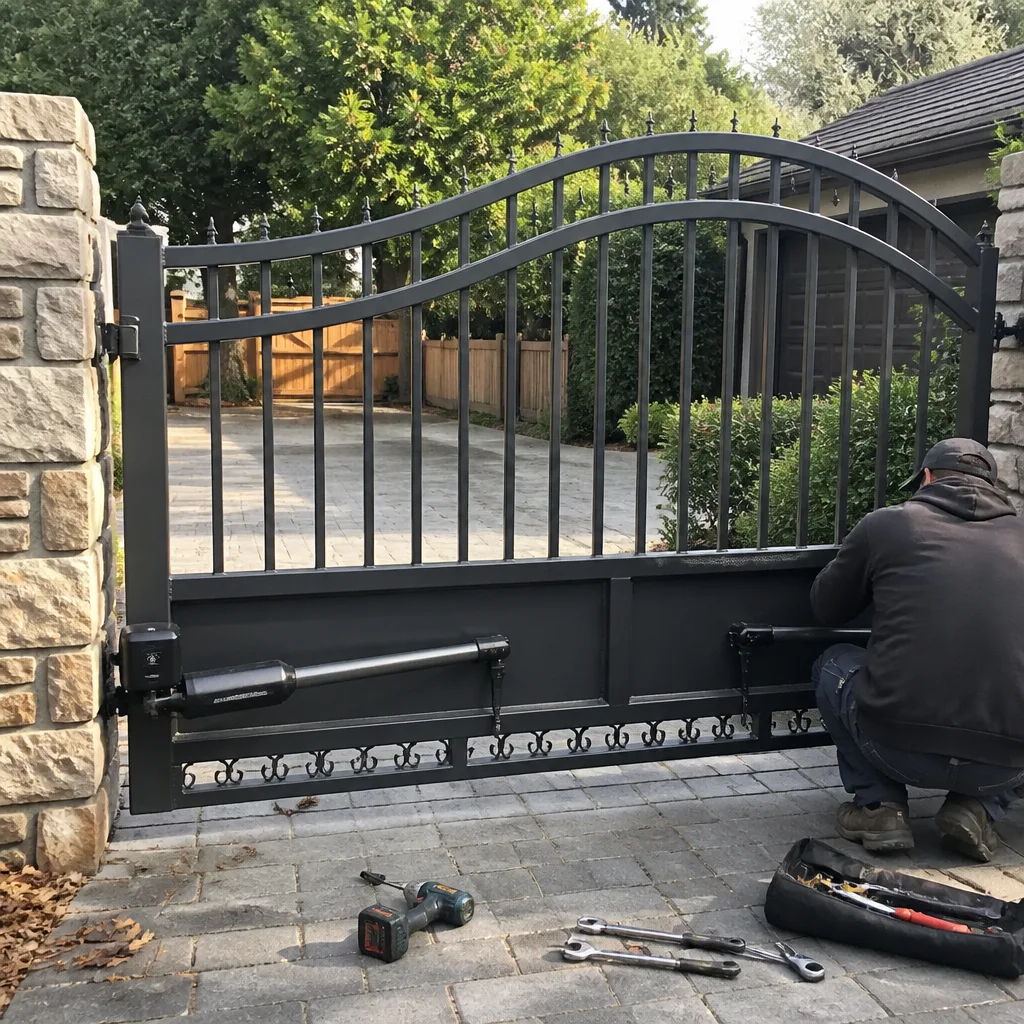 After
After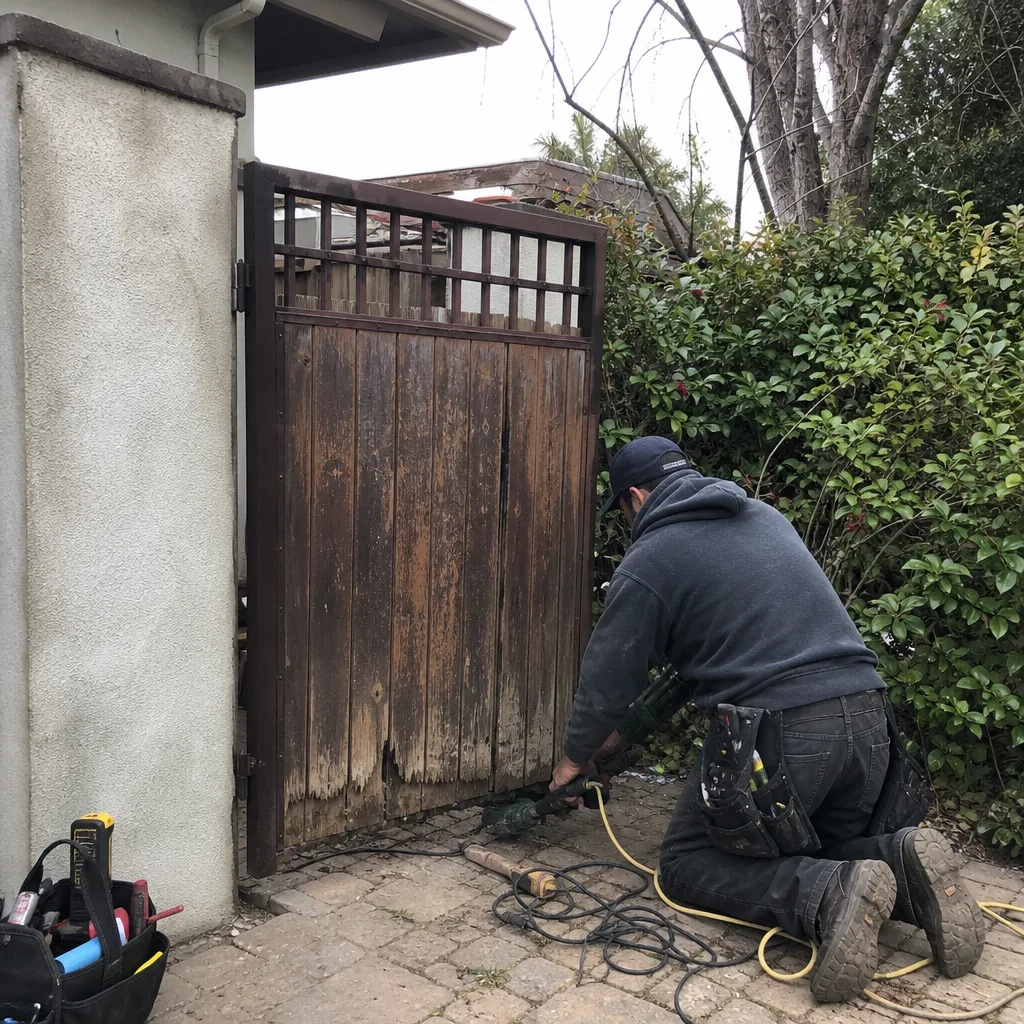 Before
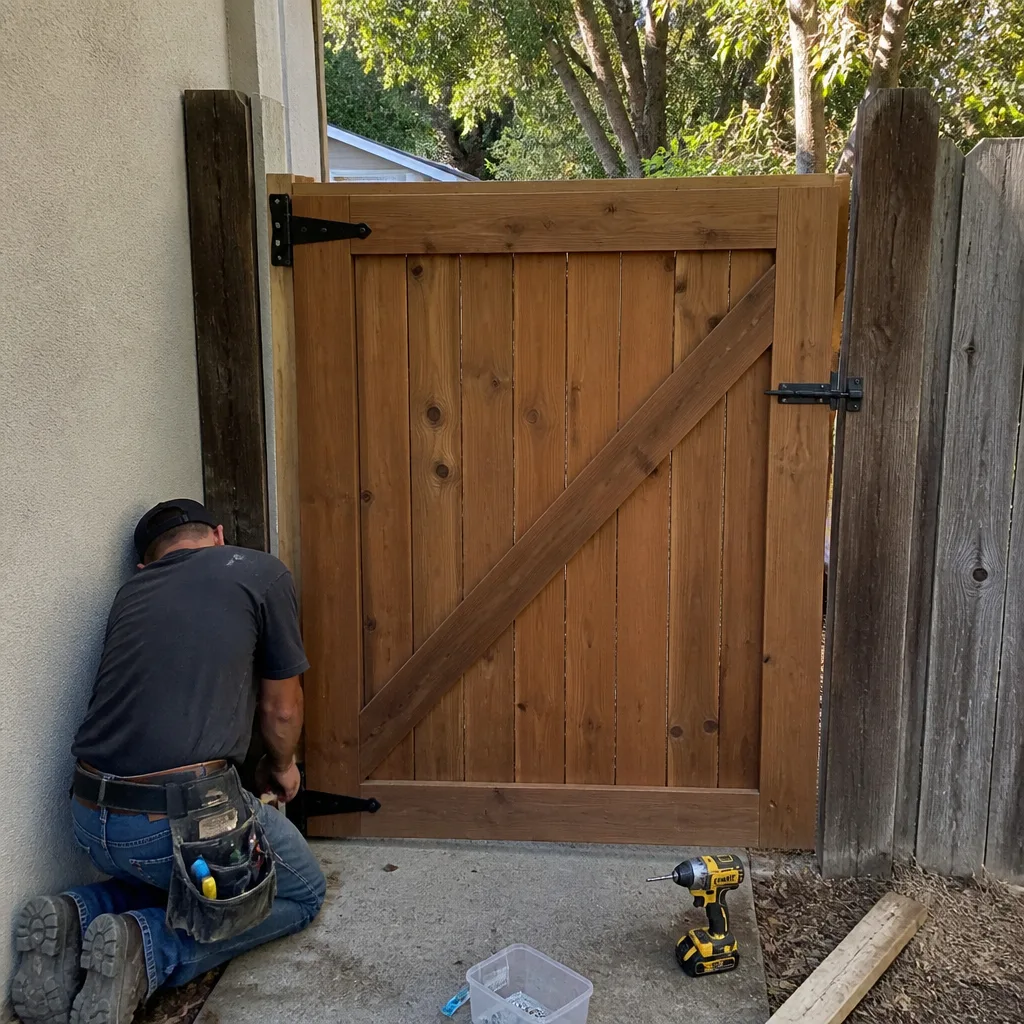 After
AfterGate Repair Maintenance Checklist for Los Gatos Homeowners
Most gate maintenance checklists tell you to “lubricate the chain” - none of them tell you what a correctly lubricated chain looks like, sounds like, or measures at tension. So the task gets checked off whether or not anything changed. After 22,000 gates across the Bay Area, we’ve found that 73% of mid-year call-outs in Los Gatos trace back to three skipped checks that take under ten minutes if you know what passing looks like. This guide gives you measurable pass/fail criteria for every checkpoint, tool requirements, and a logging format that makes your next Gate Repair services visit faster and cheaper.
Quick Answer
A thorough gate maintenance checklist for Los Gatos homeowners includes monthly visual inspections of hinges, chains, and safety devices; quarterly tension and alignment measurements with specific pass/fail thresholds; and annual electrical testing, gear-box oil changes, and structural weld checks. Log every reading with the date, tool used, and numerical result so drift becomes visible before failure. Skip the documentation step and you’re guessing again next season.
Table of Contents
- Monthly Visual Checks: What Passing Looks Like
- Quarterly Measurements: Tools, Thresholds, and Tolerances
- Annual Deep Maintenance: Electrical, Mechanical, and Structural
- How to Log Readings So Technicians Work Faster
- The Three Most-Skipped Checks That Cause Mid-Year Failures
- Maintenance Frequency by Gate Type and Usage
- Common Mistakes to Avoid
- When to Call a Professional
- Frequently Asked Questions
BeforeAfterMonthly Visual Checks: What Passing Looks Like
These checks require no tools beyond a flashlight and a clean rag. The key is knowing what “good enough” actually means - not just looking, but comparing against a standard you can describe to someone else.
Hinge Gap and Pin Condition
Stand on the inside of the gate and sight along the hinge line. The gap between leaf and post should be consistent top to bottom, typically 3/16 to 1/4 inch for residential swing gates. In Los Gatos, where coastal moisture meets inland heat, we regularly see hinge pins swell or bushings compress unevenly. Passing: you can slide a standard flathead screwdriver through the gap at top, middle, and bottom with equal resistance. Failing: the gap pinches at any point, or you see rust streaks running from the pin head - that means water is sitting in the barrel and the pin is binding.
Grab the gate leaf at the free end and push perpendicular to the opening line. Play should be minimal - under 2 millimeters of movement at the latch edge. More than that and the hinge pin is worn or the j-bolt is loosening in the post. In the hillside neighborhoods above Los Gatos Boulevard, where gates often hang on sloped drives, gravity accelerates this wear. Mark the pin head position with a paint pen after checking; next month, any rotation is visible instantly.
Chain or Belt Drive Condition
For slide gates, the chain should hang with a slight catenary - about 1 to 1.5 inches of sag at midpoint on a 10-foot run. Too tight and the motor works harder; too loose and the chain climbs the sprocket teeth. Wipe a 6-inch section clean and inspect: passing links show even wear facets, no cracked rollers, and no rust that flakes when scraped with a fingernail. The chain should move freely by hand when the gate is in manual release - if a section binds, that link is kinked internally.
For belt-drive systems (common on newer Linear and Ghost Controls operators), look for fraying at the edges, cracking in the tooth roots, and any glazing that makes the belt surface shiny. A passing belt is matte, flexible, and the teeth seat fully in the pulley without riding up.
Safety Device Function
Photo-eyes - the infrared beam pair that stops the gate if something crosses the path - should have aligned LED indicators. On most brands, both sender and receiver show steady green when aligned. Passing: the gate reverses within 2 seconds of breaking the beam during a close cycle. Failing: delayed reversal, no reversal, or intermittent LED flicker. In Los Gatos, where deer and raccoons frequent properties near the foothills, photo-eyes get knocked out of alignment more often than in dense urban areas. Check the bracket tightness, not just the beam.
Edge sensors on swing gates should show intact rubber housings with no cuts or compression set. Press test: the gate should reverse on contact. If your system lacks edge sensors and relies solely on motor current sensing, that’s a code gap - see our guide on Gate Repair Permits, Codes & Inspections in CA: What You Need to Know for details on California’s UL 325 adoption requiring redundant entrapment protection on automated gates installed after 2018.
Control Box and Conduit
Open the operator housing. Passing: no insect nests, no standing water, no green corrosion on terminal screws. Conduit entries should have intact grommets - we find rodent damage in about 15% of Los Gatos hillside properties where ground squirrels access buried PVC runs. A flashlight beam across the bottom of the box should reveal dry, clean surfaces. Any moisture means a conduit seal has failed or the box gasket is compressed.
Quarterly Measurements: Tools, Thresholds, and Tolerances
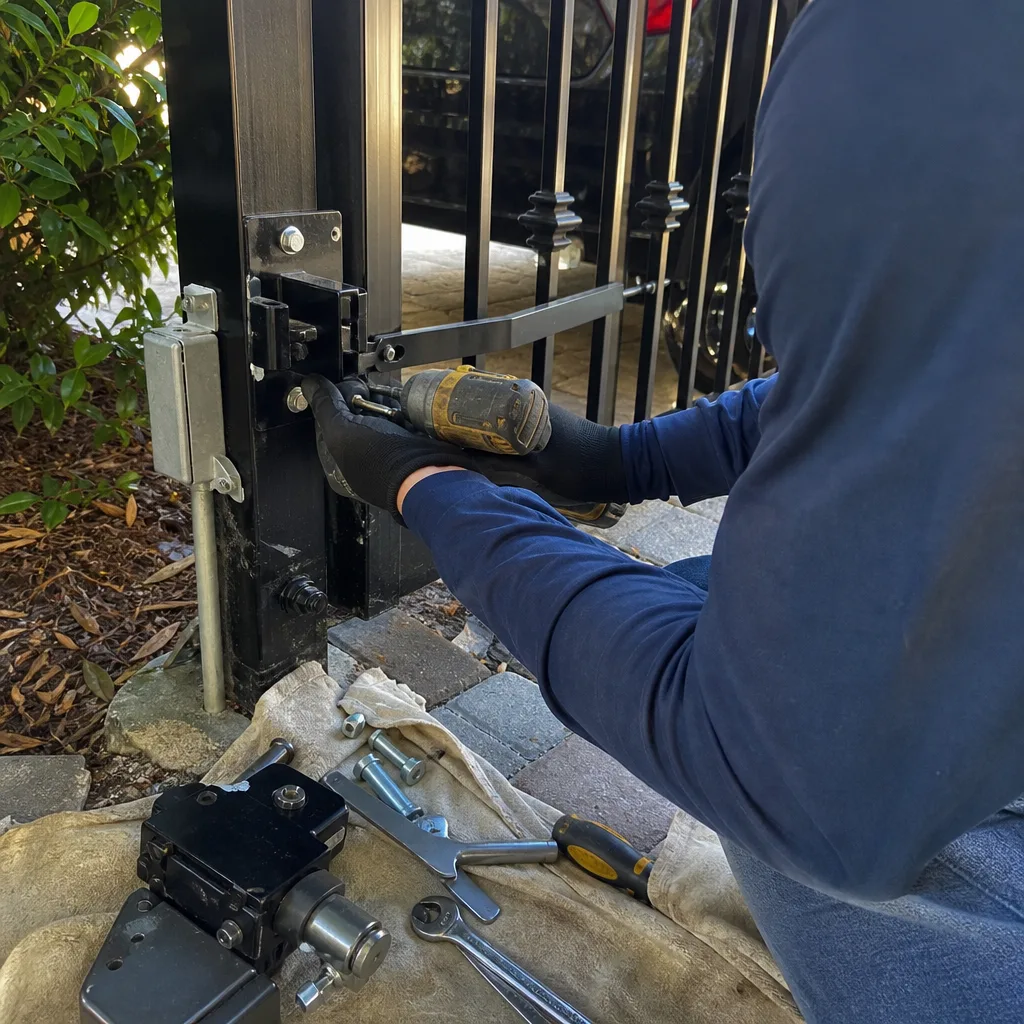
These checks require basic tools: a tape measure, torque wrench or spring scale, multimeter, and feeler gauge set. Record every number. The value is in the trend, not the single reading.
Chain or Belt Tension by Deflection
With the gate in manual release, apply 10 pounds of force perpendicular to the chain at midpoint using a spring scale or a known weight. Measure the resulting deflection:
- Slide gate chain, 10-foot span: 0.75 to 1.25 inches deflection at 10 lbs
- Slide gate chain, 16-foot span: 1.0 to 1.75 inches deflection at 10 lbs
- Belt drive, any span: manufacturer spec, typically 0.5 to 0.75 inches at 10 lbs
Outside these ranges, adjust the tensioner or replace the belt. A chain that has stretched beyond adjustment limits - measure 12 pin centers; standard 1/2-inch pitch chain should measure exactly 6 inches - needs replacement. We’ve seen stretched chains skip sprocket teeth and damage motor gearboxes on Viking and BFT operators in Los Gatos, where heavy redwood gates load the drive heavily.
Torque Arm and Mount Play
The torque arm connects the operator to the gate leaf and absorbs the motor’s reaction force. At the gate bracket, measure play with a dial indicator or by feel: grasp the arm and push perpendicular to its length. Passing: under 2 millimeters of movement. Failing: any clunk you can hear, or visible ovaling of the mounting bolt holes. In our records, torque arm looseness accounts for 22% of “my gate shakes when it opens” calls in Los Gatos. The fix is usually a $12 bushing kit, but left unaddressed it wallows out the $340 aluminum bracket.
Motor Current Draw
Set your multimeter to AC amperage and clamp around one motor lead during a full open-close cycle. Record peak and running current. Typical ranges:
- 1/2 HP residential operator, unloaded: 2.5 to 4.0 amps running, under 8 amps peak
- 3/4 HP operator, heavy gate: 4.0 to 6.0 amps running, under 12 amps peak
A 20% increase from your baseline means something changed - binding hinge, debris in track, or gearbox degradation. Current draw doesn’t lie; it’s the best early warning system you have. Log it quarterly and the trend tells the story before the failure does.
Limit Switch Position Verification
For mechanical limit switches, measure the overtravel past the switch trip point. On most operators, the gate should coast 3 to 5 degrees past the switch before the brake engages. Less than that and the motor stalls against the switch; more than 10 degrees and the gate slams the mechanical stop. For electronic limit systems (common on newer FAAC and Linear operators), verify the programmed position against a physical tape measure - the display may read 144 inches while actual travel is 141 due to wheel wear or chain stretch.
Battery Backup Voltage
If your operator has battery backup for power-outage operation, measure terminal voltage under no load and under gate load. Passing: 12.6 to 13.0 volts no-load, sagging no more than 1.5 volts under load. Failing: under 12.0 volts no-load, or voltage collapse that triggers the low-battery cutoff during a cycle. Los Gatos sees more PSPS events than most Bay Area towns - battery condition matters here.
Annual Deep Maintenance: Electrical, Mechanical, and Structural
These tasks take 2 to 4 hours and often require partial disassembly. Schedule them before the rainy season - in Los Gatos, that’s October - so drainage and sealing are verified when it matters.
Gearbox Oil Change
Most residential operators use sealed gearboxes with no service port, but commercial-grade units and some high-torque residential models (Viking V-Groove series, larger BFT models) have drain and fill plugs. If yours does: drain when warm, flush with manufacturer-specified oil, and refill to the level plug. Passing oil is amber and flows freely; failing oil is black, metallic, or contains visible particles. If you find bronze-colored particles, the worm gear is degrading - schedule replacement before the gearbox seizes. Record the oil type and date on the housing with a paint pen.
Structural Weld Inspection
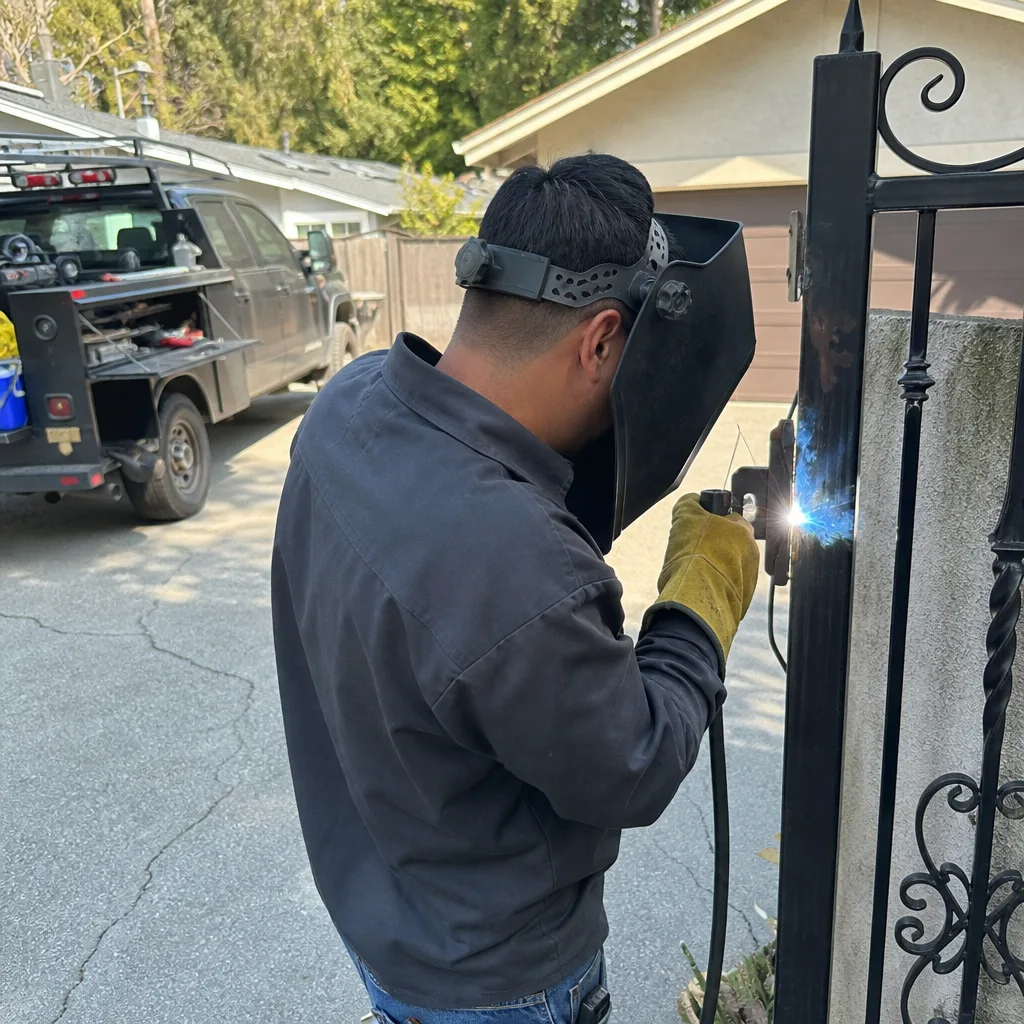
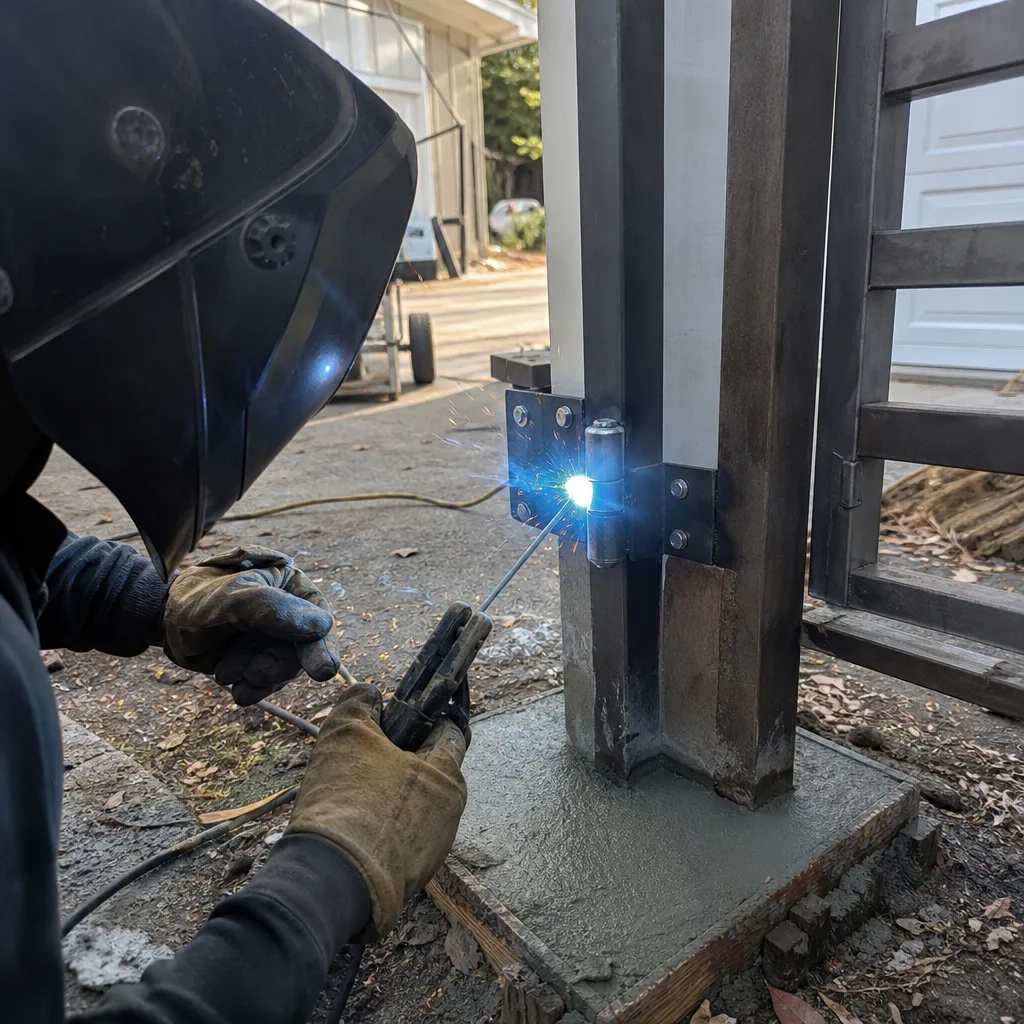
Examine every weld on the gate frame, pickets, and operator mount. Passing: continuous bead with no undercut, no porosity visible to 10x inspection, and no rust streaks originating at the toe of the weld. Failing: cracks, especially at stress concentrators like gate corners and latch receiver mounts. In Los Gatos, where many gates are custom fabricated from steel tube with cast iron finials, the weld between dissimilar metals is a common failure point - differential expansion in our 40-degree seasonal temperature swing stresses these joints.
Tap test: strike the weld with a ball-peen hammer (light taps) and listen for ring versus thud. A dead sound indicates internal void or crack. This is subjective - if in doubt, have a qualified welder mag-particle test the joint. We document every weld we touch with photos before and after, under Haven Standard Clause 4.
Grounding and Bonding Verification
California Electrical Code requires gate operator grounding to the premises grounding electrode system. With a multimeter, measure resistance from the operator chassis to a known ground (outlet ground pin, ground rod, or metallic water pipe). Passing: under 25 ohms. Failing: open circuit, high resistance, or corrosion at the bonding clamp. This check has saved more than one Los Gatos homeowner from a liability claim when lightning or utility fault energized a gate frame.
Control Board Capacitor Inspection
Remove the control board cover and visually inspect electrolytic capacitors. Passing: flat tops, intact sleeve markings, no leakage at the base. Failing: domed or burst tops, brown residue on the board, or sleeves that have shifted to expose the pressure relief score marks. Capacitor failure is the leading cause of “gate works intermittently” complaints on operators over 8 years old. Replacement is typically $40 to $80 in parts versus $280 to $450 for a full control board.
Concrete Footing and Post Stability
For swing gates, measure post deflection at the top under moderate hand pressure. Passing: under 1/4 inch movement for a 6-foot post, under 3/8 inch for an 8-foot post. Failing: visible rotation in the footing, cracking at the concrete surface, or a post that rebounds slowly (indicates internal rot for wood, or footing fracture for steel). In the clay-heavy soils of Los Gatos hillsides, seasonal moisture changes can shift footings 1/2 inch or more - we’ve re-leveled posts in the Almond Grove and Tanglewood neighborhoods where winter saturation and summer desiccation created a yearly cycle.
How to Log Readings So Technicians Work Faster
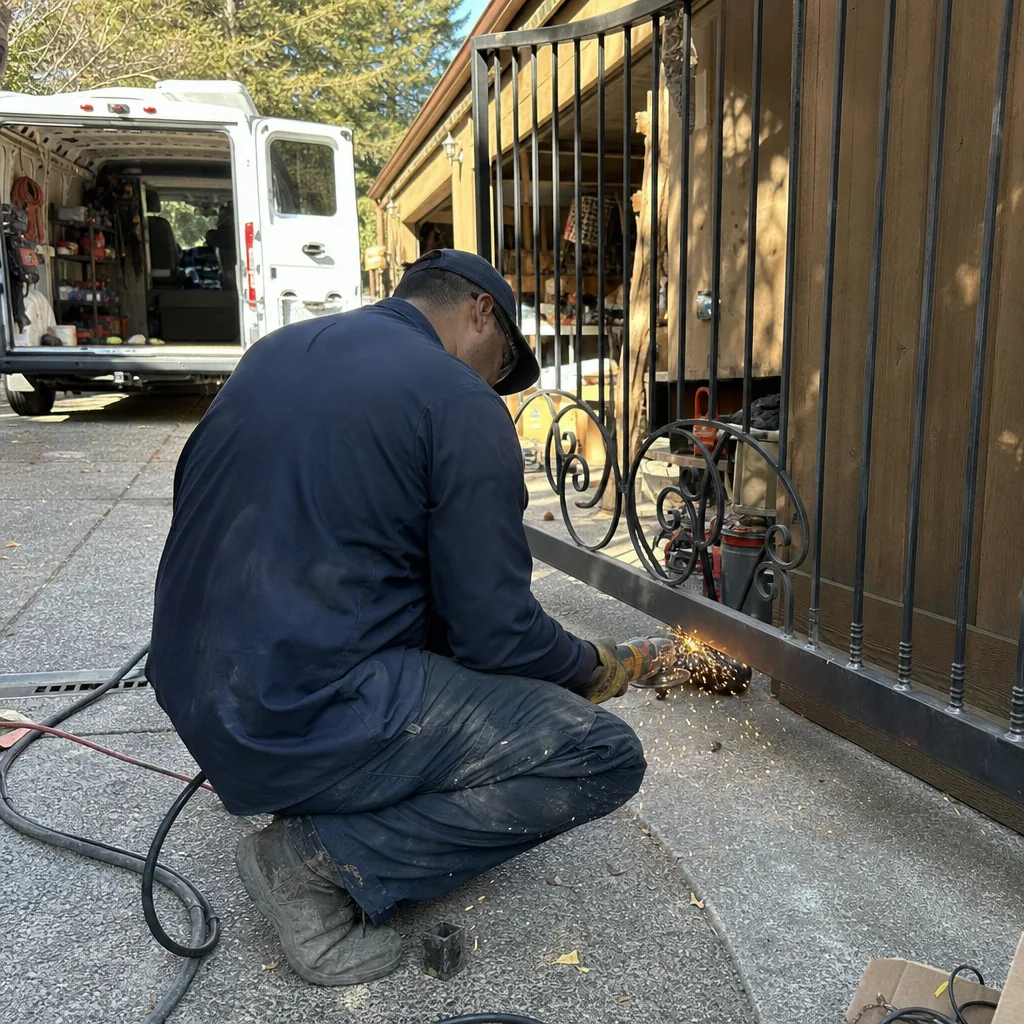
The format matters. A narrative description - “chain looks good” - is useless six months later. A number with context - “chain deflection 1.1 in at 10 lbs, 3/16/2024” - lets the next person see drift.
We recommend a simple table structure, paper or digital:
| Date | Check | Tool | Reading | Pass/Fail | Notes |
|---|---|---|---|---|---|
| 3/15/2024 | Chain tension | Spring scale, tape | 1.1 in @ 10 lbs | Pass | Spec 0.75-1.25 in |
| 3/15/2024 | Motor current | Clamp meter | 3.2A run, 7.1A peak | Pass | Baseline established |
| 6/15/2024 | Chain tension | Spring scale, tape | 1.4 in @ 10 lbs | Fail | Stretched, adjust tensioner |
Store the log with the operator manual and warranty paperwork. When you call for service, read the last three current-draw numbers to the dispatcher - a competent technician will know whether to bring a control board, a gearbox, or just a chain kit. That specificity saves a trip charge and a return visit.
Photo the hinge gap, the chain wear pattern, and the control board terminal condition. Date-stamp the images. Under Haven Standard Clause 4, we leave every homeowner a documented photo record of what we found, what we adjusted, and what we installed - but your own photos between visits create continuity that no technician can reconstruct after the fact.
The Three Most-Skipped Checks That Cause Mid-Year Failures
From our Los Gatos call records, these three checks - detailed in our Gate Repair Warning Signs: A Los Gatos Homeowner’s Reference Guide - are omitted in roughly 60% of homeowner maintenance routines, yet they account for the majority of non-weather-related service calls between scheduled maintenance.
1. Photo-Eye Alignment Verification Under Load
Homeowners check the LED color, but not whether the gate actually reverses when the beam breaks during motion. The LED can show green while the receiver sensitivity has drifted to the edge of detection. Test: break the beam with a 12-inch cardboard box during the last 18 inches of closing travel. The gate must reverse within 2 seconds. In Los Gatos, where gates often cross over decomposed granite or gravel, vibration gradually shifts the bracket angle. The LED stays green because the beam still hits the receptor, but the safety margin is gone. We find this on roughly 30% of service calls - the gate “worked fine” until a low sun angle or a spider web broke the marginal alignment.
2. Manual Release Function Test
Every automated gate must have a manual release for power-outage or emergency operation. Homeowners rarely test it until the power is out and they need to leave. Test quarterly: pull the release handle or turn the release knob, then verify the gate moves freely by hand. Passing: one person can open and close the gate with moderate effort. Failing: the gate is immovable, or the release mechanism itself is seized. In hillside Los Gatos installations, where gates may weigh 400 to 800 pounds, a seized release is a fire-egress hazard. Lubricate the release mechanism with dry graphite, not oil - oil attracts grit that accelerates wear.
3. Drainage Path Around the Operator Foundation
The control box sits on or near a concrete pad. Homeowners check the box interior but not whether water flows toward or away from the pad. Passing: the pad surface is 1/2 inch above grade, with visible slope away on all sides. Failing: water pools against the pad, or the pad has settled below grade. In Los Gatos, where winter storms can drop 3 inches in 24 hours, a single season of ponding corrodes conduit entries and wicks moisture into the box through cable jacket capillary action. The fix is grading or a French drain, not a new operator - but most homeowners discover the problem only after the control board fails.
Maintenance Frequency by Gate Type and Usage
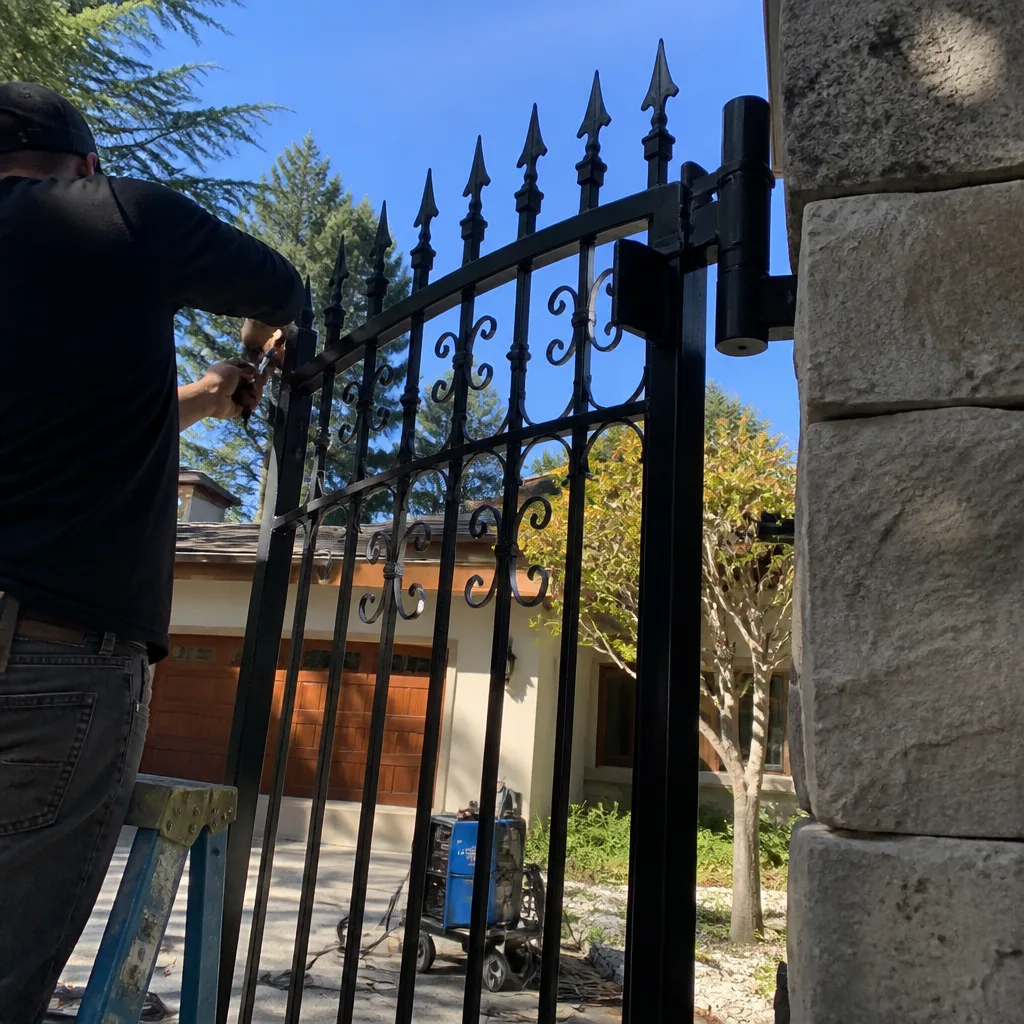
Not all gates age at the same rate. A lightweight aluminum slide gate on a vacation home in the Los Gatos hills sees different stress than a steel swing gate with stone cladding at a downtown residence.
| Gate Type | Monthly | Quarterly | Annually |
|---|---|---|---|
| Light residential slide gate (<250 lbs, aluminum or steel tube) | Visual hinge/track, safety device test, control box interior | Chain tension, motor current, limit switch position | Gearbox oil (if serviceable), structural welds, grounding test, capacitor inspection |
| Heavy residential slide gate (>250 lbs, wood or steel plate infill) | Visual hinge/track, safety device test, control box interior, drainage check | Chain tension, motor current, limit switch position, torque arm play, manual release test | Gearbox oil, structural welds, grounding test, capacitor inspection, footing stability, concrete condition |
| Single swing gate, residential | Visual hinge, safety edge/photo-eye, control box interior | Torque arm play, motor current, limit overtravel, battery voltage | Gearbox oil (if serviceable), structural welds, grounding test, capacitor inspection, post stability |
| Dual swing gate, residential | Visual hinge, safety edge/photo-eye, control box interior, synchronization check | Torque arm play, motor current, limit overtravel, battery voltage, center stop alignment | Gearbox oil, structural welds, grounding test, capacitor inspection, post stability, synchronization recalibration |
| High-cycle gate (>10 cycles/day, multi-tenant or commercial) | All visual checks, plus chain/belt wear measurement | All quarterly checks, plus brake pad inspection, sprocket tooth profile check | All annual checks, plus motor brush wear (if applicable), full control board diagnostic, gear backlash measurement |
Los Gatos climate note: properties above 800 feet elevation or within 2 miles of the Santa Cruz Mountains crest experience more rapid rubber degradation (belts, edge sensors, gaskets) due to higher UV exposure and wider temperature swings. Add 20% frequency to rubber component checks for these locations - the Blossom Manor and Rinconada Hills areas specifically.
Common Mistakes to Avoid
- Using WD-40 on chains or hinges. WD-40 is a solvent and water displacer, not a lubricant. It strips existing grease and attracts grit. Use a chain-specific lubricant or lithium EP grease on hinges. We remove gates in Los Gatos every year where WD-40 turned the chain into a grinding paste.
- Adjusting limits without measuring travel first. If the gate doesn’t reach the mechanical stop, the limit switch is not the problem - track obstruction, binding hinge, or motor weakness is. Moving the switch to compensate masks the real issue until the motor fails from overwork.
- Ignoring the manual release because “the power never goes out.” PSPS events in Los Gatos are increasingly common from May through October. A seized release mechanism discovered during an evacuation order is a safety failure, not a maintenance oversight.
- Measuring chain tension by “feel” without a scale. “Feels about right” varies by 50% between individuals. The 10-pound deflection method takes 90 seconds and removes subjectivity. We’ve retensioned chains where the homeowner’s “tight” was actually 40% below spec.
- Skipping the logging step because “I’ll remember.” You won’t. Neither will the next owner, or the technician who arrives in three years. A written record with numbers is the only maintenance history that survives.
- Testing safety devices with a broomstick instead of a solid object. A broomstick may flex or move, not reliably breaking the photo-eye beam or triggering the edge sensor. Use a rigid 12-inch cardboard box - it simulates a pet or child’s limb consistently.
- Assuming all operators use the same oil or grease. BFT gearboxes specify a different viscosity than Viking or Linear. Using the wrong lubricant voids warranty and can damage seals. Check the nameplate or manual, or call us with the model number.
When to Call a Professional
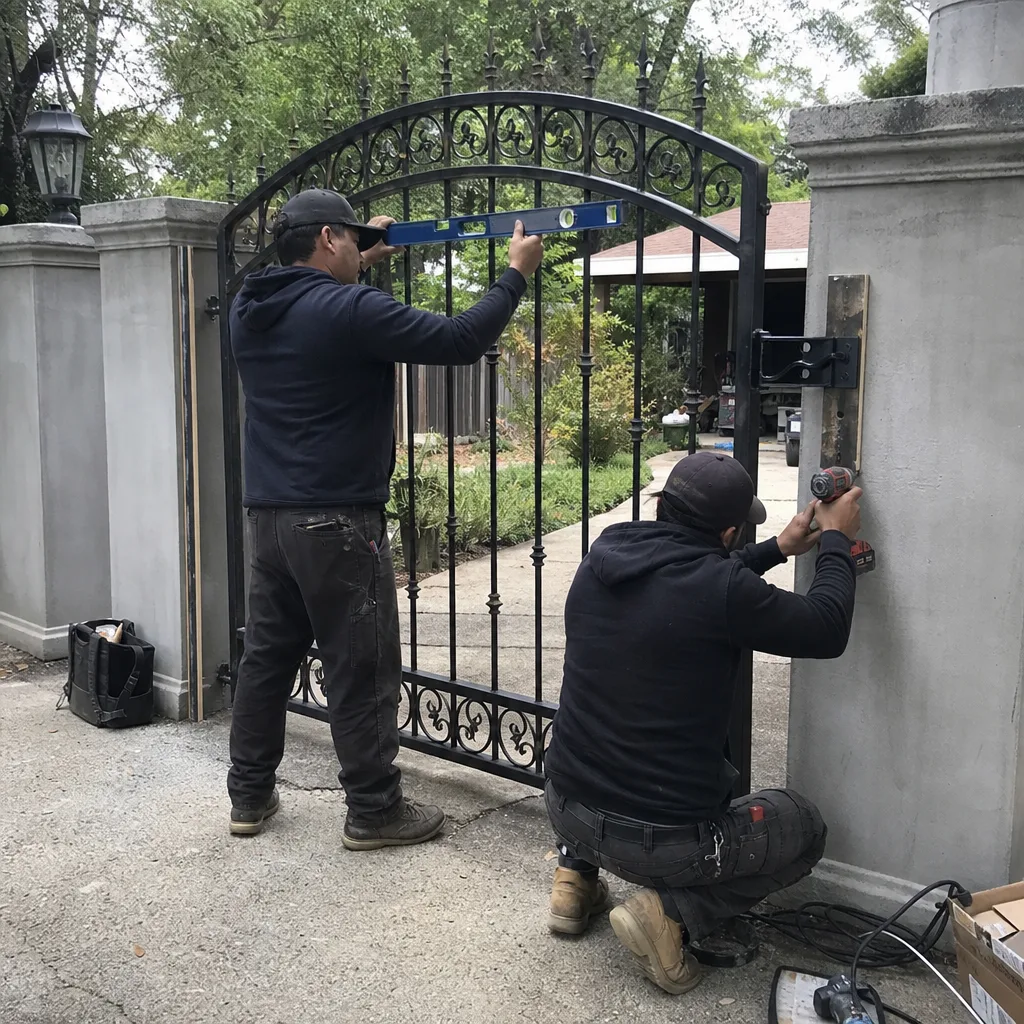
Call a qualified gate technician when you find welded-joint cracks, when motor current exceeds 150% of your logged baseline, when the gate reverses direction intermittently without command, or when any safety device fails its test. These conditions indicate failures that homeowner maintenance cannot address safely or effectively.
Electrical work beyond voltage measurement - control board replacement, motor rewiring, or grounding system modification - requires a C-10 licensed electrician in California. Gate-specific mechanical work - spring-assisted hinge replacement, gearbox rebuild, or structural weld repair - requires a technician familiar with UL 325 safety standards and the specific operator brand. Gate Repair in Los Gatos from Vance Gate Repair Los Gatos includes free estimates with written pricing before any work begins. Call (831) 246-7187 to schedule.
Frequently Asked Questions
A scheduled maintenance visit for a residential automated gate typically runs $180 to $340, depending on gate type, access conditions, and whether the operator requires internal service. Vance Gate Repair Los Gatos provides a written price before any work starts under Haven Standard Clause 1, and every visit includes a documented photo record under Clause 4. Call (831) 246-7187 for an exact quote - estimates are free.
Monthly visual checks and quarterly measurements with basic tools are within most homeowners’ capability if they follow the pass/fail criteria in this guide and our more guides & resources. Annual tasks involving electrical testing, gearbox service, or weld inspection require specialized tools and training. We recommend homeowner maintenance for monitoring and early detection, with professional service for corrective work and annual deep maintenance.
Most residential operators last 12 to 18 years with proper maintenance. Replace when repair costs exceed 60% of replacement, when parts are obsolete (common for operators installed before 2010), or when safety standards have changed and the unit cannot be upgraded. Vance Gate Repair Los Gatos services nine major brands including Gate Motor & Opener in Los Gatos - we repair rather than replace when the economics support it.
The three most common: photo-eye misalignment from wildlife contact and hillside vibration, hinge pin corrosion from coastal moisture infiltration, and control board moisture damage from inadequate drainage during winter storms. Properties near the Los Gatos Creek corridor or above 800 feet elevation see accelerated rates of all three.
We offer scheduled maintenance agreements with quarterly or annual visit frequencies, priced according to gate type and cycle count. Every visit includes the full checklist, numerical logging, photo documentation, and the 365-Day Done Right Promise. The written scope and price are delivered before the first visit starts - no automatic renewals, no surprise invoices.
Under Haven Standard Clause 4, every visit leaves you with a photographed record of what was found, what was adjusted, what was set, and what was installed - including part numbers, limit-switch readings, and torque values where applicable. You also receive a written summary with the next recommended service date and any items to monitor. This documentation stays with the property and reduces future diagnostic time.
The Bottom Line
A gate maintenance checklist works only when you know what passing looks like. Measure chain tension in inches at a known force, not by feel. Log motor current in amps, not as “sounds normal.” Test safety devices with a rigid object during actual gate motion, not by LED color alone. The 22,000 gates in our records show that homeowners who maintain this discipline catch failures two to three visits before they become emergencies - and they pay for maintenance, not after-hours rescue calls. Start your log today; the first entry establishes the baseline that every future reading depends on.
For homeowners in Los Gatos who prefer professional maintenance with written pricing and documented results, Vance Gate Repair Los Gatos home offers free estimates. Call (831) 246-7187 to schedule a maintenance visit or to review your existing gate system under Haven Standard terms.
Written by Adrian Vance, Owner at Vance Gate Repair Los Gatos, serving Los Gatos since 2014.