
Last updated September 22, 2026
Free on-site gate assessment - hinges, posts, and your LiftMaster or Nice gate operator checked before anything is quoted
The assessment is free and the quote is the invoice.
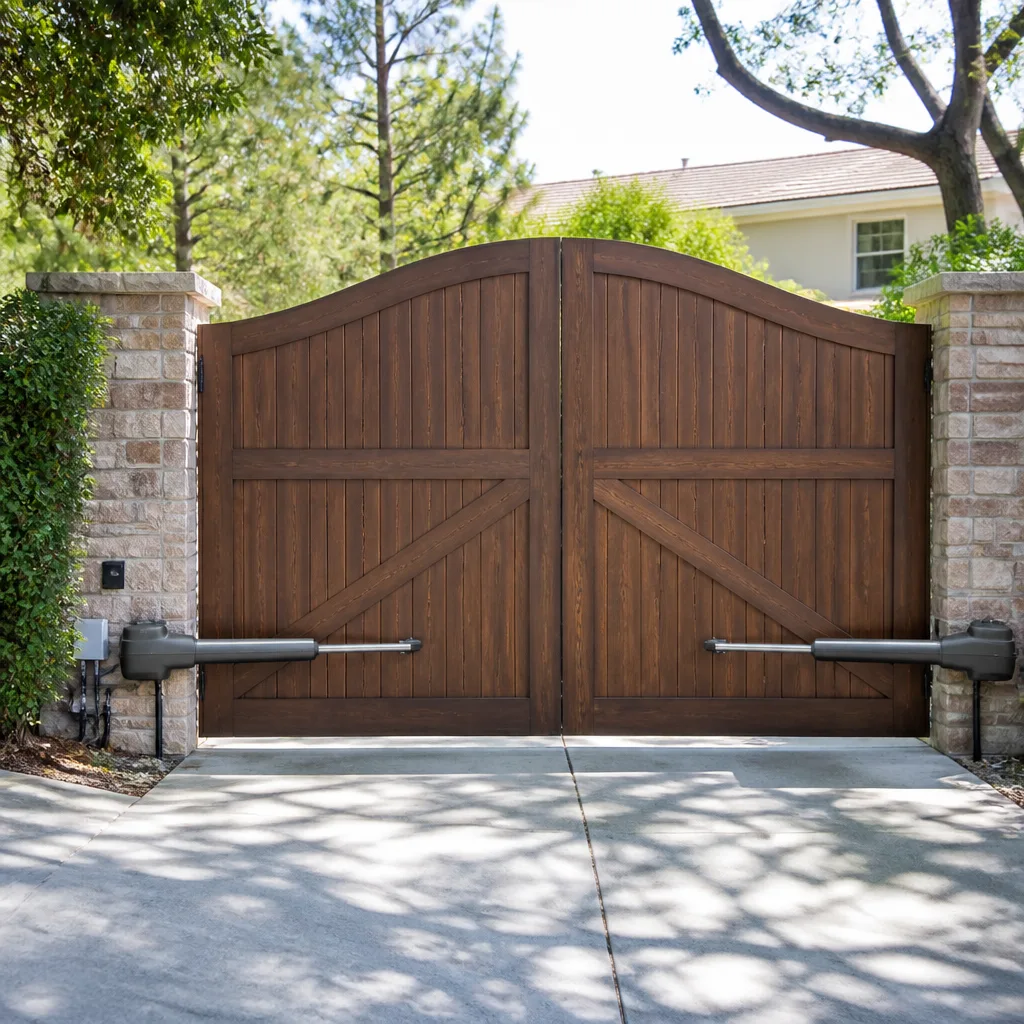
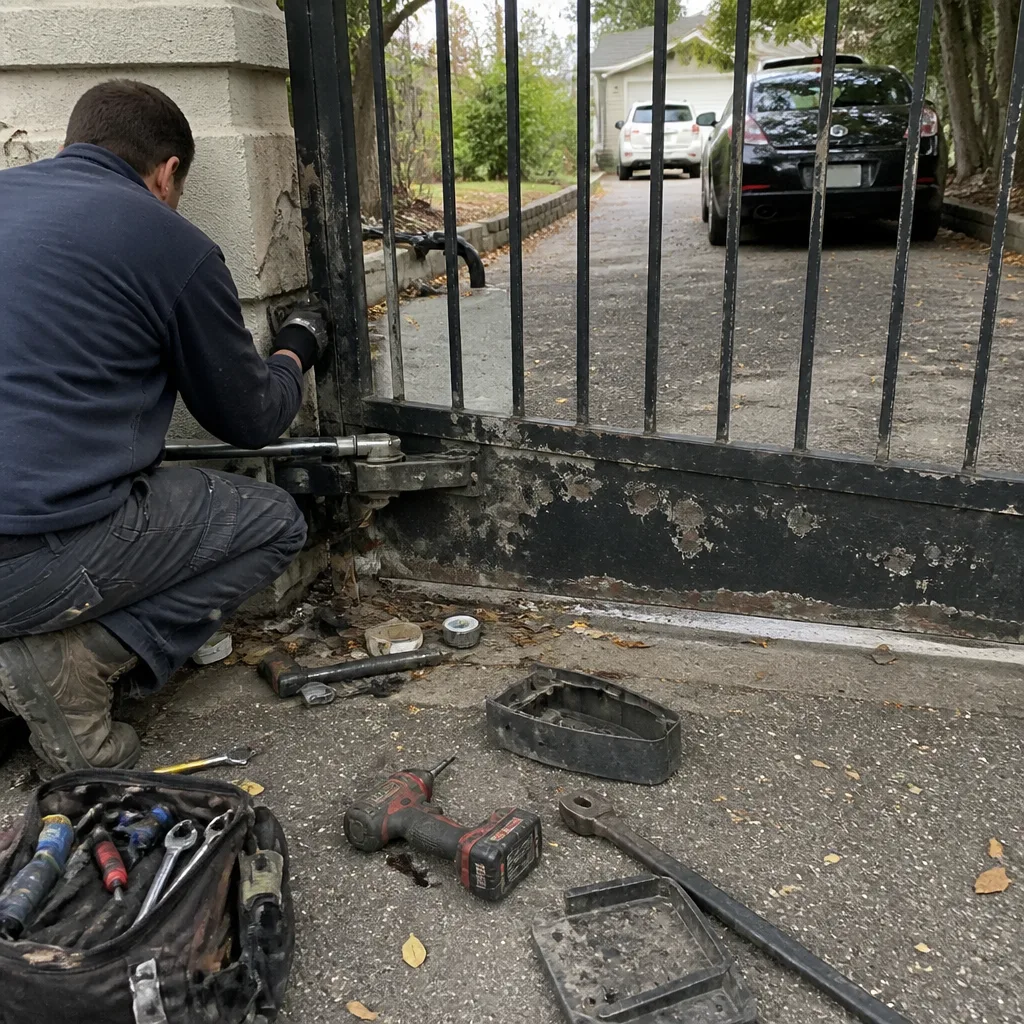 Before
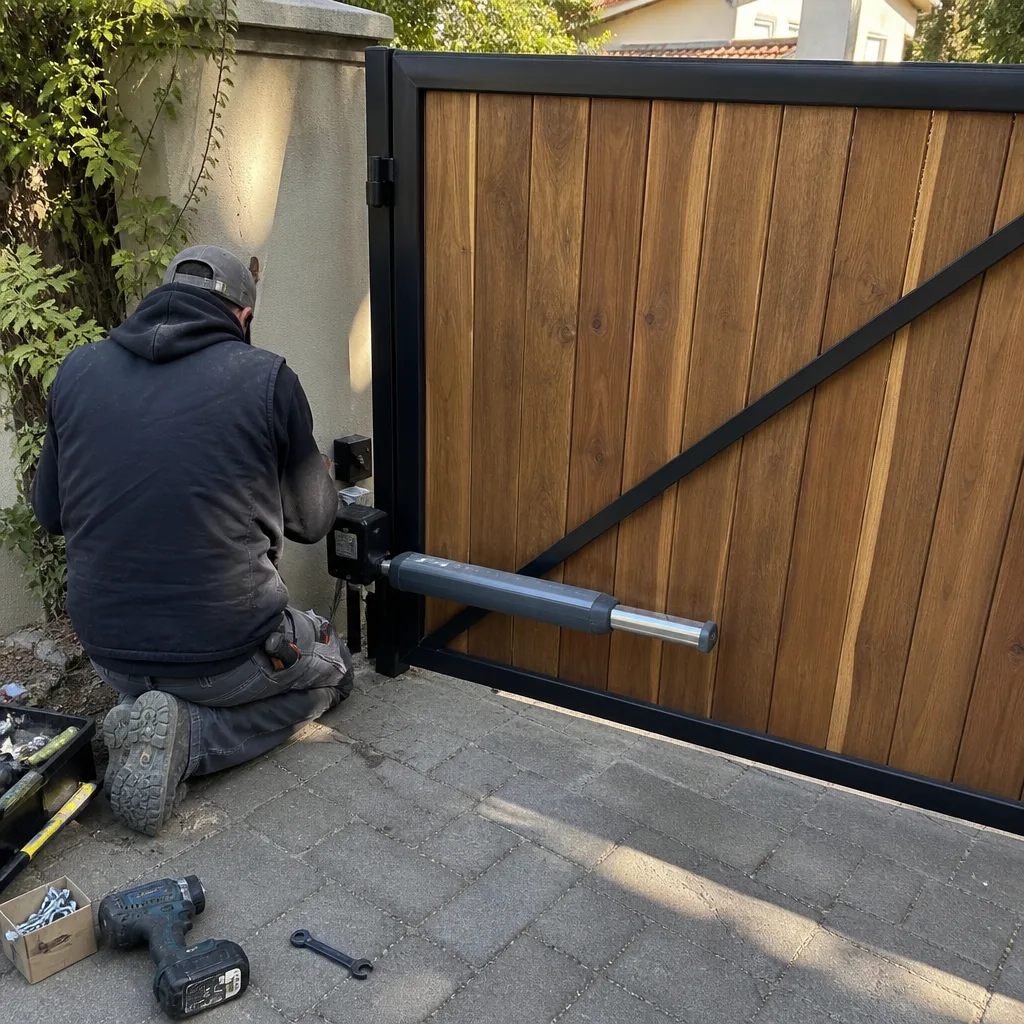 After
After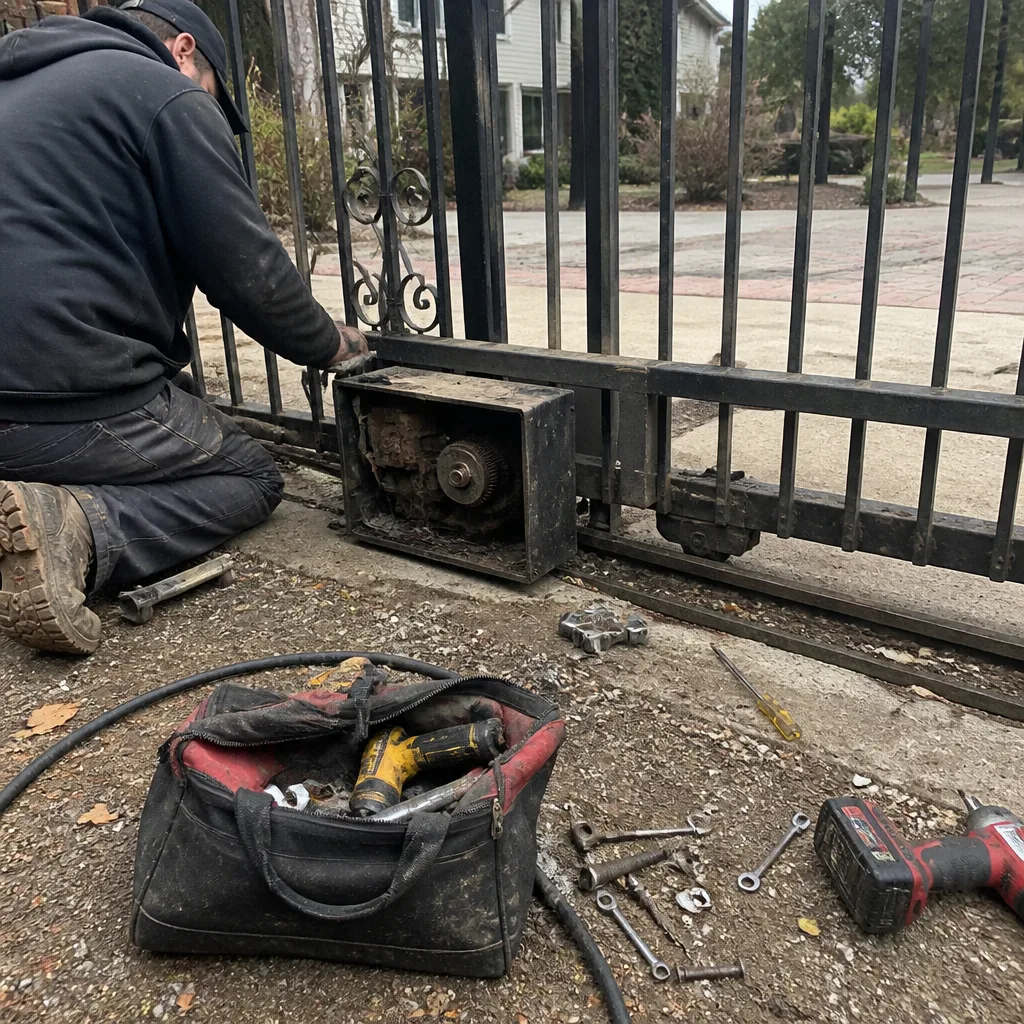 Before
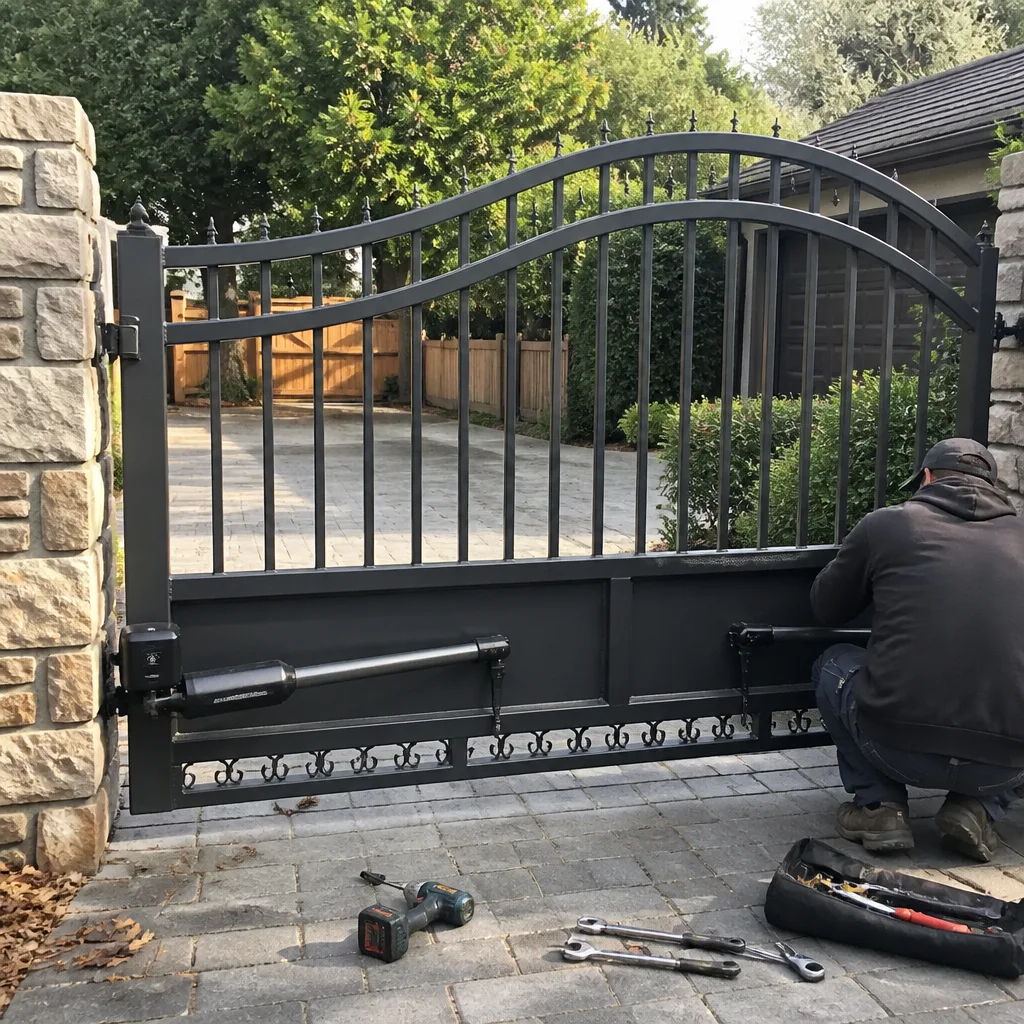 After
After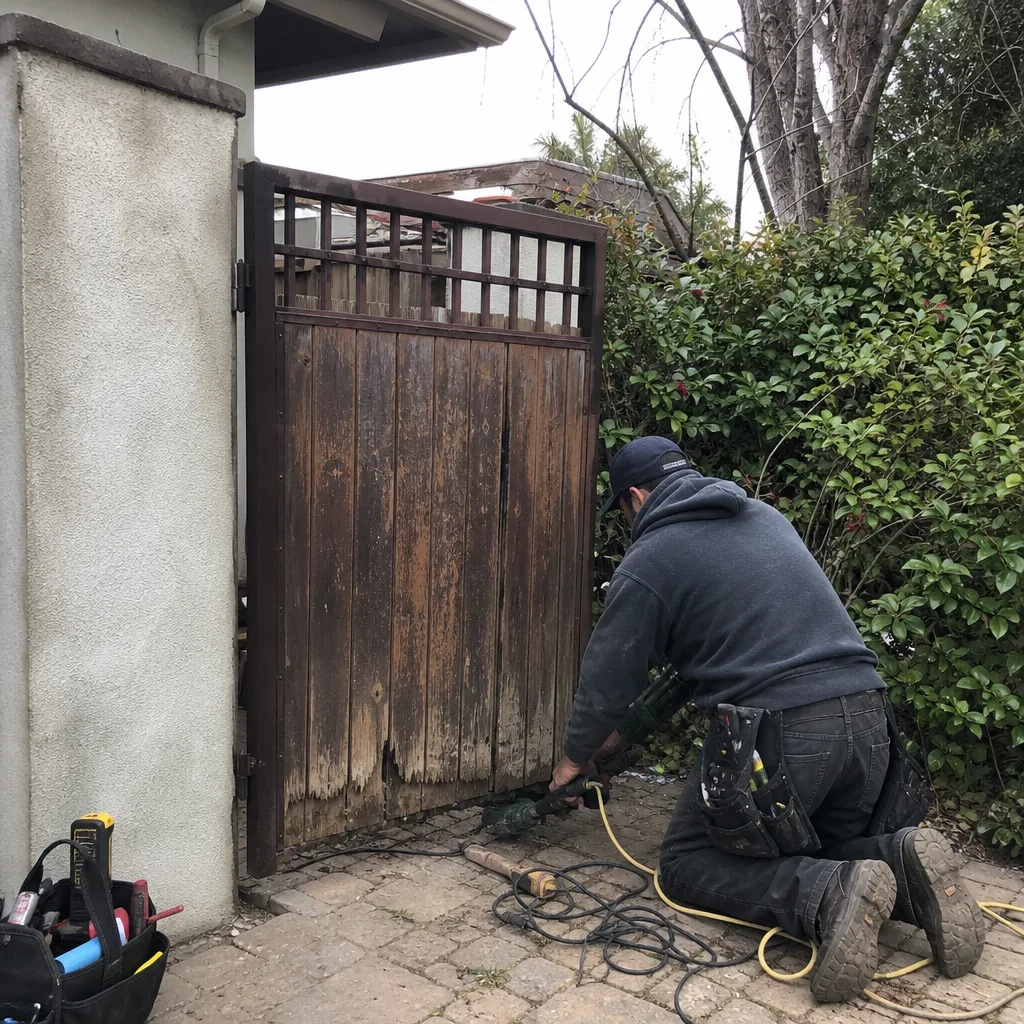 Before
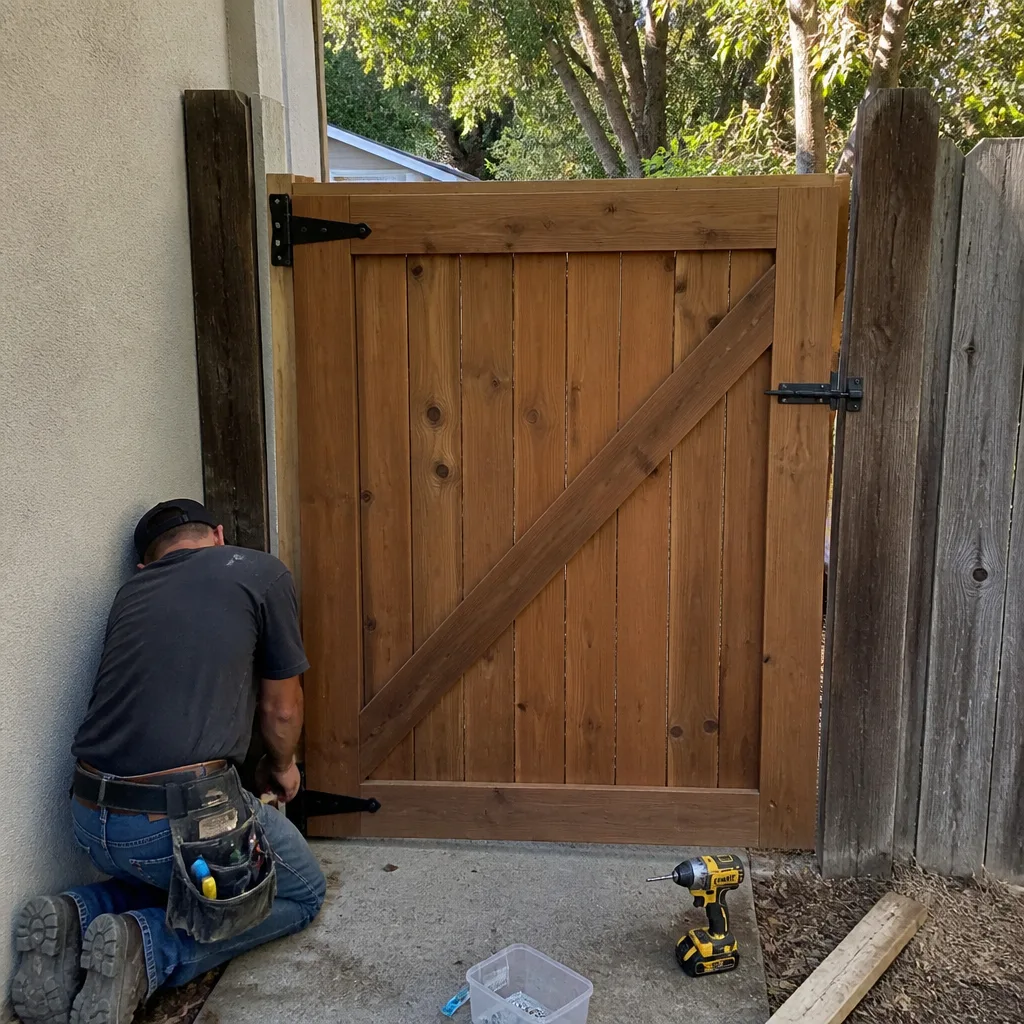 After
AfterGate Repair Permits, Codes & Inspections in CA: What You Need to Know
A homeowner in the Bay Area paid $800 to have their gate operator replaced - no permit pulled, no inspection. Three years later, escrow held up their sale for 40 days while an inspector flagged the unpermitted electrical work. The repair was fine. The paperwork wasn’t. In Los Gatos and across Santa Clara County, the permit line for gate work isn’t drawn at “new installation versus repair.” It’s drawn at whether the work changes electrical load, structural attachment points, or safety-device configuration. Many routine repairs homeowners assume are permit-exempt actually aren’t. This guide maps the actual thresholds so you don’t get caught at resale.
Quick Answer
In California, gate repairs require permits when they involve electrical modifications above 120 volts or 20 amps, new concrete footings, changes to UL 325 safety devices, or any alteration to structural attachment points. Like-for-like replacement of a motor with identical specifications may be exempt, but upgrading from a 1/2 HP to 3/4 HP operator, adding a keypad where none existed, or relocating a photo-eye typically triggers permit requirements in Los Gatos and Santa Clara County.
Table of Contents
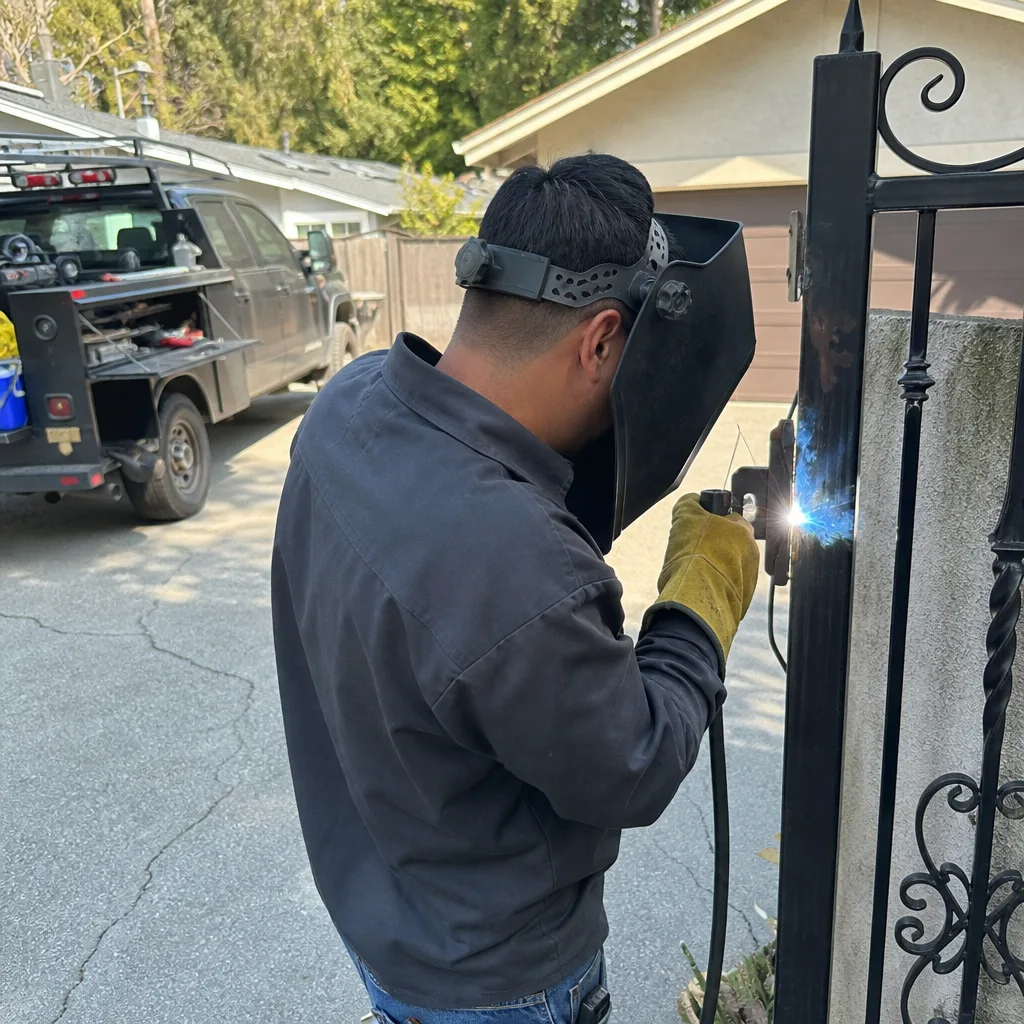
- Where the Permit Line Actually Sits
- What “Like-for-Like Replacement” Really Means
- How Permit History Shows Up on Property Records
- The Inspection Sequence for Permitted Gate Work
- Retroactive Permits: Cost, Process, and Timeline
- Santa Clara County-Specific Requirements
- Common Mistakes to Avoid
- When to Call a Professional
- Frequently Asked Questions
BeforeAfterWhere the Permit Line Actually Sits
The California Building Standards Code (Title 24) delegates gate permitting to local jurisdictions, but the trigger points are more consistent than most homeowners realize. The confusion comes from assuming that “repair” equals “exempt.” It doesn’t.
Here are the four categories that cross the permit threshold in Los Gatos and Santa Clara County:
- Electrical load changes. Any modification that increases amperage draw, changes voltage, or adds a new circuit requires an electrical permit. Replacing a failed LiftMaster or Linear operator with the identical model and horsepower rating is typically exempt. Upgrading from a 1/2 HP to 3/4 HP unit is not, because the load calculation changes. Adding a keypad, intercom, or cellular receiver where none existed also triggers permitting, since you’re introducing new low-voltage wiring that must meet Article 725 of the National Electrical Code.
- Structural attachment modifications. New concrete footings, post replacement, or changes to gate-hinge mounting points require a building permit. In Los Gatos hillside neighborhoods like Rinconada Hills and Belwood, where many gates are anchored into engineered retaining walls, even minor footing work can trigger geotechnical review.
- UL 325 safety-device changes. Underwriters Laboratories Standard 325 governs automatic gate safety. Adding photo-eyes, edge sensors, or loop detectors where none existed requires permit and inspection. Relocating existing safety devices - moving a photo-eye from 4 inches to 6 inches above grade, for instance - may also trigger review if the change affects the safety envelope.
- Property line or easement impacts. Gates that swing or slide toward a public sidewalk, utility easement, or neighbor’s property may require planning department approval for any modification that changes the sweep path or opening arc.
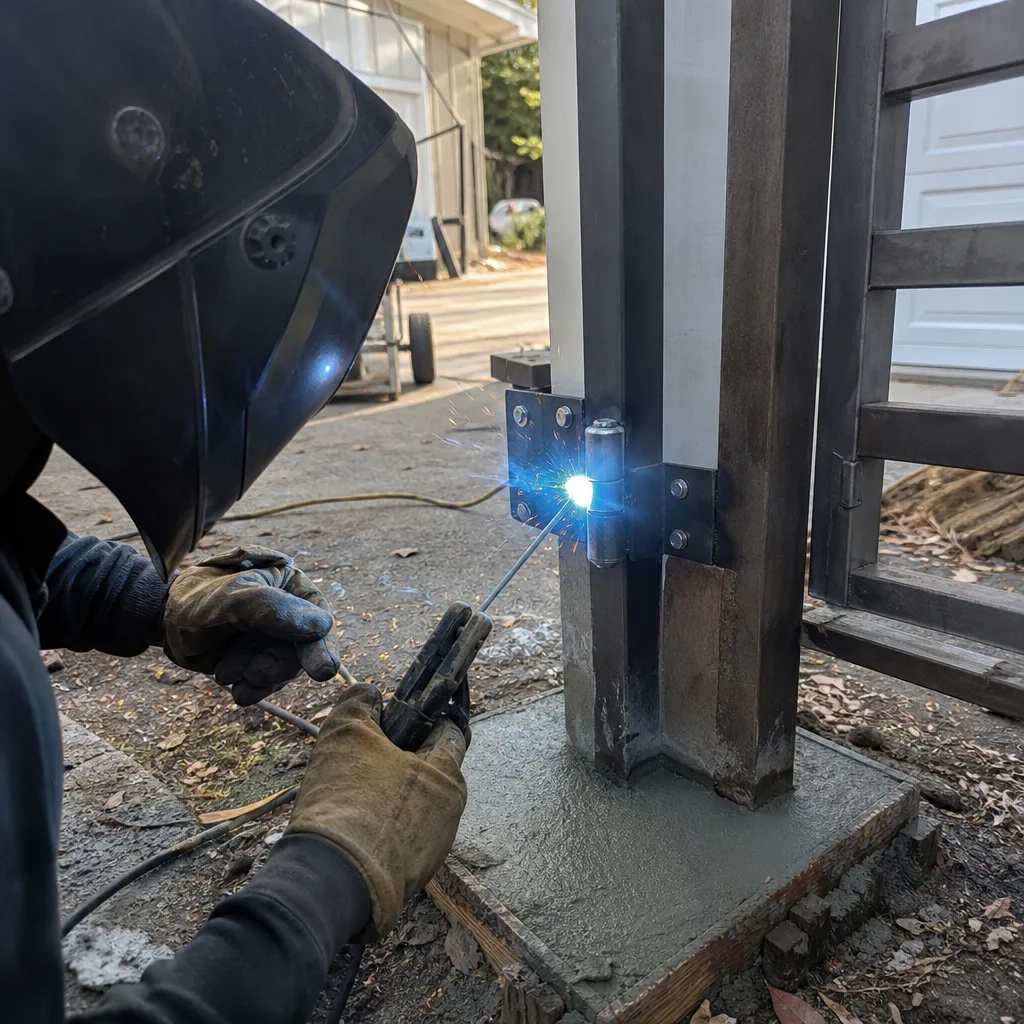
What stays exempt? Purely mechanical repairs: welding a cracked hinge, adjusting limit switches, lubricating chains, replacing a worn sprocket. These don’t alter the system’s engineered specifications. But the moment you touch wiring, concrete, or safety geometry, you’re in permit territory.
We’ve documented this distinction on hundreds of jobs in Los Gatos. A customer on Tait Avenue assumed their Viking operator replacement was “just a swap” until we measured the existing unit and found it was a 115V, 8-amp model being replaced with a 230V, 6-amp unit. Same horsepower, different electrical profile. Permit required. We caught it during the pre-work inspection, wrote the scope to include permit coordination, and the job closed clean.
What “Like-for-Like Replacement” Really Means
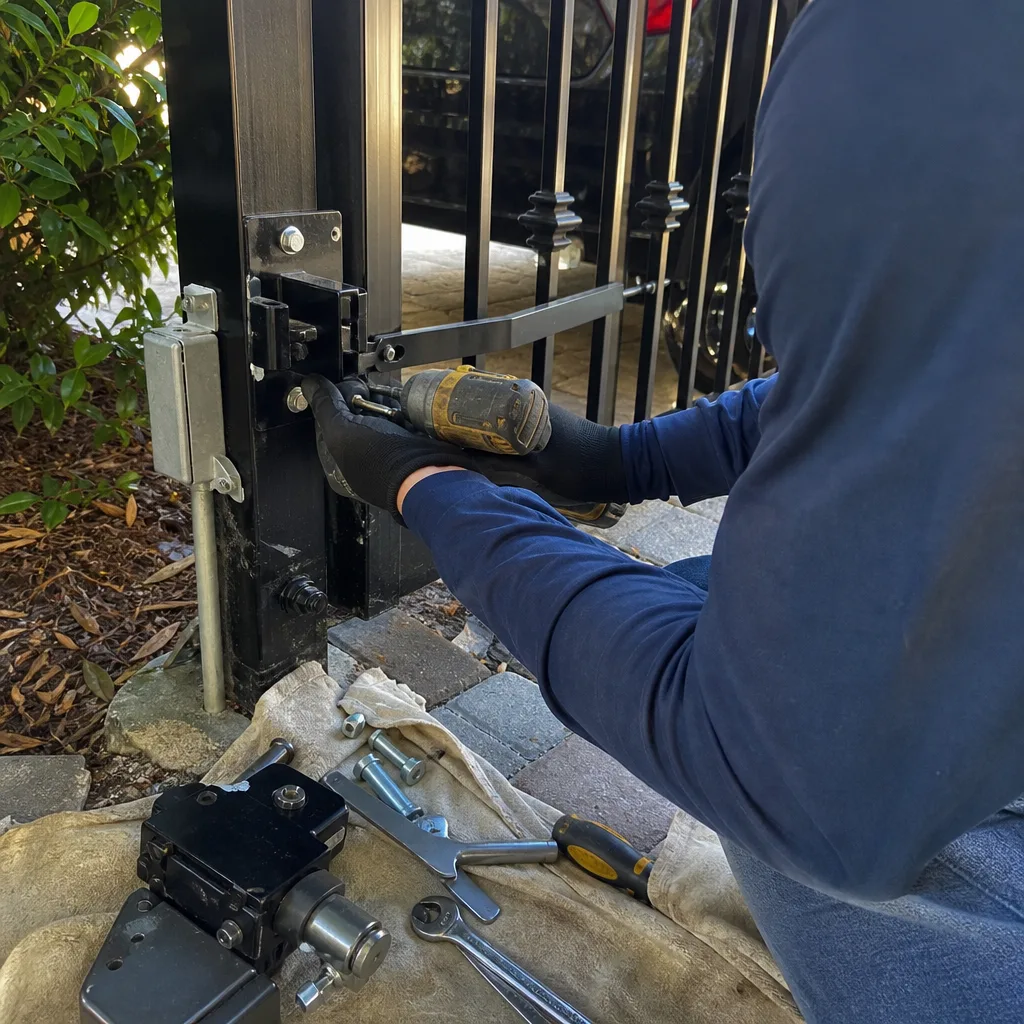
“Like-for-like” is the exemption homeowners hear about most and understand least. Santa Clara County Building Division interprets it narrowly: the replacement item must match the original in manufacturer, model, electrical specification, and safety configuration. Not “similar.” Not “comparable.” The same.
Here’s what passes and what doesn’t, based on our permit coordination experience:
| Scenario | Permit Required? | Why |
|---|---|---|
| Replacing a failed FAAC 770 with identical FAAC 770, same voltage/HP | No | True like-for-like; no load or safety changes |
| Replacing FAAC 770 with FAAC 770 but adding smartphone connectivity module | Yes | New low-voltage accessory introduces Article 725 wiring |
| Replacing 1/2 HP Ghost Controls with 1/2 HP Ghost Controls, same model | No | Identical electrical signature and safety envelope |
| Replacing 1/2 HP with 3/4 HP any brand | Yes | Load calculation changes; may require panel review |
| Replacing operator and relocating photo-eye to new height | Yes | Safety-device configuration changed |
| Replacing operator after fire damage, same model | No (with documentation) | Like-for-like if original specs verifiable; photos help |
The documentation habit matters here. Under The Haven Standard, we photograph every existing operator’s nameplate - voltage, amperage, model, serial - before quoting replacement. If a permit officer later questions whether a job was truly like-for-like, that photo record becomes evidence. Without it, you’re relying on memory against a county database.
One Los Gatos customer on University Avenue had a BFT operator replaced by another company in 2019 with no documentation. When they sold in 2023, the buyer’s inspector noted the “newer” operator and asked for permits. The seller couldn’t prove like-for-like. Retroactive permit cost: $340 in fees, plus a $180 re-inspection after the electrician corrected a grounding issue the original installer had missed.
How Permit History Shows Up on Property Records
Permit records in Santa Clara County are public and digitally searchable. Any buyer’s agent, inspector, or title officer can pull them in minutes. Here’s what they see and what it means for your sale.
The county maintains two relevant databases: the Building Permit Information System (BPIS) for permits issued since 1995, and microfilm records for older work. When a property sells, the title company runs a permit search as standard practice. What shows up:
- Permit number and date. Establishes when work occurred relative to ownership changes.
- Permit type. Electrical, building, planning, or combination. Gate work often carries multiple types.
- Final inspection status. “Final” means passed. “Expired,” “abandoned,” or “no final” means trouble.
- Job description. Often vague - “electrical repair” or “gate operator” - but enough to flag follow-up questions.
Buyers’ inspectors in the Los Gatos market are particularly thorough. The town’s median home price creates scrutiny. An inspector who sees a 2021 operator replacement with no matching 2021 permit will note it in the report. The buyer’s lender may require permit clearance before funding. Escrow holds funds. The seller must either obtain a retroactive permit or accept a price reduction.
We’ve reviewed property records for customers preparing to list. One on Loma Alta Avenue had a 2018 gate installation with no permit. The record showed a 2017 electrical permit for a spa and nothing else. We coordinated the retroactive permit, brought the installation to current code (which required adding a second photo-eye where only one existed), and cleared the record before listing. Cost: $890. Value of clean title: considerably more.
The key point: permits don’t disappear. They either exist and show “final,” or they don’t exist and create a gap that sharp buyers will find.
The Inspection Sequence for Permitted Gate Work
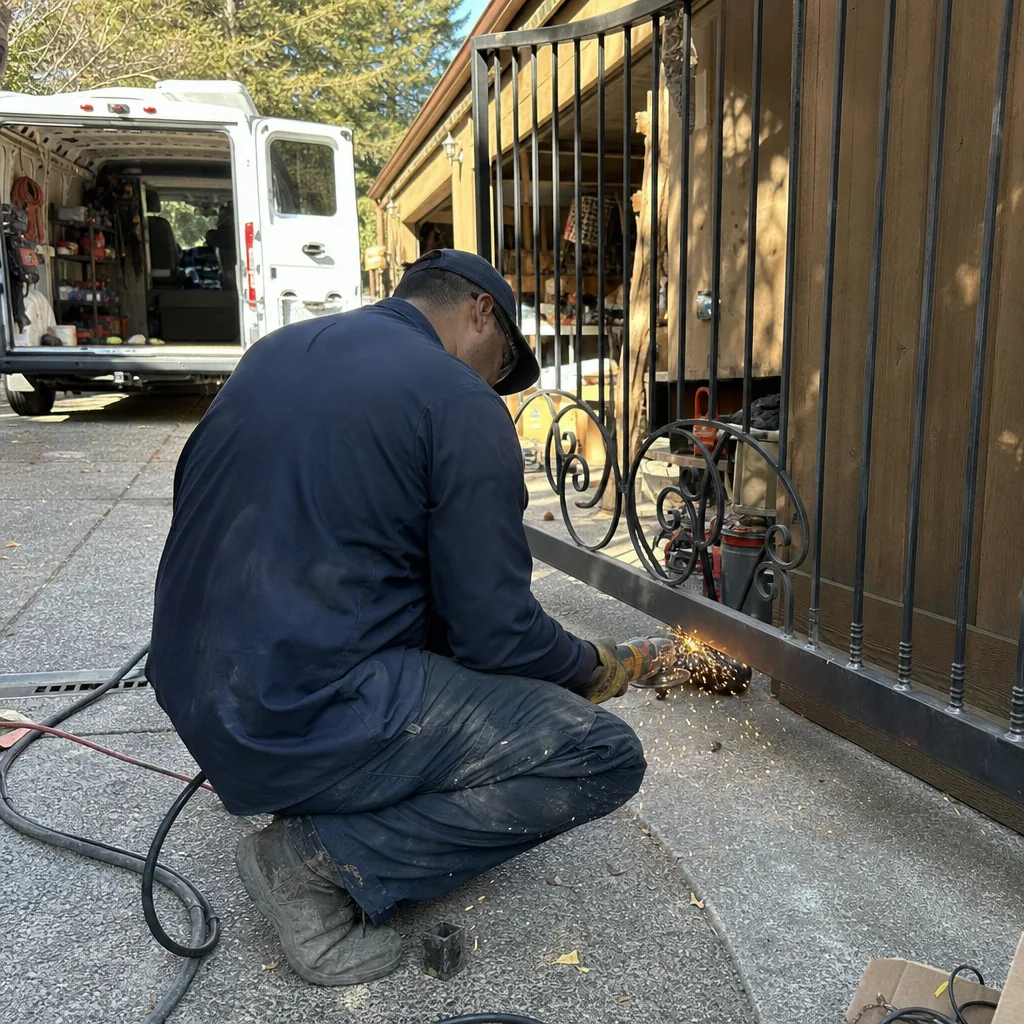
Permitted gate work in Los Gatos typically requires two to three inspections, depending on scope. Understanding the sequence prevents re-inspection fees and schedule delays.
Step 1: Rough Electrical Inspection
Required for any new circuit, conduit run, or panel modification. The inspector verifies wire gauge, grounding, GFCI protection where required, and conduit support spacing. For gate operators, this usually means the inspector examines wiring before it’s enclosed in the operator housing or buried in conduit. In Los Gatos, rough electrical inspections are scheduled through the county’s online portal with 48-hour notice. We always leave wiring accessible and labeled, with a copy of the approved plan on site.
Step 2: Structural/Foundation Inspection
Required for new footings, post embedment, or retaining-wall attachment. The inspector checks depth, rebar placement, concrete mix documentation, and setback from property lines. On hillside lots common in Los Gatos, this may include verification against a geotechnical report. We coordinate this inspection before pouring, not after. One re-pour on a Shannon Road job cost a customer three weeks when the initial footing was 4 inches shallow due to unmarked bedrock.
Step 3: Final Inspection
The comprehensive review. The inspector verifies:
- Operator installation matches approved plans
- UL 325 safety devices are present, correctly positioned, and functional
- Photo-eyes are no more than 6 inches above grade (residential) or per engineered spec (commercial)
- Edge sensors cover the full leading edge
- Gate force settings are within 40 lbf (pounds-force) for entrapment protection
- Warning signage is posted and legible
- Manual release is accessible and functional
The inspector will cycle the gate multiple times, test each safety device by interrupting the beam or pressing the edge sensor, and measure force with a calibrated gauge. Fail any element, and you get a correction notice and re-inspection fee - currently $180 in Santa Clara County.
We schedule final inspections only after our own internal checklist, which includes photographing every safety-device position and recording force readings. Under Haven Standard Clause 4, that documentation goes to the customer and the permit file. When the county inspector arrives, we hand them the photo log and the force readings. It doesn’t guarantee pass, but it demonstrates preparation that most inspectors appreciate.
Retroactive Permits: Cost, Process, and Timeline
Unpermitted work doesn’t have to stay that way. Santa Clara County allows retroactive permitting, but the process is more invasive than pulling a permit upfront. Here’s the realistic path.
The Process
- Application and disclosure. Submit a standard permit application with a checked box indicating “existing work.” Describe what was done and when. Honesty matters; the county can access satellite imagery and prior inspection records to verify timelines.
- Plan submission. Provide as-built drawings showing current configuration. For gate work, this means electrical schematics, safety-device layout, and structural details. We generate these from our field documentation; homeowners without records may need us to reverse-engineer the installation.
- Field inspection. An inspector visits to assess whether the work meets current code. This is the critical difference from original permitting: retroactive inspections apply today’s code, not the code in force when work was done. A gate that passed in 2019 may need upgrades to meet 2024 standards.
- Correction and re-inspection. Common required corrections include adding missing photo-eyes, upgrading to GFCI protection, or installing additional warning signage. Each re-inspection carries the $180 fee.
- Final and record update. Once passed, the permit shows “final” in BPIS with the original work date noted as “existing construction.” The property record is clean for sale purposes.
The Cost
Retroactive permit fees in Santa Clara County run higher than original permits due to administrative overhead. Typical ranges we’ve coordinated:
- Electrical permit (operator replacement): $280-$420
- Building permit (structural work): $340-$580
- Combination permits: $520-$780
- Re-inspection fees: $180 each
- Plan drawing (if we generate from field survey): $240-$360
The timeline is typically 4-8 weeks from application to final, assuming one or fewer re-inspections. We’ve seen 12-week stretches when corrections required manufacturer documentation for older operators no longer in production.
A Los Gatos customer on Hilow Drive inherited unpermitted work from a previous owner - a Ghost Controls operator installed in 2017 with no safety edges and a single photo-eye. Retroactive permitting required adding a second photo-eye, installing wireless edge sensors, and upgrading the control board firmware. Total cost: $1,340. The alternative was a $15,000 price reduction requested by the buyer who found the gap in permits.
Santa Clara County-Specific Requirements
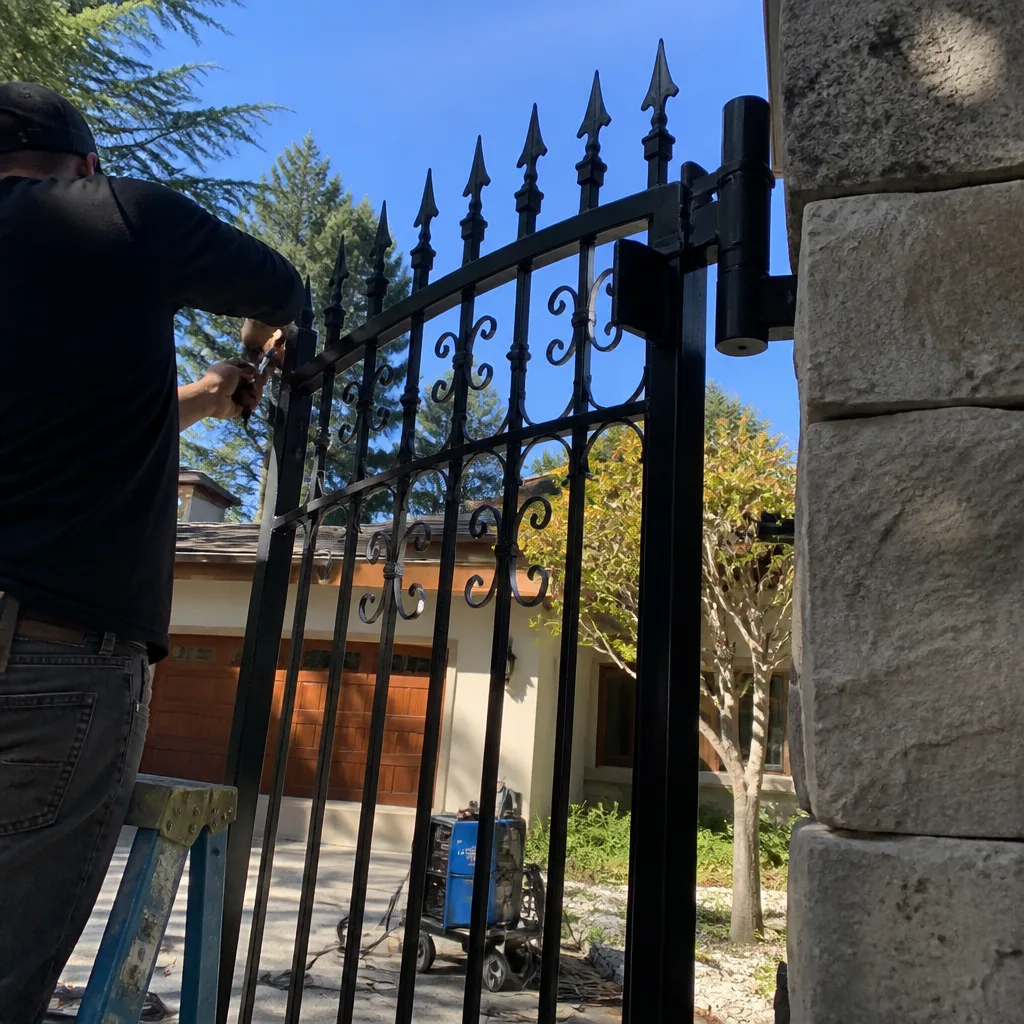
Los Gatos sits within Santa Clara County’s unincorporated areas and incorporated boundaries, with permitting split between the county Building Division and the town’s Community Development Department. The jurisdictional line matters.
Incorporated Los Gatos (downtown, most residential neighborhoods east of Highway 17) uses town permits for planning and building, county permits for electrical. Unincorporated areas (Almond Grove, parts of the hills west of town) use county permits for all trades. We’ve coordinated both. The forms differ slightly; the standards don’t.
Local conditions that affect gate permitting in Los Gatos:
- Hillside development. Lots with slope greater than 30% trigger additional geotechnical review for any footing work. We’ve seen this on Tait Avenue, Rinconada Hills, and along Shannon Road. The review adds 2-3 weeks and $400-$800 in engineering fees.
- Historic districts. Almond Grove and University Avenue historic zones require design review for visible gate modifications, even when building permits aren’t otherwise required. A color change on a visible operator housing has triggered review.
- Wildland-urban interface. Properties in the Very High Fire Hazard Severity Zones (portions of the Santa Cruz Mountains foothills) may require non-combustible materials for any exterior electrical enclosure. Metal operator housings pass; certain plastic enclosures don’t.
- Seismic bracing. Post-2019 county amendments require gate posts over 6 feet in height to meet enhanced lateral load requirements. We’ve retrofitted existing posts with embedded steel angles to meet this on several Los Gatos hillside installations.
The climate also shapes code interpretation. Los Gatos sees 90+ days above 80°F annually and winter moisture that can reach 40 inches in wet years. Inspectors look for weather-rated enclosures and proper drainage around footings. A permit application that ignores these conditions gets questioned.
We maintain permit coordination as a standard service, not an add-on. When we quote gate installation in Los Gatos, we identify the permit requirements, include the fees in the written price, and handle submission and scheduling. Under Haven Standard Clause 1, that total price is fixed before work starts - no surprise permit fees added mid-project.
Common Mistakes to Avoid
- Assuming “repair” means “no permit.” Replacing a failed operator with a different model is legally an alteration, not a repair, even if the gate itself doesn’t change. The permit threshold is about system specifications, not the homeowner’s perception of the work scope.
- Accepting a contractor’s verbal assurance that permits “aren’t needed for this.” The liability stays with the property owner. If the contractor disappears or disputes arise, you’re left with unpermitted work and no recourse. We provide permit documentation in every written scope where permitting applies.
- Installing “smart” accessories without considering low-voltage permitting. Cellular modules, Wi-Fi bridges, and app-controlled receivers add convenience but introduce new wiring categories. A customer on Los Gatos-Almaden Road added a smartphone module to an existing operator; the module itself was fine, but the 24V wiring run to the keypad location required a low-voltage permit that wasn’t pulled.
- Ignoring the “current code” rule on retroactive permits. Many homeowners assume grandfathering protects old work. It doesn’t for retroactive applications. The inspector applies today’s standards, which may require upgrades the original installation didn’t need.
- Not photographing existing conditions before work starts. If a future dispute arises about whether work was like-for-like, photos are evidence. Our field documentation includes nameplate photos, safety-device positions, and force readings on every job - left with the customer and filed in our record.
- Scheduling final inspection before testing safety devices yourself. A failed inspection costs $180 and delays occupancy or sale. We run full safety cycles before calling for inspection: beam interruption, edge sensor pressure, force measurement, and manual release verification.
- Forgetting that permit gaps show in title searches. Buyers’ agents in Los Gatos routinely run permit histories. An unpermitted gate installation discovered during escrow becomes leverage for price reduction or repair credits, often exceeding the original permit cost many times over.
When to Call a Professional
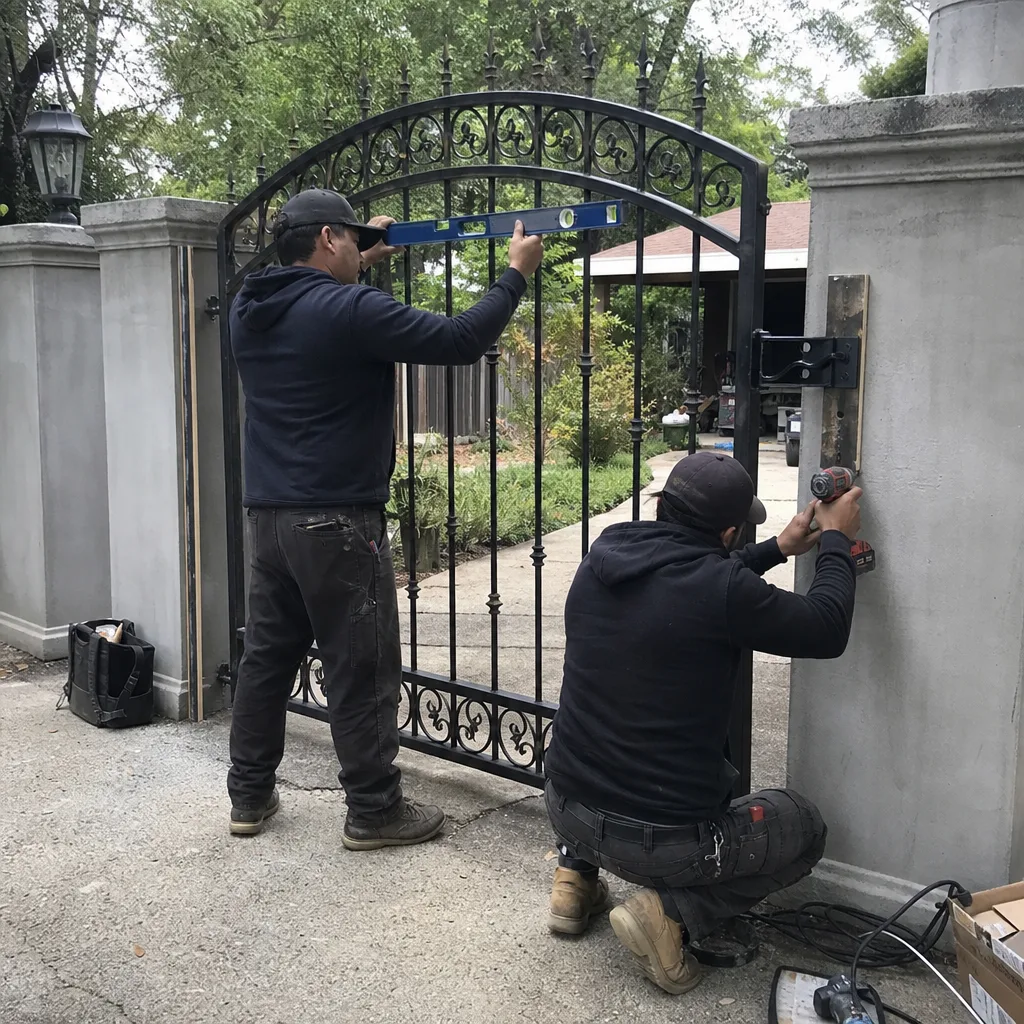
Call a licensed gate technician - or explore our Gate Repair services - when the work touches electrical systems, structural supports, or safety devices, which is most significant gate work. The permit research alone can take hours for homeowners unfamiliar with jurisdictional splits between town and county. A professional who’s coordinated permits in Los Gatos before knows which forms, which inspectors, and which common corrections to anticipate.
We’re particularly cautious with older operators from brands no longer in production. Finding UL 325 documentation for a discontinued model can take days of manufacturer contact. We maintain technical libraries for nine major brands - gate motor and opener service in Los Gatos covers LiftMaster, FAAC, BFT, Linear, Viking, Ghost Controls, DoorKing, Elite, and Mighty Mule - so we can source documentation that homeowners struggle to find.
Vance Gate Repair Los Gatos offers free estimates in Los Gatos. We’ll inspect your gate, identify permit requirements, and provide a written scope and price before any work starts. Call (831) 246-7187.
Frequently Asked Questions
You need a permit if the replacement changes electrical load, voltage, or safety-device configuration. A true like-for-like swap - same manufacturer, model, horsepower, and voltage - is typically exempt. Upgrading horsepower, adding smart connectivity, or relocating safety devices requires an electrical permit in Santa Clara County. Call (831) 246-7187 and we’ll verify your specific setup against current code.
Retroactive permits for gate electrical work typically run $280-$420 in county fees, plus $180 per re-inspection if corrections are needed. Structural permits range $340-$580. Plan drawing from field survey adds $240-$360 if original documentation doesn’t exist. Total realistic range: $520-$1,200 depending on scope and inspection rounds. We include permit coordination in our written quotes when needed.
It can. Title companies flag permit gaps, buyers’ inspectors note unpermitted electrical work, and lenders may require clearance before funding. The delay typically runs 2-6 weeks for retroactive permitting, or buyers negotiate price reductions. We’ve seen $10,000-$20,000 credits requested for unpermitted gate installations that would have cost $400-$800 to permit originally.
Building permits cover structural elements: footings, posts, gate frames, and attachment to structures. Electrical permits cover wiring, operators, control boards, keypads, intercoms, and safety devices. Many gate projects require both. In incorporated Los Gatos, building permits come from the town, electrical permits from the county. We coordinate both as part of our installation service.
Original permitting typically moves from application to final inspection in 2-4 weeks, assuming no corrections. Each inspection requires 48-hour scheduling notice in Santa Clara County. Retroactive permitting takes 4-8 weeks on average, longer if the work must be brought to current code. We schedule inspections only after our internal checklist is complete to minimize re-inspection risk.
Homeowners can pull permits as owner-builders in California, but the permit holder becomes responsible for code compliance and inspection scheduling. Most gate contractors, including Vance Gate Repair, include permit coordination in their service. We prefer to handle it because we carry the documentation, know the inspectors, and can answer technical questions on site. The permit fee is the same either way; our coordination is included in the written price.
The Bottom Line
The permit line for California gate work sits at electrical load, structural attachment, and safety-device changes - not at the intuitive boundary between “repair” and “new installation.” Like-for-like replacement is narrower than most homeowners assume: same model, same specs, no added features. Unpermitted work persists in property records and surfaces at sale, often at far greater cost than original compliance. In Los Gatos and Santa Clara County, the inspection sequence is predictable if you know the steps, and retroactive permits are available but apply current code to old work. The practical path: verify permit requirements before starting work, document everything, and keep the record with your property file. See more guides & resources for related topics. The $300-$800 you spend on proper permitting is insurance against the $10,000+ friction of a flagged sale.
Written by Adrian Vance, Owner at Vance Gate Repair Los Gatos, serving Los Gatos since 2014.